Book review
A Book of Short Stories Review
This A Book of Short Stories review considers Stuart Pratt Sherman's early twentieth-century anthology as a reader's guide to short fiction, literary taste, and the strengths and limits of curated classics.
- Author
- Stuart Pratt Sherman
- First published
- 1914

View source
https://openlibrary.org/works/OL4764967WA Book of Short Stories review: an anthology that reveals how literary taste is made
This A Book of Short Stories review argues that Stuart Pratt Sherman's volume is best understood not as a horror novel, not as a disguised single-author collection, and not even primarily as a book with one unified emotional effect, but as an anthology that teaches readers how selection itself becomes criticism. The editor's choices matter here. The arrangement, implied standards, and historical moment all shape the reading experience. That makes the book useful for readers browsing classic literature and literary fiction not because it offers a single overwhelming masterpiece, but because it shows how a culture packages short fiction as worthy, representative, and teachable.
That distinction matters more than it may first appear. A collection edited by someone else always asks two questions at once: what do these stories do individually, and what does the editor think stories of this kind are supposed to do? A Book of Short Stories therefore belongs to a long tradition of anthologies that educate taste by implication. Readers are not only meeting fiction; they are meeting a particular argument about fiction. Even when the book does not state that argument directly, the choices behind inclusion, emphasis, and framing still guide the reader toward certain ideas of craft, seriousness, readability, and literary value.
The central thesis of this review is that A Book of Short Stories remains worth reading when approached as a curated map rather than as a seamless artistic whole. Its strengths are breadth, contrast, and historical interest. Its limits are also clear: anthologies of this era often narrow the field, smooth over disagreement, and treat "representative" literature as if that category were neutral. But if you want to understand how short fiction has been introduced to general readers and students, this volume is more revealing than a casual glance suggests.
What kind of book this actually is
One reason this page needed a rewrite is that the old framing misunderstood the book at a very basic level. A Book of Short Stories is, by title and by editorial structure, a collection. That means the standards for judging it are different from the standards for judging a novel. The right question is not whether it maintains one plot engine, one voice, or one escalating dramatic arc. The right question is whether the anthology makes a persuasive reading experience out of variety.
That variety is the point. In a short-story anthology, inconsistency is not always failure. Changes in voice, pacing, register, and theme are part of the design. A strong anthology teaches readers to notice those differences rather than flattening them into sameness. When the book works, it helps the reader compare what one story can do with scene, another with moral tension, another with irony, another with compression, and another with atmosphere or social observation. Even without listing or relying on specific contents, it is possible to say that the anthology form invites a mode of reading built on juxtaposition.
Sherman's role matters because an editor of this kind is never invisible. Early twentieth-century anthologists often acted as gatekeepers between the general reader and the literary field. They curated not only texts but also norms. Which stories are deemed substantial? Which styles seem polished rather than excessive? Which themes become central to the short form's prestige? A volume like this can therefore be read as a lesson in canon formation. It reflects assumptions about what readers ought to admire and how literary culture imagined the short story's proper scope.
That makes the book more interesting than a generic "sampler." It occupies a space between criticism and pleasure reading. You can read it for individual stories, certainly, but you can also read it for the editorial imagination behind the grouping. Readers interested in the history of reading practices may find this almost as valuable as the fiction itself.
Why anthologies can be better teachers than single-author collections
Single-author collections often reward deep immersion in one sensibility. Anthologies do something else. They train comparison. That training is one of the strongest reasons to spend time with A Book of Short Stories. A well-curated anthology can sharpen a reader's instincts faster than a run of loosely connected standalone tales because it keeps presenting new problems in compressed form. One story may lean on plot surprise, another on moral ambiguity, another on tonal precision, another on social sketching. Each shift encourages the reader to ask what exactly produced the effect.
That is especially useful for readers who are still building a vocabulary for discussing short fiction. Novels give writers room to accumulate power over time. Stories have to be quicker, cleaner, and often more selective. In anthology form, those differences become easier to detect. You can watch how openings establish pressure, how endings refuse or deliver closure, how much characterization can be sketched in very little space, and how style can either broaden or narrow a story's emotional range. A Book of Short Stories works well when used that way: as a comparative workshop in reading.
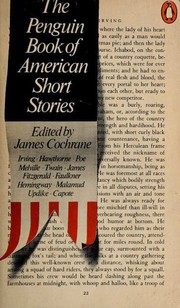
This is also why the book belongs in conversation with other anthology-based titles in the catalog, including Selected English Short Stories Nineteenth Century, Selected Short Stories of Nathaniel Hawthorne, and The Penguin Book of American Short Stories. Those books are not interchangeable, but they illuminate one another. Put side by side, they show how editorial agendas shift across periods and publishing cultures. One anthology may emphasize national tradition, another authorial range, another classroom accessibility, another prestige. Reading across them helps reveal that anthologies do not simply preserve literature; they shape it.
For modern readers, that can be unexpectedly liberating. Instead of treating a table of contents as an authority to obey, you begin to see it as an argument to evaluate. Why these pieces? Why this range of tone? Why this implied hierarchy of importance? Once that question becomes natural, anthology reading becomes much more active and rewarding.
The strengths of A Book of Short Stories
The first major strength is breadth without total diffusion. Anthologies inevitably risk feeling miscellaneous, but their best versions create a sense that the reader is moving through a field rather than wandering through clutter. A Book of Short Stories earns much of its value by presenting the short story as a flexible literary instrument. The collection format makes room for contrast, and contrast is one of the clearest ways to make formal intelligence visible.
The second strength is historical perspective. A reader who picks up this book today is not only reading stories. They are also reading an early twentieth-century idea of which stories deserved preservation and circulation. That historical layer gives the book a double usefulness. It can be enjoyed as literature, and it can be examined as evidence of older critical taste. For readers who like books that perform more than one function at once, that is a real advantage.
The third strength is practical reader development. This is a very good kind of book for anyone who wants to become a more precise reader of short fiction. Because the anthology does not depend on a single long arc, it invites pause and reflection. You can finish a piece and ask what it accomplished before moving on. You can compare how different narratives handle exposition, perspective, implication, or resolution. You can also discover what kinds of short fiction actually hold your attention. That sounds basic, but it matters. Anthologies often clarify taste more efficiently than reputationally heavier novels do.
There is also a quiet strength in the book's modesty. It does not need to overwhelm to be useful. Some collections function almost like monuments, demanding that the reader admire their comprehensiveness or cultural authority. A Book of Short Stories is more serviceable than grand. In this case, that is a virtue. It leaves room for the reader's judgment. Rather than forcing one dominant tone, it encourages sampling, contrast, and reconsideration.
Where the book shows its age
The caution most worth stating plainly is that period anthologies are rarely neutral. Sherman's editorial perspective comes from a particular literary culture, and that culture had exclusions built into it. Modern readers may notice narrowness in representation, assumptions about which voices count as serious, and a confidence that "good literature" can be selected from above with relatively little argument. Those features do not make the book unreadable, but they do shape its limits.
This matters because some readers approach old anthologies expecting them to function as timeless gateways. In practice, they are gateways with strong hinges. They open toward some traditions more than others. They make some literary values feel obvious while pushing other possibilities to the edge or out of sight altogether. A modern anthology often announces its curatorial logic more explicitly; an older one may present its preferences as if they were self-evident. That can feel instructive or frustrating, depending on what you want from the book.
There is also the familiar anthology problem of unevenness. Even a good selection will not affect every reader evenly. Some pieces will feel vivid and alive; others may seem included for representative or historical reasons rather than for immediate force. That is not necessarily a defect. It is part of anthology reading. Still, readers who want consistent intensity from cover to cover may find the experience variable. The book asks you to accept that one story's relative thinness may sharpen your appreciation of another story's economy or depth.
Finally, this is not the right book for someone who wants a single immersive narrative world. The pleasures here are segmented. They depend on reset and reorientation. If you tend to read for long emotional absorption with one cast of characters, the anthology format itself may feel interruptive. That is not a reason to avoid the book, but it is a reason to set expectations correctly.
Reader fit: who will get the most from it
This book is best suited to readers who enjoy reading as comparison. If you like noticing how different writers solve the same formal problem in different ways, A Book of Short Stories can be very satisfying. It is also strong for readers who are curious about literary history but do not always want that history delivered as abstract criticism. Here, the history lives inside selection and arrangement. You learn something about the period's assumptions simply by watching what has been chosen and what kind of reading experience those choices produce.
It is an especially good fit for students, teachers, book-club readers, and general readers who want a doorway into older short fiction without committing immediately to one major author. Anthologies are often underestimated as entry points. In reality, they can be excellent diagnostic tools. After spending time with a volume like this, a reader usually knows more clearly whether they want to pursue shorter classic fiction, particular traditions of realism, or more pointed modern collections.
On the other hand, readers who mainly want emotional continuity or a large central thesis may not find this the strongest match. Anthologies reward stopping, restarting, and calibrating. That rhythm can feel invigorating or fragmented. Much depends on how you like to read. If you want a book to gather pressure in one direction, a novel will probably serve you better. If you want a book that keeps opening fresh angles on narrative possibility, this anthology becomes more attractive.
It also helps to approach the editor with a measured curiosity rather than blind trust. Sherman is part of the experience. That does not mean you must accept the selection as definitive. Quite the opposite. The richest way to read the book now is to let it provoke questions about taste, pedagogy, inclusion, and literary memory. That attitude turns the collection from a static artifact into a live conversation.
How it compares with stronger or broader alternatives
Readers wanting a more focused route into one author's short fiction may do better with Selected Short Stories of Nathaniel Hawthorne, where the advantage is depth of sensibility. Hawthorne's collection lets you study how one imagination varies within a recognizably unified moral and symbolic world. If what you want is continuity of voice rather than editorial contrast, that is likely the stronger next step.
Readers wanting a broader national or period-spanning survey may prefer The Penguin Book of American Short Stories, assuming they are comfortable reading an anthology as a larger canon argument. That kind of volume tends to feel more expansive in scope and, depending on the edition, more visibly self-conscious about literary history. It can serve readers who want a wider sense of how the form develops across time and editorial priorities.
Meanwhile, Selected English Short Stories Nineteenth Century offers a useful comparison for readers who want to stay closer to historical English traditions while still benefiting from anthology variety. Pairing that book with A Book of Short Stories can be surprisingly productive. The overlap is not the point. The point is to notice how two collections can imply different standards of representativeness, seriousness, and pleasure even when they seem to occupy similar shelf space.
The broader lesson is that anthology reading becomes best when it is comparative. A single anthology can feel authoritative. Two or three anthologies quickly expose authority as constructed. That does not weaken the reading experience. It improves it. Once you see the editorial hand clearly, you can take more from the stories and from the book that contains them.
Final assessment
A Book of Short Stories deserves a place in the catalog because it is more than a miscellaneous bundle of older fiction. It is a record of how an early twentieth-century editor imagined the short story should be presented to readers, and that makes it valuable on two levels at once. As literature, it offers variety, contrast, and an efficient way to study short-form technique. As a cultural object, it reveals the power of selection, framing, and canon-making.
Its limitations should be acknowledged without hesitation. The anthology almost certainly reflects a narrower literary horizon than many modern readers will want, and like most curated collections it will feel uneven in places. But those limits are also part of what makes it legible. They remind us that literary culture is assembled by choices, not delivered by nature. For readers willing to engage the book on those terms, the anthology becomes considerably richer than its plain title suggests.
So the best recommendation is a qualified but real one. Read A Book of Short Stories if you want to become a more attentive reader of short fiction, if you are interested in how literary taste is organized, or if you want a classic anthology that can serve as both reading experience and historical evidence. Skip it only if you need one sustained narrative or if anthology reading reliably feels too discontinuous to be rewarding. For the right reader, this book does exactly what a good anthology should do: it widens the field, sharpens judgment, and leaves you better prepared for the next collection you open.