Book review
Ah, Sweet Mystery of Life Review
This Ah, Sweet Mystery of Life review examines Roald Dahl's 1989 collection of seven linked country stories, weighing its black humor, rural menace, reader fit, and place among his adult fiction.
- Author
- Roald Dahl
- First published
- 1989
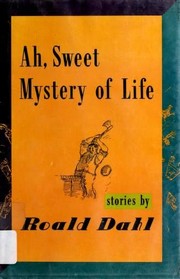
View source
https://openlibrary.org/works/OL45854WAh, Sweet Mystery of Life review: Roald Dahl's country stories hide barbs under the hedgerows
This Ah, Sweet Mystery of Life review needs to start with a basic correction of identity. Roald Dahl's 1989 book is not a novel and not merely a generic work of literary fiction. It is a collection of seven linked stories set in and around a small English village just after the Second World War, drawing together a recurring cast, a shared rural world, and many of the adult qualities that make Dahl such a distinctive short-story writer: comic timing, social cruelty, sharp appetite, and an eye for the grotesque hiding inside ordinary life.
That distinction matters because the book reads differently once you know what it is. As a collection, Ah, Sweet Mystery of Life lives by variation and return. One story gives you a poacher's ingenuity, another a con man's performance, another a local eccentric treated with a blend of fascination and mockery. The cumulative effect is not the inward continuity of a novel but the widening pressure of a village observed from several wicked angles. By the end, Dahl has built something close to a miniature social map, where hunger, vanity, sly intelligence, and animal practicality keep colliding.
The central thesis is straightforward: Ah, Sweet Mystery of Life is most valuable as a compact introduction to Dahl's adult fiction because it shows how well he could turn pastoral material into black comedy. The setting promises rustic charm, but the stories keep spoiling that promise in productive ways. Country life here is not innocent. It is competitive, furtive, bodily, and frequently absurd. Readers who come for quaintness will get traps, scams, betting, rotting smells, stubborn livestock, and people who know exactly how far to push their luck.
What Ah, Sweet Mystery of Life actually is
Open Library and WorldCat both identify the book as a seven-story collection, and that simple fact shapes the whole reading experience. The contents typically include "Ah, Sweet Mystery of Life," "Parson's Pleasure," "The Ratcatcher," "Rummins," "Mr Hoddy," "Mr Feasey," and "The Champion of the World." Several of these pieces had lives elsewhere before being gathered here, but in this arrangement they form a coherent rural sequence rather than a random pile of Dahl stories.
The shared setting is crucial. Dahl uses the village and surrounding countryside as more than background. It becomes a testing ground for human appetites. People want money, advantage, prestige, sport, or revenge; sometimes they want little more than the pleasure of getting away with something. The village scale makes those motives funnier and nastier at once. Everybody seems close enough to know one another's habits, but not close enough to become morally improved by the knowledge.
Because the stories are linked rather than fully interdependent, the collection stays light on its feet. You do not need to track a large plot architecture, yet you do feel a satisfying sense of return as Dahl revisits a tone and a social ecosystem. That makes the book unusually accessible for readers who are curious about classic short fiction but wary of collections that feel abstract, solemn, or stylistically diffuse. There is a recognizable world here, and Dahl wastes very little time establishing its rules.
The title can still mislead. It sounds lyrical, perhaps even sentimental. Dahl uses that expectation mischievously. What he delivers is a book interested in the earthy mechanics of life: breeding, baiting, cheating, eating, poaching, bargaining, and bluffing. Mystery exists, but it is seldom elevated. It is usually attached to some very concrete fact about bodies, animals, money, or trickery.
How the collection works as a whole
The first strength of Ah, Sweet Mystery of Life is its structural economy. Dahl does not write village life as a broad panorama full of diffuse sympathy. He writes it as a set of concentrated encounters. Each story isolates a scheme, obsession, or local drama and lets it reveal the kind of world the characters inhabit. Read together, the stories accumulate into a portrait of postwar rural England stripped of idealization.
That accumulation is what saves the book from feeling slight. Any one story might land primarily as anecdote, stunt, or comic shock. In sequence, though, patterns emerge. Men boast and bargain. Expertise becomes a form of power. Cunning often matters more than respectability. The countryside is full of technical knowledge, but that knowledge is rarely ennobling. It is instrumental: how to breed maggots, catch rats, outwit birds, assess furniture, or exploit someone else's assumption. Dahl clearly delights in these specific competencies, yet he also shows how easily skill curdles into predation.
This is why the collection can feel more substantial than its page count suggests. Dahl's stories are quick, but they are not casual. He is extremely alert to escalation. A conversation that begins in local color can turn into humiliation or menace with almost no warning. A comic premise can keep darkening until the reader realizes the joke has teeth. That rhythm gives the book its peculiar snap. Even when a story aims mostly to entertain, Dahl keeps tightening the line until the last movement has bite.
Another virtue is the shared emotional temperature. Many collections suffer from tonal whiplash, but Ah, Sweet Mystery of Life is deliberately gathered around a single mode: rural, sly, funny, and faintly rotten. The book does not aim for the full range of Dahl's adult fiction. Instead, it offers a focused register, which makes it one of his more coherent volumes. Readers looking for a broad retrospective may prefer a larger collection, but readers looking for a strong, self-contained slice of his adult work will likely find this one more memorable.
Tone, style, and Dahl's adult imagination
What keeps these stories alive is Dahl's control of tone. He writes with an apparent plainness that is never really plain. Sentences move quickly, details arrive with tactical precision, and comic understatement often prepares the ground for something uglier or stranger. He trusts event, rhythm, and observation more than discursiveness. That economy is one reason his stories remain readable even when the characters are unpleasant or the situations verge on the grotesque.
The adult Dahl on display here is not the dreammaker of the children's books, though readers familiar with that side of his work will recognize certain continuities: delight in rule-breaking, fascination with appetite, love of reversals, and relish for exposing pomposity. What changes is the moral atmosphere. These stories are less interested in justice than in exposure. People reveal themselves through greed, vanity, cunning, or complacency, and the revelation is often funnier than it is redemptive.
That edge is especially important in a rural setting, because it prevents the book from slipping into heritage prettiness. The countryside in Ah, Sweet Mystery of Life is tactile, specific, and often foul-smelling. Animals matter not as symbols of innocence but as living facts around which people organize schemes, work, and fantasies. Dahl is very good at showing how the practical knowledge of country life can look impressive from afar and deeply unnerving up close.
He is equally good at handling status. One recurring pleasure of the collection is watching supposedly superior people underestimate others. Dahl loves confidence artists, amateurs with technical genius, and shabby men whose local knowledge defeats polished assumptions. That theme gives several stories their spring. It also explains why the book still feels lively rather than merely period-bound: the social mechanisms are old, but the pleasure of seeing vanity punctured is perennial.
Who this book suits, and who should be cautious
This is a strong recommendation for readers who want to meet Dahl the adult storyteller in a manageable form. If you know him mainly through children's classics and wonder what his fiction for adults feels like, this collection is an efficient answer. It is also a good fit for readers who like short stories that are plot-forward without being disposable. Dahl understands momentum, but he also gives you enough tonal and thematic texture to keep the book from reading like a set of gimmicks.
It is especially suitable for readers who enjoy fiction about local worlds built through recurring habits, rivalries, and vernacular knowledge. If you like stories where the setting is thick with custom and technique, where character is revealed through practical action rather than introspective confession, Dahl has a lot to offer here. The linked structure also makes the book a smart choice for people who want some continuity from one story to the next without committing to a full novel.
The cautions are real, though. Readers expecting emotional warmth may bounce off the collection. Dahl is amused by human folly, but he is not consistently tender toward it. He can turn people into types on purpose, and sometimes that flattening is part of the comic design. If you need deep interior development from every story, this book may feel more performative than penetrating.
There is also a level of grotesque relish that will divide readers. Dahl likes bodily facts, ugly surprises, and the nasty little mechanics behind respectable surfaces. For many readers that is exactly the appeal; for others it can make the stories feel more clever than humane. The book works best if you accept that its moral intelligence is sharp but not especially consoling.
Strengths, limits, and the book's lasting appeal
The clearest strength of Ah, Sweet Mystery of Life is concentration. At a relatively small scale, it gives you a remarkably complete sense of Dahl's adult manner. You get black humor, rural observation, efficient plotting, and the steady pressure of trickery. There is very little slack. Even readers who do not love every story will likely admire how decisively the book establishes and sustains its world.
A second strength is the way the stories make expertise dramatically interesting. Dahl understands that esoteric knowledge can be both comic and suspenseful. A man who knows too much about rats, breeding, antiques, or poaching is never just a source of information in these stories; he is a destabilizing presence. That ability to turn niche knowledge into narrative energy is one of Dahl's signature adult gifts.
The main limitation is that the collection does not represent the full emotional range of short fiction as an art form. It is tightly tuned to one cluster of pleasures. If you want lyrical inwardness, moral tenderness, or radical formal experiment, this is not the right destination. Dahl is after momentum, sting, and memorable social nastiness. That narrowness is not a flaw so much as a boundary condition, but it should be named clearly.
Some readers will also notice that the book's caricatural mode can harden into predictability. Dahl's best stories feel inevitable only in retrospect; weaker ones advertise their trap too early. Even then, his craft usually carries them. The voice is so alert, and the observation so amused, that the collection rarely loses its charge for long.
Context, alternatives, and where to go next
Within Dahl's body of work, this collection matters because it preserves a very specific corner of his imagination: the country story as adult black comedy. That gives it a different function from broader omnibus collections and a different appeal from the children's novels that dominate his reputation. If your interest is the overlap between comic storytelling and low-key menace, this is one of the cleaner entry points.
For readers using Online Library as a reading route rather than a single stop, the best alternatives depend on what you most enjoy here. If you want another book where unease seeps into intimate life, Our Wives Under the Sea offers a much more contemporary and emotionally interior version of strangeness. If what you want is sharp prose about desire, identity, and pressure within a compact narrative frame, Swimming in the Dark gives you a more lyrical and openly reflective experience. If you are drawn to the way voice can expose social hierarchy and moral performance, James is a strong next step in a very different register.
You can also browse the wider literary fiction shelf or the history and ideas shelf if you want to widen the comparison set. This book does not belong to those categories in a tidy or exclusive way, but it does productively touch both: it uses fiction craft with high efficiency, and it captures a recognizably postwar social atmosphere without turning into a historical pageant.
That last point is worth stressing. Ah, Sweet Mystery of Life is not valuable because it offers a grand statement about England after the war. It is valuable because it renders a small social world with enough specificity that larger conditions can be felt indirectly. People bet, poach, posture, improvise, and scrape by. The village is never reduced to symbol, but it is never merely local color either.
Final verdict
Ah, Sweet Mystery of Life is easy to underrate if you approach it under the wrong label. Read as a generic literary title, it can seem minor. Read correctly as a compact gathering of Dahl's linked country stories, it becomes much more interesting: a sly, efficient, and often deliciously unpleasant book about rural life, practical cunning, and the comedy of people who think they know what they are dealing with.
It is not Dahl at his most expansive, and it will not convert readers who dislike his taste for the grotesque. But it does something highly specific very well. The stories create a shared world, maintain a distinct tonal pressure, and show how much narrative energy Dahl could extract from seemingly modest materials. For readers who want adult short fiction with momentum, bite, and a thoroughly unsentimental pastoral surface, this remains a rewarding place to start.


