Book review
Danse Macabre Review
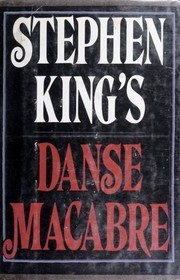
This Danse Macabre review examines Stephen King's personal 1950–1980 map of horror across radio, television, film, and fiction.
- Author
- Stephen King
- First published
- 1981
View source
https://openlibrary.org/works/OL81605WDanse Macabre review: a 1950–1980 map, not a timeless encyclopedia
This Danse Macabre review starts with the date range that gives Stephen King's book both its authority and its limits. Published in 1981, it looks back over roughly three decades of American horror, from the anxieties of the 1950s to the end of the 1970s. King moves across radio, television, cinema, and fiction because his subject is not one medium. It is the way a culture manufactures, circulates, and enjoys fear. Read on those terms, the book is still unusually alive. Read as an up-to-date history of horror, it is necessarily incomplete.
King's central achievement is to connect scary stories to the pressures surrounding their audiences without reducing them to coded political messages. Monsters can absorb Cold War unease, generational conflict, economic insecurity, fear of technology, or anxiety about changing social roles, but they must also work as monsters. King never loses sight of suspense, shock, atmosphere, identification, and the mischievous pleasure of being frightened. His criticism matters because social interpretation and popular enjoyment occupy the same page.
The resulting thesis is clear: Danse Macabre remains valuable as a practitioner's period map, not as a neutral reference work. Its examples reveal what one influential horror writer had watched, heard, read, taught, and argued about at a formative moment in the genre's history. Its dated qualities are therefore evidence as well as limitations. The book records a critical position in 1981, when much horror still required defense against the assumption that popular or sensational entertainment could not repay serious attention.
How the ten chapters build their argument
The ten-chapter structure is more deliberate than the book's conversational manner initially suggests. King opens on October 4, 1957, recalling a childhood cinema screening interrupted by news of Sputnik. That pairing of a science-fiction spectacle with a real geopolitical shock establishes his method: private memory and public anxiety can illuminate each other. He then turns to the urban legend of the hook and to a set of durable monster archetypes before pausing for autobiography.
The middle of the book travels medium by medium. A chapter on radio considers how sound recruits the listener's imagination. Two chapters on film distinguish social subtext from the unruly pleasures of exploitation and B-movies. Television receives its own sustained assessment, followed by a long treatment of modern horror fiction. A final chapter returns to morality, imagination, and the reasons horror may be socially useful. The appendices offer extensive reading and viewing lists from the period, making the book a practical guide as well as an argument.
This organization is not a chronological textbook. Ideas recur, personal memories interrupt classification, and individual works sometimes receive more space because King loves or dislikes them intensely. That looseness can frustrate readers looking for a balanced survey. It also lets the book show how media histories overlap. A radio effect can clarify a film scene; an old literary monster can reappear beneath a contemporary paperback; a supposedly disposable television episode can express a fear that prestige culture ignores.
Radio and television: imagination versus the sponsored screen
The radio chapter is among the clearest demonstrations of King's practical criticism. Programs such as Suspense, Inner Sanctum, and Arch Oboler's Lights Out lead him to the special power of sound: the medium provides the door, the footsteps, or the voice, while the listener supplies what waits in darkness. The imagined object can conform perfectly to an individual's fears. King is not merely nostalgic for childhood broadcasting; he is explaining why incomplete sensory information can become a horror technique.
Television creates a different problem. King discusses anthology and supernatural programs including Thriller, The Outer Limits, The Twilight Zone, Dark Shadows, and Night Gallery. He recognizes the ambition and occasional brilliance of television horror, but he also sees a medium constrained by network standards, scheduling, and advertisers. The joking title of the television chapter points to his suspicion that commercial interruption and institutional caution can tame material that depends on danger and transgression.
The contrast is productive rather than absolute. Radio is not automatically art, and television is not automatically compromised. King asks what each form allows creators and audiences to do. His attention to delivery systems now feels historically revealing: these chapters capture broadcast culture before home video, prestige cable, on-demand libraries, and streaming changed access to horror. Those later developments fall outside the book's frame; they should contextualize a modern reading, not become retroactive charges against it.
Movies: social subtext and the pleasures of junk food
King's two film chapters hold together an argument that critics often separate. In one mode, horror movies make collective tension visible. He reads Cold War invasion stories, religious and generational panic, changing gender roles, financial insecurity, and technological dread through films that gave those pressures a body. The Thing from Another World, The Exorcist, The Stepford Wives, The Amityville Horror, and The China Syndrome become evidence for different moments rather than interchangeable entries in a list of scares.
In the other mode, horror cinema is “junk food”: immediate, excessive, sometimes crude, and capable of satisfying an appetite without becoming a masterpiece. The metaphor is not permission to abandon judgment. King can be severe about failure. It is a refusal to pretend that only formally distinguished movies deserve explanation. Cheap effects, outrageous premises, and a responsive audience are part of genre history, and a critic who excludes them may produce a cleaner account but not a truer one.
This double vision is one of the book's lasting strengths. King can ask what a film's monster means and whether the scene actually frightens, startles, or delights. At his best, symbolic interpretation stays answerable to craft. At other times, the social readings can feel speculative or too closely tied to his chosen examples. Even then, the method encourages a useful question: what was an audience already afraid of when a particular image became persuasive?
Horror fiction and the three recurring archetypes
King organizes much of his genre thinking around three nineteenth-century touchstones: the vampire associated with Dracula, the created creature of Frankenstein, and the divided self represented by Dr Jekyll and Mr Hyde. These are not rigid boxes. They are a portable set of patterns—predatory intrusion, dangerous creation, and the monster within—that help him connect older Gothic literature to modern popular stories. The framework is memorable precisely because readers can test it rather than merely memorize it.
The fiction chapter then becomes a substantial critical tour through writers and books King considers central to postwar horror. Shirley Jackson, Richard Matheson, Ray Bradbury, Ira Levin, Peter Straub, Anne Rivers Siddons, Jack Finney, Ramsey Campbell, James Herbert, and others enter a conversation about haunted spaces, bodily transformation, possession, doubles, and social conformity. The selection is personal, but it is not random: King repeatedly attends to how an author turns an abstract fear into setting, pace, image, and point of view.
Readers can extend that line in several directions within this library. Carmilla predates King's 1950–1980 survey and reveals how intimate and ambiguous the vampire tradition already was before Dracula. Carrie shows King himself translating humiliation, religious coercion, and group cruelty into horror fiction during the period he studies. A Dowry of Blood is a much later rewriting of vampire relationships; it belongs outside his historical frame and is useful precisely as evidence of how the archetype continued to change afterward.
Strengths: criticism from inside the workshop
King writes as a novelist, teacher, fan, and cultural witness at once. He is alert to the practical decisions that determine whether an idea becomes frightening: what information to withhold, how long anticipation can be sustained, when a familiar setting becomes unstable, and why suggestion sometimes exceeds display. That workshop awareness prevents the book from floating into a theory of “the audience” detached from actual sentences, scenes, sounds, and cuts.
His voice also lowers the barrier to serious genre criticism. The book does not dictate good taste from a distance. It argues, jokes, remembers, lists, and occasionally provokes. King can value a canonical novel and an unruly creature feature without pretending that they achieve the same thing. This generosity toward mixed cultural levels was important in 1981 and remains useful whenever discussion of popular fiction mistakes prestige for the only form of quality.
The cross-media range is equally significant. Many histories specialize in literature or film, while Danse Macabre asks how fear changes when transmitted by a radio speaker, a television network, a cinema screen, or prose. That breadth sometimes sacrifices depth, but it produces connections a single-medium account cannot. The 1982 Hugo Award for Best Related Non-Fiction Book also reflects the book's early recognition as more than an author's casual collection of opinions.
Cautions: a personal canon preserved in time
The strongest caution is temporal. Danse Macabre does not cover horror after about 1980. The later expansion of the slasher cycle, home-video culture, global horror available to American audiences, Japanese horror's international influence, prestige television, streaming, internet folklore, and decades of feminist, queer, racial, and postcolonial scholarship cannot be expected from its original project. Some editions add later introductory material, but the central study remains a retrospective on 1950–1980.
Its canon is also narrower than a contemporary overview should be. The emphasis is predominantly Anglo-American, and King's choices reflect his biography, access, enthusiasms, and moment. Women writers appear and sometimes receive major attention, yet the governing perspective remains distinctly his. Language and generalizations that passed more easily in early-1980s criticism may now feel blunt or dated. Readers should notice these limits rather than disguise them as timeless authority.
Finally, the prose is expansive and digressive. King accumulates cases, returns to favorite ideas, and lets autobiography interrupt taxonomy. Readers who enjoy a persuasive voice may find this hospitality; readers who want a compact scholarly demonstration may find sprawl. The book is best treated as an argued tour with an exceptionally informed guide. It needs supplementation, but its subjectivity is also the reason it can show the texture of a historical horror culture rather than only its approved landmarks.
Reader fit, context, and useful alternatives
This is an excellent choice for readers interested in Stephen King's critical intelligence, the media ecology of postwar American horror, or the relationship between social anxiety and genre technique. It also suits readers building a list of older films and novels: the discussions and appendices create many routes outward. Familiarity with some titles helps, but King's summaries and enthusiasm make the book accessible to a curious reader who has not completed the informal syllabus.
It is a weaker fit for anyone seeking a current global history, a systematic academic theory, or a biography of King. For philosophical definition and a more formal argument, Noël Carroll's The Philosophy of Horror is a useful later alternative. For gender and the American horror film, Carol J. Clover's Men, Women, and Chain Saws supplies a focused framework developed after King's period. A recent multi-author history can provide the geographic and scholarly breadth that one writer's 1981 retrospective cannot.
The most productive approach is therefore additive. Read Danse Macabre for its period testimony, close observations, infectious curiosity, and willingness to cross boundaries between respectable and disreputable art. Then place it beside newer criticism that revises its canon and follows horror beyond 1980. That sequence preserves what is distinctive about King's book without asking it to answer questions that emerged after it was written.
Final verdict
Danse Macabre is not the last word on horror, and it is better for readers who do not ask it to be one. It is a vivid record of how radio, network television, movies, and fiction formed an American horror imagination across three postwar decades. King's strongest pages join social context to the concrete mechanics of fear; his weakest rely on a personal hierarchy or wander longer than the argument requires.
The book's value lies in that combination of historical limit and critical vitality. It preserves a working horror writer thinking publicly about the material that shaped him, while offering readers a vocabulary for archetype, subtext, suspense, and popular pleasure. Four decades of later horror and criticism make supplementation essential, not dismissal sensible.
For readers comfortable with a forceful guide and an openly personal canon, the recommendation is strong. Approach it as a 1950–1980 cultural map, follow its references, dispute its rankings, and keep its dates visible. Under those conditions, Danse Macabre remains both an enjoyable tour of horror's machinery and an important artifact of the moment when defending the genre became part of explaining it.


