Book review
Dare to Lead Review
This Dare to Lead review examines Brené Brown's case for courage and vulnerability in management, praising its clarity about trust and accountability while questioning how far emotional language can carry a team without stronger operational structure.
- Author
- Brené Brown
- First published
- 2018
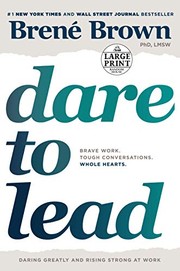
View source
https://openlibrary.org/works/OL19754782WDare to Lead review: vulnerability as a management standard
This Dare to Lead review takes the book seriously because Brené Brown is trying to solve a real managerial problem: teams often fail not because they lack intelligence or effort, but because fear distorts what people are willing to say. Brown's central claim is that courage, vulnerability, trust, and accountability are not soft supplements to leadership. They are part of the work itself. When leaders hide behind control, polish, or emotional distance, they often create the very evasiveness they later complain about.
That argument gives the book real weight within business and growth. Modern workplaces talk constantly about innovation, feedback, and adaptation, yet many still punish uncertainty, punish dissent, or reward performative confidence. Brown's book is compelling because it names those contradictions cleanly. It argues that leadership requires the ability to stay present in difficult conversations instead of escaping into authority, vagueness, or image management.
My thesis is that Dare to Lead is one of the better mainstream leadership books on the emotional realities of management, but only if it is read with discipline. It is strongest as a book about defensive behavior, trust, and candor under pressure. It is weaker when readers expect it to provide a full operating system for running teams. Brown helps leaders understand what makes honest work psychologically difficult. She does not always show, in enough detail, how to convert that insight into repeatable management design.
What Dare to Lead is really trying to change
The smartest thing about the book is that it reframes vulnerability. In ordinary corporate language, vulnerability is often treated as either a moral virtue or a branding style. Brown tries to rescue it from both simplifications. In her framework, vulnerability is exposure to uncertainty, risk, and emotional discomfort. That matters because leadership routinely involves all three. Giving hard feedback, admitting a mistake, making a call without complete information, naming cultural drift, or telling a team that priorities have changed are all vulnerable acts in that sense.
That definition keeps the book grounded. Brown is not making a case for leaders to become confessional or theatrically open. She is arguing that avoidance has costs. Leaders who cannot tolerate discomfort tend to postpone clarity, soften accountability, or turn meetings into performances of certainty. Teams then learn the wrong lesson: not how to think well, but how to stay safe around power.
The book is also trying to change the emotional status system inside organizations. Many workplaces still reward the appearance of composure more than the practice of honesty. Brown's language is helpful because it reveals how often professionalism is confused with emotional concealment. A leader can sound polished while still being evasive. A leader can sound calm while still producing fear. Brown's best contribution is to make those patterns legible.
This is where the book differs from more motivational leadership writing. It is not mainly about charisma, mission, or heroic confidence. It is about whether people can tell the truth when the truth is inconvenient. That makes it more substantial than many airport-business titles, even when it occasionally slides toward slogan-ready phrasing.
Where the book is strongest: fear, trust, and difficult conversations
Dare to Lead earns its reputation when it deals with armored behavior. Brown is very good at showing how people protect themselves in professional life: intellectualizing instead of engaging, hiding behind process, pretending certainty, making themselves inaccessible, or calling detachment "standards." Those patterns are familiar to anyone who has worked in brittle organizations. The book gives them names and, more importantly, treats them as leadership issues rather than personality quirks.
That makes the book especially useful for managers who sense that something is wrong in team communication but cannot yet diagnose it. Brown's lens helps them see that trust is not just a pleasant atmosphere. It is a condition that determines whether bad news travels early, whether disagreement stays honest, and whether accountability can happen without humiliation. In that sense, the book belongs in conversation with Leaders Eat Last review, which also argues that fear quietly degrades organizational performance. Brown's version is sharper at the interpersonal level. She is more interested in what actually happens inside a tense exchange, a defensive meeting, or a feedback conversation gone sideways.
She is also good on the connection between courage and clarity. Many leadership books separate empathy from standards, as if one must weaken the other. Brown's better insight is that avoidance usually injures both. When leaders refuse hard conversations, they are not being kind. They are often outsourcing discomfort onto the team, which later experiences the result as confusion, resentment, or arbitrary correction. On that point, the book pairs naturally with Radical Candor review. Kim Scott offers a more compact feedback model, but Brown gives a richer emotional explanation for why managers avoid directness in the first place.
Another strength is the book's insistence that trust includes reliability, boundaries, and accountability, not just warmth. That matters because some readers come to Brown expecting a softer alternative to rigorous management. The book is better than that expectation. Its most persuasive sections argue that courage without accountability is self-indulgence, while accountability without trust becomes punitive. That is a strong leadership claim and a useful one.
Where Dare to Lead overreaches or thins out
The limitation is not that Brown is wrong about fear. She is mostly right. The problem is that the book can encourage readers to overestimate how much emotional fluency can solve by itself. Some workplace failures are relational; others are structural. A team may be guarded because its incentives are bad, because roles are muddy, because workloads are impossible, or because leadership changes direction every month. Naming shame and courage can help people discuss those realities more honestly, but it does not redesign them.
This is where the book needs firmer boundaries than it always gives itself. Brown is strongest when she treats vulnerability as a condition for better leadership behavior. She is less convincing when the emotional frame seems broad enough to explain nearly everything. In practice, many organizations do not need only braver conversation. They need better staffing, clearer decision rights, and more coherent priorities.
There is also a real risk of performative uptake. Dare to Lead is exactly the kind of book that can be adopted by organizations eager for humane language without wanting humane consequences. Leaders can learn the vocabulary of courage, openness, and trust while remaining evasive about pay, authority, favoritism, or poor execution. In those cases the book becomes a cultural accent rather than a management standard. That is not Brown's fault alone, but it is a predictable fate for this kind of leadership literature.
Some readers will also want more operational specificity. Brown gives a philosophy of braver leadership and a set of interpersonal practices, but not an especially robust framework for decision governance, meeting design, or performance systems. If your main problem is emotional avoidance, this book can be clarifying. If your main problem is managerial architecture, it will need help from something more procedural, such as The Effective Executive review.
Leadership and business context: why the book matters now
The reason Dare to Lead has remained relevant is that contemporary work asks for psychological flexibility while still rewarding brittle signals of competence. Teams are told to innovate, move quickly, give feedback, collaborate across functions, and speak up about risk. At the same time, many employees know that being candid can still be socially expensive. Brown's framework speaks directly to that contradiction.
In business terms, the book is really about information quality. Fear changes what reaches the leader, how quickly it arrives, and how much truth survives translation. That is not a sentimental issue. It affects hiring discussions, postmortems, product reviews, succession planning, and conflict resolution. A leader who cannot tolerate ambiguity or dissent often creates a team that manages impressions upward. By the time the facts become undeniable, the decision window is smaller and the social trust is lower.
Brown is particularly useful in cultures that mistake relentless certainty for strength. In those settings, her argument works as a correction. She reminds leaders that authority without self-awareness becomes distortion. But the business context also reveals the book's limit: courage is not a substitute for management craft. A company still needs clear expectations, competent middle management, sensible incentives, and decisions that survive contact with reality.
That is why the best reading of Dare to Lead is as a leadership multiplier, not a total doctrine. If an organization already has decent structure, Brown can help it become more honest and less defended. If the underlying system is chaotic, her ideas may expose the problem more clearly than they solve it. That distinction is crucial for serious readers.
Who should read it, and who should be cautious
This is a strong book for managers, executives, founders, and people leaders who can already sense that their culture has become too armored. It is especially valuable for leaders whose teams avoid conflict, defer bad news, or confuse politeness with trust. Readers who have relied heavily on process, authority, or technical excellence may find Brown's framework productively unsettling because it shows how often leadership failure is also an emotional failure.
It is also useful for readers who dislike traditional self-help leadership writing but still want a serious discussion of courage at work. Brown is more concrete than most inspiration-heavy authors, and she is more interested in behavior than in personality branding. That gives the book substance.
The book is less useful for readers searching for a tightly structured management manual. It will not teach someone how to run a planning cycle, design role clarity, or build a performance review system from scratch. It is also not ideal for organizations already drenched in "authenticity" language. In those places, Brown's ideas can be absorbed as a style marker rather than a discipline.
The most cautious readers should be leaders who are tempted to use emotional openness as a substitute for competence. A leader can admit uncertainty and still be irresponsible. A leader can talk movingly about courage and still avoid consequences. Brown often warns against this, but it remains the book's biggest implementation risk.
Best alternatives and the smartest reading route
For readers who want a sharper book on direct feedback, start with Radical Candor review. Scott is brisker, more managerial, and easier to operationalize in one-on-ones, performance conversations, and correction loops. Brown goes deeper on the emotional barriers that make candor difficult. Scott is better when the reader wants a framework that can be tested tomorrow.
For readers focused on trust and team climate, Leaders Eat Last review is the natural companion. Sinek works at the level of organizational atmosphere and leadership ethic, while Brown is stronger on what courage feels like inside actual conflict. Read Sinek for the climate argument and Brown for the interpersonal mechanics.
For readers whose organizations need more than better conversations, pair Brown with The Effective Executive review. Drucker offers the missing architecture: contribution, priorities, decisions, and time discipline. That route helps prevent Dare to Lead from being treated as a complete operating model when it is better understood as one essential layer of it.
The best reading sequence for most managers is simple. Read Brown first if the immediate problem is defensiveness, silence, or shallow trust. Read Scott next if the issue is feedback quality. Read Drucker if the issue is execution discipline and decision clarity. That progression moves from emotional honesty to conversational practice to managerial structure.
Final verdict
Dare to Lead is a good book, and in the better sense of the phrase: it improves the reader's ability to notice what cowardice looks like in professional settings. Not grand cowardice, but ordinary workplace avoidance dressed up as caution, professionalism, busyness, or strategic patience. Brown is persuasive when she argues that leadership requires the capacity to stay in discomfort long enough for truth to become usable.
What keeps the book from greatness is not sentimentality alone, though there are moments when the rhetoric gets smoother than the reality. It is that the book sometimes implies that better inner posture can carry more of organizational life than it really can. Teams also need structure. Leaders also need judgment. Trust also needs systems.
Still, that is not a minor reservation so much as a boundary. Inside that boundary, Dare to Lead is valuable, often incisive, and more serious than its reputation among skeptics sometimes suggests. Read it for its account of armored leadership, for its argument that courage belongs in management, and for its refusal to separate accountability from humanity. Just do not mistake emotional language for finished leadership.


