Book review
Exit West Review
Exit West is a formally disciplined migration romance that gains force through restraint, but it rewards readers who can live with ambiguity.
- Author
- Mohsin Hamid
- First published
- 2017
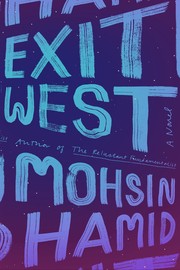
View source
https://openlibrary.org/works/OL17635446WExit West review: migration, desire, and the shape of emotional distance
This Exit West review is a professional assessment of Mohsin Hamid's novel as a controlled study of love under migration pressure. Exit West does not treat romance as escape. It tests whether intimacy can remain legible once war, displacement, and uncertainty become permanent conditions. The answer is not optimistic in a simple way, and that is precisely its strength.
The novel is best read as an argument about attention. What happens to desire when ordinary routines collapse? How do people carry loyalty, shame, memory, and hope when movement itself becomes a daily fact of life? Hamid's answer is not delivered through a thesis paragraph; it is distributed through scenes, tonal changes, and the repeated decisions characters make to stay or leave. This creates a reading experience in which the emotional center is stable but never static.
The first practical implication is that Exit West is not written as comfort reading. Its power depends on precision, not intensity. It asks the reader to track changes in behavior: who speaks, who withholds, who changes habits, and how each person recalibrates selfhood in each new place. That makes the book ideal for a catalog that privileges deliberate reading and category-aware comparison.
Thesis: emotional precision over narrative closure
The central claim of this review is that Exit West performs best when treated as a formally precise romance, not as a purely thematic statement about migration. Its strongest scenes are those where emotional truth emerges through omission and delay. Hamid avoids over-instructing, and in doing so he preserves friction between feeling and action.
In practical terms, this means Exit West gains from a reader who accepts that uncertainty is part of the method, not a flaw. The characters move between locales quickly, and the magical transitions avoid detailed procedural realism. That could be read as an evasion, but in Hamid's framework it becomes a way to keep focus on interpersonal adaptation. The question shifts from "How did they get there?" to "What remains possible between them after they arrive?"
This thesis matters to review quality because a lot of books with big themes flatten into argument when they are too explanatory. Exit West is not flattening. It is compressed, ethical, and structurally calm. Its romance is not sentimental by default; it is a test of whether tenderness can persist when social systems and physical safety fail. In other words, it judges itself less by plot volume and more by relational consistency under pressure.
Form and technique: doors, movement, and restraint
Form is where this novel stakes out its identity. The recurring use of magical doors is one of the most discussed features, but the novelty wears off if we treat it as worldbuilding trivia. The doors are a narrative instrument for acceleration and moral clarity. By skipping long routes, the book spends its narrative energy on what those moves demand of the characters.
In many migration narratives, movement can become a list of trials. Here, movement is a recurring reset button: the characters lose geography, status, and routine with each transition, and with that loss they lose the illusion that continuity is assured. The text then becomes less about location and more about adaptation. That is a subtle but rigorous move, because it lets Hamid stage social pressure without repeatedly rehearsing logistical detail.
Stylistically, Hamid keeps sentences balanced between lyrical and direct. The tone can feel tender and analytical in adjacent stretches, and this oscillation is deliberate. The book avoids decorative overload, which prevents it from becoming a page-by-page emotional declaration. The cost of that discipline is a certain emotional reserve, especially around scenes where some readers expect deeper interior excavation.
The restraint also supports tonal coherence across sections. Exit West can feel intimate in one chapter and distantly observational in the next without dissolving into inconsistency. The emotional logic is not chaotic; it is incremental. For a professional review, that matters, because the book offers a reliable framework for discussing craft: not spectacle, but controlled repetition.
Reader fit: who benefits and who should pause
Exit West is best for readers who want a serious reading contract and are willing to work within formal ambiguity. If your preferred romance asks for frequent emotional payoff, this may be frustrating at first. If your preferred mode values ethical friction, relational discipline, and social implication without melodrama, it will likely hold your attention longer.
The first reader-fit caveat is pacing. Hamid can move quickly between states and locations. Readers who want granular scene-by-scene progression may perceive this as abruptness. A second caveat is tonal minimalism: some scenes remain interpretive, requiring readers to infer motivation rather than receive explicit justification.
The third caveat is thematic intensity. This is a novel that includes migration, war conditions, border anxiety, and prolonged dislocation. Those topics are not background decoration; they are active pressures in the story. Some readers may want to postpone Exit West if they need emotionally restorative reading during a given reading period. That is a legitimate preference, not a reason to dismiss the book.
Importantly, the review has to avoid false universality. Exit West can feel deeply humane in a restrained way, and that restraint can produce a quieter emotional impact than a more overtly sentimental rendering would. In practical catalog use, this means readers who respond well should use the review as a stepping stone to other works in tone-sensitive sequences.
At the category level, this places the title in a productive bridge position between Romance and Literary Fiction Reviews. It is not an accidental crossover; the crossing is the point of the book.
Strengths: what it does exceptionally well
The first strength is conceptual focus. Exit West selects a narrow set of emotional problems and pursues them without excess subplot drift. The book consistently returns to trust, dependence, and the practical ethics of care under pressure. This keeps the reading experience coherent even as setting changes rapidly.
The second strength is comparative value. Because Hamid avoids over-explaining motive, Exit West can be read fruitfully against books with different tonal priorities. The adjacent reviews are useful for this reason. A reader can compare emotional compression with Shadow Spell, compare endurance with The Perfect Hope, then test structural contrast with Dodger. That triangulation is a concrete benefit of this title's place in the catalog.
The third strength is moral subtlety. Hamid does not stage migration as only tragedy or only metaphor. He presents social violence and emotional strain as conditions that reshape ordinary life before they are even fully named. For many readers, this is more realistic than dramatic exposition and more humane than polemic.
From an editorial perspective, this is the kind of strength that scales across a large library: Exit West becomes not only a title to recommend, but a reference point for how readers make distinctions across related shelves and genres.
Cautions and limits: where the method narrows the audience
The most significant limitation is affective reserve. Some readers will not find enough direct psychological intensity in Exit West, especially if they rely on explicit emotional narration to sustain immersion. The prose can feel too controlled at moments, and that control may be interpreted as emotional distance.
Second, the allegorical momentum created by magical migration devices can feel less grounded than expected by readers who want denser realism. The doors are artistically successful, but because they move the plot through symbolic transitions, they trade immediate documentary texture for abstraction. That is not automatically a flaw, but it narrows the book's suitability.
Third, readers with a strong preference for traditional romantic closure may find the ending and the emotional logic incomplete. Exit West offers perspective, not closure as proof of final healing. If your reading criteria require a more explicit resolution, you may be dissatisfied.
Fourth, these themes carry real-world weight: war, borders, displacement, and trauma. The book handles them with dignity, but any review has to treat those themes carefully and avoid extracting them as merely symbolic puzzles. Here, sensitivity is part of the reading contract. If those topics are personally urgent, readers may need a slower preface or adjacent texts before entering.
Context in the catalog: why Exit West remains strategically useful
In this review space, Exit West matters because it models a mature kind of genre conversation. A romance that draws on literary structure can enlarge category logic rather than erode it. That means this title is not "misplaced" in one shelf or the other; it is useful in both.
Within the Online Library structure, this dual placement supports better search behavior and better recommendation ecology. Readers often search by category first and then refine by reading needs. Exit West gives them a strong intermediary step: a book that has recognizable emotional stakes and a formal discipline that rewards comparison.
The same is true when the book is used as a pivot in reading routes. Start with readers who enjoy contemporary love stories with social pressure, then branch toward migration-centered fiction with broader documentary texture. In that movement, Exit West helps train taste around ambiguity tolerance: not every meaningful story asks to be consumed the same way.
The book also supports responsible catalog conversation around contemporary geopolitics without turning the review into policy analysis. A review can remain literary in method while still acknowledging that displacement is not just setting in the text. This supports a more mature internal map for the section, which is a measurable editorial outcome.
Alternatives: practical next reads and sequencing
For readers who like Exit West's conceptual architecture but need stronger explicit psychology, the sequence may move to works that maintain thematic concerns and increase interior depth. For readers who prefer the route of controlled compression but want to test a different social register, a structurally leaner or denser prose book can clarify preference quickly.
An immediate comparative path inside this site is:
- The Perfect Hope for tonal contrast in relationship endurance
- Shadow Spell for a different narrative temperature
- Dodger for a shift in pace and social pressure model
This sequence is not a hierarchy; it is a diagnostic route. Exit West establishes one style of migration and intimacy. The alternatives reveal whether that style aligns with a reader's goals for a given period.
If a reader is exploring the romance-literary bridge, there is also value in revisiting Romance Reviews after Exit West and then stepping back to Literary Fiction Reviews to compare what changes when narrative mechanics and emotional commitment are redistributed.
Final assessment
Professionally, Exit West succeeds when reviewed with the right expectations. It is not a book for every reading mood, but it is a high-quality title for readers who want literary restraint, controlled emotional stakes, and thoughtful engagement with migration and displacement without overexplanation. Its major value is both artistic and editorial: it strengthens a sophisticated reading ecosystem by insisting that romance can remain honest under uncertainty.
The final recommendation is clear. If your next priority is precision, moral subtlety, and comparative reading structure, this is a strong choice. If your priority is immediate emotional saturation or full socio-historical detail, approach it as a purposeful alternative and plan your next title accordingly. Either way, Exit West is no longer just "another romance"; it is a tool for refining taste and building deliberate reading pathways.


