Book review
Firestarter Review
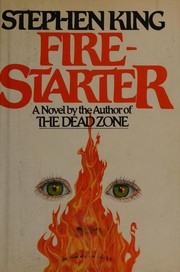
This Firestarter review considers Stephen King's horror novel as a paranoid chase story shaped by child power, government pursuit, family bond, and emotional stakes.
- Author
- Stephen King
- First published
- 1980
View source
https://openlibrary.org/works/OL81623WFirestarter review: Stephen King turns a child-with-powers premise into a hard-running paranoid thriller
This Firestarter review treats Stephen King's novel as both horror and pursuit fiction: a story about extraordinary destructive power, but also a story about what institutions do when they decide a family is easier to classify as a threat than as human. That balance is the book's real hook. Firestarter is not simply a supernatural concept novel about a girl who can start fires with her mind. It is a tense, emotionally anchored chase narrative in which Charlie McGee's ability matters because of what it does to the adults around her, especially her father Andy, and because of how quickly private family life becomes impossible once the government enters the frame.
The novel's thesis is clear and still effective: power is terrifying when it appears in a child, but the larger terror comes from the systems that try to own, weaponize, contain, or explain that child away. King uses that tension well. He gives Firestarter the momentum of a thriller, the pressure of horror, and the bruised emotional logic of a family story. The result is not his most elegant novel, and some sections are more functional than haunting, but its best pages have a fierce directness that makes the book easy to remember.
Readers coming to Firestarter for pure horror should know that the book often behaves like a road chase and conspiracy novel. Readers coming for a straight thriller should know that its strongest moments are emotional and uncanny rather than procedural. It fits best on the border between horror and mystery and thriller, and that border is exactly where it becomes interesting.
The central strength is the bond between Charlie and Andy
What keeps Firestarter from feeling like a cold high-concept exercise is the relationship at its center. Charlie's power is the headline premise, but Andy's protective, frightened, improvisational love is what gives the book its moral shape. King understands that a child with catastrophic ability can become abstract very quickly in lesser hands. She could become only a metaphor, only a plot device, only an excuse for scenes of destruction. Instead, Charlie remains a child first: confused, frightened, learning what she is capable of while sensing that every adult encounter now carries danger.
That choice matters because it resists easy sensationalism. The emotional stakes do not come from asking how spectacular Charlie's power can become; they come from asking what it means for a father to raise, hide, and defend a daughter whose existence attracts predatory attention. Andy is not written as a flawless heroic protector. His fear, exhaustion, and limited control over events give the book much of its urgency. He is trying to make decisions at a speed no parent should have to sustain, under pressure no ordinary family can absorb.
King is especially effective when he shows the family bond as both comfort and vulnerability. Charlie trusts Andy because he is the one adult who is not reducing her to a case, experiment, or weapon. But that same closeness gives the pursuers a point of pressure. The novel understands that love does not make danger cleaner; it makes danger more intimate. Every pursuit scene carries extra force because the reader is not simply tracking escape logistics. The reader is tracking whether a father can keep a child emotionally intact while the world insists on reclassifying her as an asset or a threat.
That is one reason Firestarter tends to work better than many novels built on a similar premise. King does not ask the reader to admire the concept from a distance. He insists on proximity. Charlie's gift is frightening, but the book's emotional grip comes from the terrible normality of parental care under impossible conditions.
Government pursuit gives the novel its paranoia and momentum
The book's other major strength is structural. Firestarter moves with the pressure of pursuit, and that pressure is not decorative. It defines the atmosphere. The novel assumes from early on that once the state decides it has a right to the body, mind, and future of a child, there is no safe neutral ground left. That is the source of the paranoia running through the story.
King turns the government pursuit into more than a villain mechanism. It becomes a worldview. The institutional force chasing Charlie and Andy is frightening because it is impersonal as much as it is ruthless. The people inside it may have different motives, temperaments, or limits, but the organization itself works by converting human beings into projects. That bureaucratic coldness gives Firestarter a different texture from more supernatural King novels. The horror is not built around an ancient curse, haunted location, or hidden monster. It grows from surveillance, classification, control, and the confidence of people who believe that their access to power makes them the rightful interpreters of every crisis.
This is where the thriller mechanics pay off. King knows how to make movement feel desperate rather than adventurous. Escape in Firestarter rarely feels liberating. It feels temporary, improvised, and exhausting. Safe places are provisional. Helpful strangers may matter, but the novel never lets kindness dissolve the larger pressure for long. That rhythm helps the book avoid complacency. Even when one episode resolves, the reader senses that the structure of danger is still intact.
The pursuit element also sharpens the novel's moral contrast. Charlie's power is obviously dangerous, but the book keeps returning to a harder question: what is more frightening, a child who can destroy in moments of panic, or an institution that believes it can claim permanent authority over that child? Firestarter does not treat that question lightly, and it is one reason the novel still reads as more than a period curiosity.
Child power is the premise, but fear comes from responsibility
One of King's better decisions in Firestarter is that Charlie's ability is never interesting merely because it is destructive. Many speculative thrillers flatten themselves by equating power with excitement. Firestarter understands that frightening power in a child immediately creates an ethical drama: who teaches restraint, who defines danger, who gets to decide what counts as safety, and what happens when the adults making those decisions are compromised by fear or ambition?
Charlie is compelling because she is not written as an all-purpose symbol. She is a girl trying to understand impulses, anger, fear, and self-control under circumstances that would overwhelm most adults. King gets considerable mileage from that tension. A child is expected to learn boundaries slowly, through correction, care, and ordinary mistakes. Charlie cannot afford ordinary mistakes. The book derives real suspense from that mismatch between development and consequence.
This is also where the family story and the horror story meet. Andy does not merely need to hide Charlie from a predatory institution; he needs to help her live with herself. That challenge gives the book a deeper emotional register than its premise initially suggests. The danger is not only external capture. It is internal damage: shame, confusion, panic, anger, the fear of becoming what everyone already assumes she is.
King is smart enough not to oversimplify that burden. Charlie's power creates sympathy, but it also creates strain. The novel does not pretend that love removes the practical terror of her abilities. Instead, it lets both truths stand. She is a child deserving care, and she is someone whose loss of control can carry devastating consequences. That duality keeps the book from becoming sentimental.
If the novel has lasting force, it is here. Firestarter is not simply asking whether psychic power is scary. It is asking what kind of world turns a frightened child into a strategic object, and what kind of damage follows when adulthood responds to vulnerability with domination instead of protection.
Pacing, structure, and why the book reads so quickly
Firestarter is a good example of Stephen King writing for propulsion without abandoning character stakes. The book is not especially ornate, and it does not need to be. Its prose tends toward clarity and forward motion, which suits a narrative built on escape, concealment, confrontation, and narrowing options. King wants the reader to feel that events are always pressing from behind, even in scenes that appear quieter on the surface.
That momentum is one of the novel's clearest strengths. King knows how to build chapters around immediate objectives while still feeding the larger emotional pattern. Readers often talk about pacing as if it only means speed, but Firestarter shows that pacing is also a matter of pressure distribution. The novel accelerates because it keeps changing what is at stake within the same chase. At one moment the issue is physical safety; at another it is trust, exposure, fatigue, or Charlie's ability to endure fear without losing control. That variation helps the book avoid monotony.
At the same time, Firestarter is not perfectly even. Some passages feel designed primarily to deliver information, reposition characters, or tighten the mechanism of pursuit. Those sections are readable, but they can feel more efficient than evocative. Readers who want every chapter to have the same imaginative density may notice the difference.
Still, the overall structure works. King understands that the strongest chase novels are not fueled by motion alone; they are fueled by consequences. Movement matters because stopping is worse. That principle guides Firestarter from beginning to end. The book is fast because the characters cannot afford delay, not because the author is merely trying to impress the reader with pace.
This makes the novel a particularly good fit for readers who enjoy suspense fiction but want more emotional voltage than a standard manhunt plot usually offers. If Cujo shows King stripping a threat down to brutal immediacy, and Skeleton Crew shows his range in shorter forms, Firestarter sits between those modes: broad enough to build sustained pursuit, focused enough to keep the fear personal.
Where Firestarter shows its age or its limits
Calling Firestarter effective does not require pretending it is flawless. One of the novel's limits is tonal bluntness. King is often at his best when bluntness carries conviction and momentum, and there is plenty of that here. But there are also moments when the book's explanatory habits or heavy emphasis can feel less refined than the strongest work in his catalog. Readers who prefer horror with a more controlled, suggestive, or stylistically polished surface may find parts of the novel rough-edged.
The book can also feel more interested in pressure than in subtlety. That is not automatically a defect; it is part of the design. Firestarter wants to move. It wants pursuit, confrontation, and escalating danger. But the trade-off is that some secondary material functions mainly to support the chase rather than to deepen atmosphere. The novel has atmosphere, certainly, but its identity rests less on slow dread than on mounting threat.
Another caution concerns reader expectation around horror. Anyone coming in looking for occult mystery, haunted-space unease, or the uncanny drift of more atmospheric supernatural fiction may find this book more grounded in institutional menace than in eerie mood. Its fear is modern, organized, and coercive. That can be a strength, yet it means the novel belongs to a different branch of horror than ghost stories or Gothic dread.
There is also a limit in how directly the book announces some of its thematic material. Firestarter is not shy about what it thinks of domination, secrecy, and state power. Many readers will appreciate that clarity. Others may wish the novel trusted implication a little more often. Still, even where the book is broad, it remains purposeful. Its roughness is often the roughness of urgency rather than confusion.
For most readers, then, the question is not whether the novel has limitations. It does. The better question is whether its velocity, emotional core, and paranoid intelligence outweigh them. In my view, they do.
Reader fit: who should read Firestarter and who should skip it
This is an easy book to recommend to the right reader and an easy book to mis-sell to the wrong one. Firestarter is best for readers who want Stephen King in accessible, high-pressure mode: less interested in labyrinthine mythology than in what happens when fear, authority, and family loyalty collide under extreme conditions. If you like stories where a powerful child is treated not as a fantasy mascot but as the center of a moral emergency, this novel should land well.
It is also a strong pick for readers who enjoy conspiratorial tension without needing elaborate world-building. The speculative premise is clear, but King does not burden the novel with excessive system-building. He keeps the focus on pursuit, manipulation, and survival. That makes the book inviting for readers who want genre energy without a lot of explanatory scaffolding.
Readers who may want to look elsewhere include those seeking a quieter literary study, a deeply interior psychological novel, or horror built primarily from atmosphere and ambiguity. Firestarter has emotional stakes and thematic weight, but it is still a forceful, externalized novel. It pushes forward. It does not linger for pages in interpretive uncertainty.
It also may not be the ideal starting place for readers who want King's most formally accomplished work. What it offers instead is sharp readability, a memorable core relationship, and a sustained sense of institutional threat. For many readers, that combination is more than enough.
As a route through the site, this novel makes sense for readers browsing between horror and mystery and thriller or looking for adjacent King titles such as Cujo and Skeleton Crew. Those books show different aspects of his range, while Firestarter stands out for the way it fuses chase momentum with parental dread.
Context, comparisons, and what makes this one distinct
Within Stephen King's body of work, Firestarter occupies a useful middle ground. It is not as sprawling as his larger epics, not as stripped-down as his leanest horror, and not as invested in ensemble breadth as some of his town-sized narratives. What distinguishes it is concentration. The premise is clean, the emotional line is clear, and the antagonistic force is organized enough to give the story a relentless direction.
That concentration is part of why the novel remains readable even when some stylistic seams show. King does not need a complicated architecture to make the book effective. He needs the reader to believe three things: Charlie matters, Andy's protection matters, and the people pursuing them will not stop on humane terms. Once those conditions are locked in, the novel can generate urgency almost automatically.
Compared with more atmospheric horror, Firestarter is less about lingering in mystery than about exposing systems of control. Compared with a pure thriller, it is more morally and emotionally charged. Compared with speculative fiction built around gifted children, it is more suspicious of the institutions that surround the gift than enamored of the gift itself. That combination gives it a durable identity.
It is also a reminder that King often works best when the supernatural or speculative element creates pressure on ordinary human bonds rather than replacing them. Charlie's power is dramatic, but the book becomes meaningful because that power changes what parenting, fear, trust, and responsibility look like under surveillance. That is a sturdier foundation than spectacle alone.
Final verdict
Firestarter is worth reading because it understands that the scariest part of its premise is not fire. It is custody, control, fear, and the speed with which institutions strip vulnerable people of privacy and dignity once they decide those people are useful. Stephen King builds a strong horror-thriller out of that insight. The novel's chase structure gives it pace, Charlie and Andy give it heart, and the government's pursuit gives it a lasting paranoid charge.
Its limits are real. The prose is not always graceful, some material is more workmanlike than haunting, and readers looking for subtle atmospheric horror may prefer a different branch of the genre. But judged on what it is actually trying to do, Firestarter succeeds more often than it fails. It is tense, emotionally legible, and serious about the human cost of turning exceptional difference into a pretext for domination.
For readers who want Stephen King writing with urgency, familial feeling, and a sharp instinct for institutional menace, this remains a strong pick. It is not just a book about a child with dangerous power. It is a book about what love has to look like when protection itself becomes a form of resistance.


