Book review
Imagined Communities Review
Benedict Anderson explains how nations become emotionally powerful communities through print, institutions, memory, and shared imagination.
- Author
- Benedict Anderson
- First published
- 1983
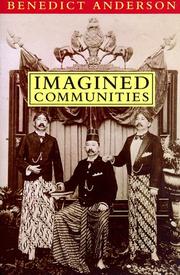
View source
https://openlibrary.org/works/OL1702855WImagined Communities review: why the central idea still matters
This Imagined Communities review begins with the distinction on which Benedict Anderson's entire argument depends: an imagined community is not an imaginary one. Calling a nation imagined does not mean that it is fraudulent, trivial, or unreal. It means that most members of even a small nation will never meet one another, yet they can understand themselves as participants in a shared political life. The nation exists through practices of representation, recognition, and memory that allow strangers to picture a bond among themselves.
That distinction gives the book both its force and its continued usefulness. Anderson does not ask only which doctrines nationalists profess. He asks how the nation became a form through which people could experience belonging, sacrifice, continuity, and political destiny. His answer crosses media history, language, religion, empire, administration, and public ritual. Nations are not presented as natural containers waiting to be discovered. They emerge under historical conditions, take recognizable forms, and then become available for adaptation in settings far removed from those in which earlier versions appeared.
The book's thesis is therefore more subtle than the slogan often detached from it. Anderson is not saying that people merely invent stories and then mistake them for facts. He is explaining how institutions and cultural forms make a vast community imaginable in the first place. That account is at its best when it joins abstract concepts to ordinary experiences: reading a newspaper, encountering a standardized language, seeing a map, participating in a ceremony, or learning a national history. These repeated acts help transform political space into something that feels collective and continuous.
Print capitalism turns strangers into contemporaries
The most famous mechanism in Anderson's account is print capitalism. The phrase names the meeting of commercial publishing with expanding vernacular readerships. Printed books and newspapers did more than distribute ideas. They helped stabilize languages, establish shared fields of communication, and let dispersed readers imagine that countless other people were receiving the same narratives in roughly the same social moment.
Anderson's treatment of novels and newspapers is particularly illuminating because he focuses on form as well as content. A novel can hold separate lives within one temporal frame, inviting a reader to perceive people who never meet as part of the same social world. A newspaper gathers unrelated events under a common date and presents their recurrence as normal. Reading it becomes a private action oriented toward an unseen public performing a similar action. The resulting solidarity is neither face-to-face nor purely abstract: it is mediated, habitual, and synchronized.
This is one of the book's greatest strengths. Rather than reducing nationalism to propaganda delivered from above, it shows how a social imagination can be supported by technologies, markets, and routines that do not need a single controlling author. Print entrepreneurs seek readers; administrators favor usable languages; readers gain access to wider conversations. These motives intersect without becoming identical. The nation takes shape through that intersection.
The argument also encourages productive questions about later media without pretending to have answered them in advance. A reader can carry Anderson's method into radio, television, or networked communication by asking what kinds of public, simultaneity, and boundary each medium makes perceptible. The book supplies the question more reliably than it supplies a universal answer, and that restraint is part of its durability.
From sacred order and dynasty to national time
Anderson places nationalism within a larger transformation of how political communities locate themselves in time and space. Earlier religious and dynastic orders could connect authority to sacred language, cosmology, lineage, and hierarchy. Their worlds were not simply primitive nations under another name. They organized belonging according to different principles. As those principles lost some of their monopolizing power, new ways of imagining continuity became possible.
The shift matters because nationalism does not merely replace one ruler with another. It recasts the relation between people, territory, history, and sovereignty. A national community is understood as bounded: it exists alongside other nations rather than aspiring, in principle, to contain all humanity. It is sovereign because its legitimacy belongs to a political people rather than to a sacred dynasty. It is communal because deep inequality does not prevent members from imagining a horizontal fellowship.
Anderson's analysis is strongest when these features remain in tension. The rhetoric of fellowship can coexist with hierarchy, exclusion, and coercion. Nationalism can challenge an empire, and a state can use national forms to consolidate authority. A cultural form is not assigned one moral direction. It can support emancipation in one context and domination in another. That refusal to make nationalism either wholly liberating or wholly reactionary keeps the book analytically useful.
The comparative scale, however, asks a great deal from the reader. Historical cases pass quickly, and the line of argument matters more than exhaustive treatment of any one place. Readers who expect a country-by-country narrative may find the movement abrupt. The better approach is to treat the cases as tests of a model: note what each contributes, then return to the larger account of how national time and political legitimacy are being reorganized.
The Americas, Europe, empire, and modular nationalism
One of Anderson's major interventions is to resist a purely European origin story. His discussion of creole communities in the Americas emphasizes colonial administration, restricted careers, travel, and print as conditions under which locally born elites could imagine political units distinct from imperial centers. This changes the direction of explanation. National forms do not simply radiate outward from an industrial European core; they develop through imperial structures and then become available for reuse.
The idea of modularity is essential here. Once a national form becomes recognizable, later movements can adapt it without reproducing its original circumstances. Languages, schools, bureaucracies, censuses, maps, museums, and political organizations can be combined in new ways. European linguistic nationalism, official nationalism pursued by dynastic states, and anticolonial nationalism are consequently related without being treated as copies of a single prototype.
This comparative ambition is impressive, but it creates the book's most important limitation. Modularity can clarify recurring forms while smoothing differences in social conflict, political economy, gender, race, religion, and local institutions. Anderson does not claim that every case is identical, yet the speed and elegance of the synthesis can tempt readers to use the model too confidently. The best reading keeps asking what the framework reveals and what a closer regional history would complicate.
For that reason, Imagined Communities is best approached as a conceptual map rather than a final inventory of causes. It identifies mechanisms by which national belonging becomes thinkable and repeatable. It does not eliminate the need to study who controls those mechanisms, who is excluded from the public they create, or why similar institutions produce different political outcomes.
Census, map, museum, and the administration of identity
The later parts of Anderson's argument sharpen its attention to colonial knowledge. The census classifies populations, the map turns territory into a bounded and reproducible shape, and the museum orders a past that can be made to support political identity. These are not neutral mirrors of communities already formed. They are administrative and representational instruments that help define what can be counted, seen, inherited, and governed.
The map is especially powerful because its outline can detach from technical geography and become an emblem. Repeated in classrooms, offices, media, and public design, the territorial shape becomes recognizable as the nation's body. The census likewise converts fluid identities into official categories, while the museum arranges objects and monuments within narratives of possession and descent. Together these institutions make abstractions tangible.
This part of the book pairs especially well with Edward Said's Orientalism. Said concentrates on the authority involved in representing peoples and regions, while Anderson examines how classification and representation help constitute political community. The books differ in scope and method, but reading them together makes it easier to see that knowledge is not merely commentary on power. Categories, images, and scholarly conventions can become part of the machinery through which power defines its objects.
Anderson also draws attention to memory and forgetting. National histories often require selective narratives that turn conflict into ancestry and discontinuity into inheritance. The point is not that every public memory is consciously fabricated. Rather, collective identity depends on narrative choices about what counts as origin, loss, victory, kinship, and continuity. Remembering is organized, and what cannot fit the national story may be renamed, displaced, or absorbed.
What Anderson explains well, and what remains open
The book's clearest achievement is to make national attachment intelligible without treating it as biological destiny or simple irrationality. People can feel profound loyalty toward strangers because the forms that mediate collective life are woven into language, time, space, education, and remembrance. This does not make the loyalty benign, but it explains why factual correction alone rarely dissolves it.
A second strength is the integration of culture and institutions. Anderson moves across literary form, commercial publishing, bureaucracy, pilgrimage, education, and commemoration. The result avoids a narrow choice between ideas and material structures. Markets help circulate languages; states classify populations; stories organize time; symbols make territory visible. National consciousness grows through their interaction.
The cautions follow from the same breadth. The prose is conceptually compressed, and the historical references can outrun readers who lack the surrounding context. Some examples carry more argumentative weight than their brief treatment can fully support. The model also leaves open difficult questions about unequal access to print, differences within national publics, and the force of class or other social divisions. These are reasons to read further, not reasons to dismiss the framework.
Readers should also resist turning one memorable phrase into a universal shortcut. Not every large group is a nation, not every shared story produces sovereignty, and not every media audience becomes a political people. Anderson's value lies in the specific combination of limited community, sovereignty, historical transformation, and mediated imagination. Removing those conditions produces a looser claim than the book actually makes.
Who should read Imagined Communities
The ideal reader is someone studying nationalism, political identity, colonialism, media history, or collective memory who wants a framework capable of connecting those fields. It is especially useful for students beginning a research project because it generates testable questions: Which language reaches a public? How is territory pictured? What calendars and ceremonies synchronize citizens? Which past is institutionalized? Who appears inside the community's boundaries, and who does not?
General readers can also benefit, provided they are comfortable with a comparative argument that assumes attention and occasional background checking. This is not a chronological primer on every nationalist movement, and it is not a practical guide to contemporary politics. Its reward is a vocabulary for noticing how belonging is made durable. Readers who prefer one deeply narrated case before encountering theory may want to start elsewhere and return once the conceptual problem feels concrete.
The book is less suitable for anyone seeking a single-cause explanation. Economics, military conflict, ethnicity, religion, and elite strategy all matter, but Anderson's purpose is to explain the cultural form that lets these forces become national. That focus is a strength when understood as a choice and a frustration when mistaken for a complete theory of political change.
Alternatives and the best route through related books
Different companion books clarify different parts of Anderson's achievement. Readers most interested in representation, empire, and the authority to classify should continue with Orientalism. It offers a more sustained confrontation with how knowledge about other societies can be organized within unequal relations of power. The overlap is not redundancy: Said asks who has authority to represent, while Anderson asks how representational systems help communities imagine themselves.
Readers more interested in war, civic identity, and political memory can turn to History of the Peloponnesian War. Thucydides offers an ancient historical world rather than a theory of modern nationalism, which makes the contrast valuable. Reading the two together separates intense attachment to a polity from the specifically modern national forms Anderson studies.
For a sharply different account of political order, individual liberty, and the relation between markets and government, Capitalism and Freedom is the useful alternative. Friedman's normative argument asks what institutions freedom requires; Anderson's historical analysis asks how people come to imagine a national community as the field in which political claims are made. The comparison reveals how differently books can connect markets, state power, and collective identity.
The best sequence depends on the reader's question. Start with Anderson for the architecture of national imagination, move to Said for representation and empire, then choose Thucydides for historical contrast or Friedman for ideological contrast. That route preserves what is distinctive about Imagined Communities: it is not the last word on nationalism, but it remains one of the most productive ways to begin asking how nations became imaginable, portable, and emotionally compelling.


