Book review
In the Hand of the Goddess Review
This In the Hand of the Goddess review considers Tamora Pierce's YA fantasy sequel through heroine arc, fantasy politics, pacing, reader fit, and alternatives.
- Author
- Tamora Pierce
- First published
- 1984
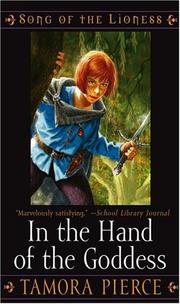
View source
https://openlibrary.org/works/OL29250WIn the Hand of the Goddess review: why the second volume matters
This In the Hand of the Goddess review argues that Tamora Pierce's sequel matters because it does more than extend Alanna; it tightens the whole idea of the series. The book keeps the energy of a YA fantasy adventure, but it asks a harder question than the first volume does. What happens after a heroine has proven she can enter the room? How does she live inside the room once other people, institutions, and expectations begin to respond to her presence? That shift from entry to consequence is what gives In the Hand of the Goddess its lasting shape.
Placed on the fantasy shelf, the novel is easy to recognize. It has the familiar pleasures of a secondary world, courtly pressure, magic, and a heroine whose competence has to be earned rather than bestowed. But it also belongs on the young adult path because its emotional center is adolescence under scrutiny. The book is interested in training, reputation, secrecy, and the awkward business of becoming yourself before the world is ready to recognize that self. That combination is why it still earns a place in a serious review library.
The useful way to read it is not as a novelty object or a nostalgia item. It is a bridge that turns the first book's premise into a broader argument about power. Pierce is not simply asking readers to cheer for Alanna. She is asking what public authority costs, what private life requires, and how long a person can keep improvising around the rules of institutions that were never designed to welcome her.
Alanna's arc in the middle of a quartet
The most important thing In the Hand of the Goddess does is deepen Alanna's arc without flattening it into a simple victory lap. Alanna is about getting into the system. In the Hand of the Goddess is about what happens when getting in is no longer enough. The heroine still has to prove herself, but the proof has changed shape. It is no longer only about competence in a training space. It is about endurance, judgment, and the ability to carry risk without losing clarity.
That is a subtle but meaningful difference. A lot of fantasy sequels simply widen the map, add larger threats, and call that growth. Pierce does something more grounded. She keeps the scale relatively human and lets the internal stakes get sharper. Alanna's life becomes less about the thrill of disguise and more about the cost of sustaining a chosen path in a world that keeps testing her from different angles. That gives the novel a cleaner sense of pressure than a mere re-run of the first book would have.
The heroine arc also works because Pierce refuses to make Alanna abstract. She is brave, but not magically self-consistent. She is capable, but not invulnerable. She has to manage affection, ambition, embarrassment, duty, and physical vulnerability at the same time. Readers who liked her in Alanna but wanted to see what happens after the initial premise has settled will find this volume especially satisfying. It feels like a real step forward, not just a second lap.
For that reason, the novel rewards readers who pay attention to character development more than plot summary. The story matters, of course, but the real pleasure is seeing how a heroine becomes legible to herself while remaining partly hidden from the people around her. That tension is the engine of the book.
Fantasy politics and court pressure
One of the reasons In the Hand of the Goddess feels fuller than a simple training story is that the political environment is active, not decorative. Pierce's fantasy world is not presented as a map with names on it; it is a set of social rules that shape behavior. Court life, hierarchy, patronage, expectation, and reputation all matter because they determine what kinds of action are possible and what kinds of mistakes become expensive.
That is a real strength. The politics in this novel are not the kind that reward diagramming a family tree for twenty minutes. They are the kind that show up in decisions about where someone can stand, who gets taken seriously, and how much room a young person has to fail before being defined by that failure. The book understands that institutions are not only places of power. They are machines that teach people how to read each other. Alanna has to move through that machine while keeping enough secrecy to survive it.
The fantasy element supports that pressure rather than replacing it. Magic is present, but it does not swallow the human scale of the story. Instead, it intensifies the social stakes by making Alanna's life feel even more contingent. The result is a book where court politics and magical possibility are intertwined in a practical way. The characters live in a world where status matters, but so does courage, and where the extraordinary is never fully separate from the ordinary discipline of getting through the day.
That balance helps explain why the novel still works for readers who are not usually drawn to sprawling epic fantasy. It is ambitious, but not bloated. It is political, but not talky. It is interested in systems, but it never loses track of the person moving through them.
Style, structure, and pacing
Pierce's style is one of the book's quiet strengths. She writes with clarity, speed, and just enough warmth to keep the emotional stakes from feeling mechanical. The prose is not the main event, and that is part of the design. It serves action, tension, and character change without drawing so much attention to itself that it overshadows the story. For a YA fantasy adventure, that restraint is often exactly right.
The pacing is similarly practical. This is a middle-volume novel, so it has to manage continuity while still feeling alive on its own terms. Pierce mostly succeeds by keeping the chapters focused and the scene work efficient. The book has a sense of forward movement that comes from consequence rather than constant surprise. Events matter because they alter relationships, obligations, and self-understanding.
Some readers will feel the transitional nature of the book more strongly than others. That is fair. In the Hand of the Goddess is not trying to hide the fact that it sits between an opening and a larger payoff. But being a bridge is not the same as being thin. In fact, the book's middle position is what gives it so much of its value. It has room to deepen the heroine, complicate the social world, and prepare later development without feeling like filler.
The structure also works because Pierce knows when to let a moment breathe and when to move on. She does not over-explain the setting, and she does not linger so long on a single emotional beat that the novel loses its momentum. That balance makes the book approachable for younger readers while still leaving enough texture for adult readers to appreciate on a second pass.
Who this book fits best
The ideal reader for In the Hand of the Goddess is someone who wants fantasy to be emotionally serious without becoming grimly overworked. If you enjoy heroines who earn their authority through training, judgment, and persistence, this is a strong fit. If you like courtly settings, institutional pressure, and adventure that grows out of social constraint rather than constant spectacle, the book will likely land well.
It is also a good fit for readers who want a series that respects continuity. The novel assumes that the first book mattered. It does not flatten earlier developments just to reset the board. That makes the reading experience richer for anyone who values long-form character development. The payoff is cumulative rather than explosive.
Readers who may want something else include those looking for denser prose, a darker political imagination, or more elaborate worldbuilding. If you want fantasy that is more mythic and inward, A Wizard of Earthsea is the cleaner contrast. If you want heroine-centered adventure with a different relationship to power and identity, The Blue Sword will feel more sweeping. And if you want to stay inside Pierce's Tortall world while following the same broad energy into a later stage, The Woman Who Rides Like a Man is the most natural next stop.
For some readers, the strongest appeal will be how the book makes competence feel lived in rather than symbolic. Alanna is not just a statement about possibility. She is a person who has to keep making difficult adjustments in public. That kind of storytelling tends to age well because it is built on pressure the reader can still feel.
Reader fit, cautions, and context
The main caution is that In the Hand of the Goddess rewards the reader who comes in prepared for a sequel, not a reboot. If you expect a fresh premise with the first book's emotional and narrative work already erased, the novel will feel narrower than it is. It is better understood as a continuation that deepens the stakes of the original setup.
Another caution is that the book's social world is legible more than it is lush. Pierce is very good at making status and obligation easy to follow, but she is not writing the kind of dense political fantasy that invites line-by-line parsing of dynastic detail. That is not a flaw, but it does shape the reading experience. The book is direct, accessible, and focused on consequences rather than on elaborate geopolitical display.
Context matters here too. This is early-1980s YA fantasy, which means the book comes from a period when directness and momentum were often valued over psychological sprawl. Some readers will appreciate that economy immediately. Others may want a more contemporary novel's emphasis on interior complexity. The point is not to order those approaches absolutely. It is to know what the book is trying to do before deciding whether it does it well.
Seen in the wider catalog, In the Hand of the Goddess is useful because it helps readers compare different kinds of female-centered fantasy. It is not trying to be the most revolutionary text in the field. It is trying to be a sturdy, intelligent one that turns a heroine's movement through institutions into a real narrative problem. That makes it a good library book, not just a series installment.
Alternatives and reading routes
The cleanest route through the book is to start with Alanna, then move here, then continue to The Woman Who Rides Like a Man. That sequence lets you feel the escalation from entry, to consolidation, to deeper responsibility. It is a particularly helpful route for readers who care about character growth more than isolated plot summaries.
If you want a different Pierce entry point after this one, Wild Magic is a useful contrast. It shifts the emotional texture and the shape of its central conflict while keeping Pierce's interest in capable young protagonists and practical stakes. Reading the two together clarifies how flexible Pierce can be within a broadly similar YA fantasy frame.
If you want to widen the comparison beyond Pierce, browse the site's fantasy and young-adult categories after finishing this review. Those shelves will help you see whether what you loved here was the heroine arc, the court pressure, the brisk pacing, or the way the book keeps fantasy grounded in social consequence.
The point of these routes is not to treat In the Hand of the Goddess as a waypoint with no value of its own. It has value because it makes the next choice sharper. Readers learn more about their own tastes when they move from one carefully chosen fantasy to another than when they simply accept a generic recommendation.
Final assessment
In the Hand of the Goddess succeeds because it respects the difficulty of continuation. It does not assume that a strong first book automatically creates momentum. Instead, it builds a second volume that deepens its heroine, gives its court world more pressure, and keeps the fantasy elements tied to the human problem at the center of the series.
That makes it a very good recommendation for readers who want YA fantasy with real spine. It is accessible, but not disposable. It is adventurous, but not loud for the sake of noise. It is most satisfying when read as part of a larger Tortall route, but it still has enough identity to justify close attention on its own.
For Online Library, the book earns its place because it helps readers decide what kind of fantasy sequel they actually want. If that sounds modest, it is only because good sequels often are. The best ones do not chase novelty at any cost. They make the original premise mean more. That is what In the Hand of the Goddess does.


