Book review
Judy Moody, Girl Detective Review
A professional Judy Moody, Girl Detective review focused on comic detective play, reader fit, series context, and comparisons for families and educators.
- Author
- Megan McDonald
- First published
- 2010
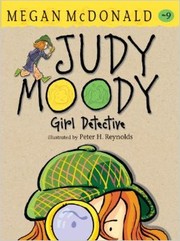
View source
https://openlibrary.org/works/OL14910940WJudy Moody, Girl Detective review: comic detection, child logic, and classroom-ready curiosity
This Judy Moody, Girl Detective review treats Megan McDonald's book as a comic detective story for younger readers rather than as a high-stakes mystery. That distinction matters. The book's real subject is not crime or danger in any adult sense, but the way a lively child turns clues, assumptions, and half-seen details into a performance of competence. Read that way, Judy Moody, Girl Detective becomes easy to value on its own terms: it is a book about noticing, improvising, exaggerating, and making sense of the world with more confidence than precision.
That is also the thesis of this review. The book works because it understands that children often approach mystery as a game of identity before it becomes a game of evidence. Judy is not only trying to solve something; she is trying on the role of someone who solves things. The result is playful, readable, and broadly useful for families and educators who want a story that invites conversation about observation, inference, and point of view.
On the site, the book sits under Mystery and Thriller Reviews, but readers should think of that shelf as a starting point rather than a final label. The book also has a natural place in Literary Fiction Reviews insofar as it is really interested in voice, character, and social comedy. It is less a puzzle box than a personality engine.
What the detective frame gives the book
The detective frame is the book's organizing trick, and it is a good one. It lets ordinary childhood material feel charged without needing to borrow adult menace. Small events can matter because detective stories teach readers to treat small events as meaningful. A missing object, a suspicious remark, a rumor, a misunderstanding, or a dramatic interpretation can all become part of the action. That gives the book movement, but it also gives it shape. Children know what kind of thinking they are supposed to do here, even if the book is not asking them to solve a formally intricate mystery.
That matters because Judy Moody is strongest when the narrative stays close to her mind. The pleasure is not only in what happens, but in the comic mismatch between Judy's certainty and the scale of the situation. She treats her own perspective as if it were evidence. That is funny, but it is also psychologically recognizable. Many young readers will understand the impulse immediately, because childhood is full of moments when a feeling arrives first and the explanation comes later.
The book also benefits from being specific about ordinary life. Detective fiction often depends on a hidden world behind the visible one. Here, the hidden world is the everyday one: school, family routines, friendships, attention spans, and the endless negotiation of status that children perform without using adult vocabulary. The detective setup makes those ordinary pressures legible without draining them of humor. That is a real craft achievement, even when the book keeps its ambitions modest.
Reader fit for children, families, and educators
For children, especially early independent readers and fans of character-driven chapter books, the appeal is direct. Judy Moody, Girl Detective offers momentum, a strong personality, and the sense that a reader can enter the story without needing to master a large invented world. It rewards readers who like confidence, mischief, and the pleasure of seeing a plan unfold even when the plan is slightly overblown.
For families, the book has useful read-aloud value. It is the kind of story that can lead to quick, practical questions: What counts as a clue? Why does Judy think that matters? Where is she making a good guess, and where is she simply projecting? Those questions are not academic in a stiff way; they are the natural byproduct of a narrative that keeps turning ordinary experience into interpretation. A parent or caregiver does not have to lecture to make the book useful. The book itself creates opportunities to pause and talk.
Educators can use the book in a similar way. It is especially handy for lessons on inference, perspective, characterization, and genre. A classroom discussion can ask what makes a story feel like a detective story even when the stakes are low. It can also ask how a narrator's confidence shapes the reader's response. Because the book is accessible, it can help younger students practice literary ideas without feeling as though they are being handed a worksheet disguised as reading.
That said, reader fit depends on temperament. Some children will love Judy's intensity and comic self-importance. Others will prefer a quieter protagonist or a tighter, more conventional mystery. The book is friendly, but it is not neutral. It wants readers to enjoy a character with edge.
Strengths of Judy Moody, Girl Detective
The first major strength is voice. A book like this rises or falls on whether the main character feels vivid enough to carry repeated comic pressure, and Judy Moody does. She is broad without becoming blank. Her feelings have volume, and the book knows how to use that volume for humor. The reader is invited to laugh at Judy, but also with her, because the book does not treat her as a fool. It treats her as a child whose imagination is often ahead of her judgment.
The second strength is structure. The detective premise gives the book a visible spine, but the story does not become mechanical. It keeps moving because curiosity itself becomes the motor. That is a good match for younger readers, who often respond well to books that make questions feel active rather than abstract. In that sense, the book does a better job than many titles of translating "What is going on?" into a genuine reading pleasure.
The third strength is emotional accessibility. Judy Moody, Girl Detective does not need heavy drama to matter. It understands that child readers care deeply about status, recognition, embarrassment, competence, and belonging. Those concerns may look small from a distance, but the book treats them with respect. That is one reason the comedy lands: the story does not mock the scale of childhood feelings, even when it exaggerates their expression.
For readers looking to compare it with other mystery-minded books in the library, The Mystery of The Strange Bundle and The Secret of Terror Castle are useful contrasts because they make the mechanics of mystery more visible. Stillwatch moves in a far more adult and suspense-driven direction, which helps show how light Judy Moody's detective play really is. Those links matter because they clarify range, not because they flatten the books into the same thing.
Cautions and limits
The main caution is simple: this is not the place to go if you want a tightly engineered mystery with serious suspense. The title promises detective work, but the book's strongest interest is comic characterization, not procedural complexity. Readers hoping for layered misdirection, dramatic peril, or a carefully hidden solution may find the stakes too gentle.
That does not make the book weak. It just means the book should be judged by the promise it actually keeps. Its detective business is playful, not exhaustive. The pleasure is in the motion of thinking, not in the elegance of a final reveal. Families who go in expecting a miniature detective adventure will probably be satisfied. Families who expect a harder mystery may feel that the book stops short of the tension they wanted.
Another limit is repetition. A series book has to keep its hero recognizable, and that means some attitudes will recur. Judy's intensity, certainty, and theatrical self-confidence are part of her charm, but they can also become a hurdle for readers who prefer more restraint. The book works best for readers who enjoy a protagonist with strong edges and do not need constant emotional moderation.
Finally, the humor is best understood as character-based rather than joke-driven. If a reader wants a story built on elaborate set pieces or rapid-fire punch lines, the book may feel lighter than expected. If the reader wants a comic voice that turns thought itself into entertainment, it is much more successful.
Series context and what to read next
As part of the Judy Moody series, this book depends on the broader pleasure of spending time with a familiar personality. That series context helps the book. Readers who already know Judy bring an expectation of exaggerated confidence, quick mood shifts, and an ongoing tug-of-war between self-image and reality. The detective angle gives those traits a fresh costume, but the series identity remains visible beneath it.
For readers new to the series, that means two things. First, this volume is approachable on its own because the setup is intuitive. Second, the larger series may be the better place to start if the reader wants Judy in her more typical mode before seeing how she behaves as a detective. The detective frame is a variation, not the whole definition of the character.
If the goal is to stay in a similar neighborhood, the best next steps are the related books already in this catalog: The Mystery of The Strange Bundle, The Secret of Terror Castle, and Stillwatch. The first two help younger or family-oriented readers see how mystery can be playful and structurally clear. The third is a stronger reminder that suspense can become much darker, more adult, and more morally charged.
That comparison route is useful because it shows where Judy Moody, Girl Detective belongs. It is not trying to be an adult thriller, and it is not trying to be a puzzle story in the strictest sense. It is a book about the exhilaration of making a story out of observations. For the right reader, that is enough.
Final assessment
The final judgment on Judy Moody, Girl Detective is favorable. It is a good book for young readers who enjoy personality, motion, and a detective frame that keeps curiosity at the center. It is also a practical choice for families and educators because it gives adults an easy way to talk about clues, inference, and narrative voice without turning reading time into a seminar.
Its limitations are real, but they are mostly limitations of expectation. If you want intricate mystery architecture, this is not the volume to pick up first. If you want a comic children's book that uses detective play to sharpen attention and keep a lively character in motion, it does its job well. That makes it a useful title in the catalog and a sensible recommendation for readers whose tastes lean toward energetic chapter books.
So this Judy Moody, Girl Detective review comes down to a narrow but strong claim: the book is best when read as playful detection with a comic pulse, not as suspense in the adult sense. On those terms, it earns a place on the shelf and gives readers a clear idea of what kind of reading experience they are about to have.


