Book review
Marlfox Review
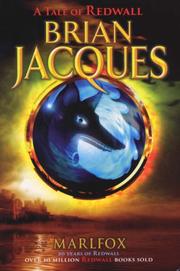
This Marlfox review assesses Brian Jacques's Redwall fantasy through reader fit, strengths, cautions, context, and alternatives.
- Author
- Brian Jacques
- First published
- 1998
View source
https://openlibrary.org/works/OL465915WMarlfox review: a Redwall novel that leans hard into menace and momentum
Any worthwhile Marlfox review has to start by separating the book from the softer assumptions people sometimes bring to Redwall. Brian Jacques is certainly interested in warmth, ritual, feasting, and the sustaining pleasures of community, but Marlfox is not built mainly as a pastoral refuge with a little danger sprinkled in. It is built as an adventure fantasy in which shelter matters precisely because threat is active, recurring, and close enough to keep the story taut. That tension between hospitality and hazard is the book's governing strength.
The central case for Marlfox is straightforward: this is one of the Redwall novels that makes Jacques's strengths especially legible. The prose is generous, the atmosphere is dense with texture, the moral lines are readable, and the narrative keeps moving. At the same time, the book leans more decisively toward menace and pursuit than some readers may expect from animal fantasy. That gives it a sharper edge than the category label alone suggests. It is still squarely a youth-facing fantasy novel, and it never mistakes darkness for depth, but it does understand that younger readers often want urgency as much as comfort.
That makes Marlfox particularly useful on UtoRead's fantasy and young adult paths. It helps identify a specific appetite: readers who want classic fantasy virtues such as bravery, fellowship, loyalty, and home defended against danger, but who also want the story to push forward with enough pressure that those virtues feel tested rather than merely stated. Not every fantasy reader wants that balance. Many want stranger, sadder, more ironic, or more psychologically ambiguous work. But readers who do want this balance will find Marlfox a strong example of it.
Why Marlfox works best when read as middle-grade fantasy with real teeth
One of the easiest ways to misread Marlfox is to ask it to behave like fantasy written for older readers. Jacques is not aiming for labyrinthine ambiguity, intimate adult psychology, or the kind of moral haze that modern grim fantasy often treats as proof of seriousness. He is writing in a tradition where peril is vivid, villains are sharply marked, and courage is meaningful because it serves something larger than individual self-expression. That larger thing, in Redwall terms, is community: the home worth preserving, the shared customs that give life shape, the social bonds that make danger more than an abstract obstacle.
Seen from that angle, the book's virtues become clearer. Marlfox has real teeth because the danger is not decorative. Jacques knows that children and crossover readers can handle conflict as long as the story offers moral bearings and emotional readability. He does not dilute threat into harmless bustle. He lets the atmosphere tighten, lets pursuit matter, and lets the possibility of loss give energy to the page. What keeps the book within a middle-grade register is not the absence of peril, but the way the peril is framed. Violence and fear serve bravery, resistance, and endurance; they are not there to create nihilism or spectacle for its own sake.
This is an important distinction for reader fit. Some readers come to the series wanting cozy animal fantasy above all else. Others want something closer to a quest novel with younger-reader accessibility. Marlfox lands closer to the second group. It still offers the pleasures that make Jacques recognizable, including ceremonial warmth and an intensely inhabited fictional world, but it uses those pleasures as stakes rather than as static decoration.
That is why the novel can be more satisfying than books that sound more ambitious on paper. Ambition in children's fantasy is not only a matter of thematic complication. It is also a matter of how convincingly a story can make courage feel necessary. Marlfox does that well. It understands that a protected world is moving only if the protection is not guaranteed.
The Redwall atmosphere remains the book's deepest pleasure
If the story's drive is one major reason to read Marlfox, the world-feeling is the other. Jacques remains one of those writers who can make a fictional setting feel lived in through abundance rather than austerity. He likes names with flavor, scenes of hospitality, repeated customs, memorable species characterization, and a language rhythm that feels almost oral in its generosity. The effect is not minimalist elegance. It is fullness. For the right reader, that fullness is a huge part of the appeal.
In Marlfox, that atmosphere does important structural work. The richness of the world is not merely background texture pasted behind an adventure engine. It is what gives the adventure its emotional stakes. A journey matters more when the reader senses where safety, continuity, and belonging reside. Jacques is very good at reminding readers that community is not a slogan. It is made of routines, meals, memory, architecture, speech, and ritual. When danger presses against that world, the conflict feels concrete rather than symbolic.
This is one reason Marlfox remains a useful companion to Redwall review. The original book establishes much of the imaginative grammar that later Redwall novels inherit: the combination of animal fantasy, communal life, and morally legible conflict. Marlfox does not replace that foundational appeal, but it shows how Jacques could keep using the same broad world while adjusting the pressure. Readers who admire the Redwall setting but wish for a version with stronger immediate tension may respond especially well here.
There is also a productive comparison with Mariel of Redwall review. Both books benefit from Jacques's talent for motion and atmosphere, yet Mariel of Redwall often feels more openly adventurous in a quest sense, while Marlfox feels more locked into sustained menace and defensive urgency. The difference is useful. It shows that Jacques was not simply repeating a single tonal formula over and over; he could tilt the same fictional world toward different kinds of pressure.
Strengths: propulsion, clarity, and communal stakes
The first obvious strength is propulsion. Marlfox moves. Jacques understands the importance of renewing tension at regular intervals and of keeping younger readers aware that the story is headed somewhere rather than circling its own atmosphere. Even when the book is doing the richly textured work of making the world feel inhabited, it does not surrender forward motion for long. That matters because a novel like this lives or dies on whether its energy feels self-sustaining.
The second strength is moral clarity. That phrase can sound like faint praise in contemporary criticism, but here it should be understood as an artistic choice, not as a simplification accident. Jacques writes for readers who do not need every conflict dissolved into ambiguity before it can count as serious. He trusts the old adventure logic that heroism becomes compelling when readers know what is under threat and why defending it matters. In weaker fantasy this can feel flat. In Marlfox it works because the atmosphere is vivid enough and the pressure real enough to keep the clarity from becoming inert.
The third strength is communal stakes. Many fantasy books are nominally about saving a place yet spend so little time making that place feel socially alive that the reader hardly feels the loss if danger wins. Jacques avoids that problem better than most. He does not ask the audience to care about abstract kingdoms or empty maps. He asks them to care about worlds made palpable through fellowship, custom, and continuity. This gives Marlfox a kind of emotional solidity that many more elaborate fantasies never quite achieve.
A fourth strength is readability across age bands. The novel is well suited to confident middle-grade readers, but it is not childish in the dismissive sense. Adults reading across children's fantasy can still appreciate how deliberately Jacques shapes tone, how effectively he alternates warmth and danger, and how comfortably he occupies a mode that many modern fantasy writers either parody or overcomplicate. Marlfox knows exactly what kind of book it is, and that confidence travels a long way.
Style and pacing: generous prose, episodic motion, and pressure that keeps building
Jacques's prose style will be familiar to Redwall readers, and as ever it will divide taste in predictable ways. Readers who prefer lean, contemporary, invisible prose may find his manner expansive. He likes verbal texture. He likes emphasis. He likes giving speech, naming, and description room to breathe. But the style is not accidental ornament. It is one of the main carriers of the series' identity. These books are supposed to feel told as much as written, with a certain ceremonial amplitude built into the sentence rhythms.
That style pairs well with Marlfox because the novel depends on contrast. Warmth needs to feel abundant enough that danger can threaten something real. Jacques's lushness helps create that abundance. When the story turns tense, the shift has more force because the reader has already absorbed the value of the world under strain. The novel would lose much of its appeal if it were stripped to efficient plot beats.
Pacing is a more mixed but still mostly successful matter. Marlfox has the kind of episodic structure common to Jacques's longer adventures. Readers who love this mode will experience it as momentum renewed through variation. Readers who prefer extremely tight architecture may notice looseness, especially in the sense that one peril can give way to the next without the novel always feeling sculpted to maximum compression. That looseness is a real caution, but it is also partly inseparable from the pleasures of the book. Jacques wants room for atmosphere, for tonal modulation, for side textures that make the world feel abundant rather than bare.
The result is a book stronger in continuous readability than in formal precision. That is not a flaw fatal enough to undercut the recommendation. It simply clarifies the type of excellence on offer. This is not immaculate fantasy minimalism. It is expansive middle-grade storytelling with enough rhythm and pressure to keep the page turning.
Cautions and sensitivity notes for readers and parents
The clearest caution is tonal expectation. Because Redwall has a well-earned reputation for warmth and communal charm, some readers may assume Marlfox will function mainly as a comfort fantasy. It is more pressured than that. There is sustained threat, conflict, and younger-reader violence in a classic adventure register. None of it is handled in a graphic or sensational way, but the book does want danger to feel immediate. Readers who want very soft fantasy may find it more intense than expected.
At the same time, readers arriving from darker YA or adult fantasy should calibrate in the other direction. The peril matters, but Jacques is not writing for shock value. He is not interested in corrosive despair, intimate brutality, or moral collapse as spectacle. The emotional function of the danger is to test courage and loyalty, not to erase the possibility of heroism. That makes the book a strong option for readers ready for tension but not for grimness.
The other major caution is structural. Marlfox is not especially interested in psychological intricacy for its own sake. Characters are memorable through action, role, voice, and alignment more than through deep contradiction. Readers who want every major figure to feel inwardly tangled may find the novel broad rather than penetrating. Similarly, those who judge fantasy chiefly by formal tightness may find Jacques more generous than exact.
These cautions are best understood as sorting tools, not disqualifications. For the right reader, the book's directness is a feature. It allows Jacques to keep the story emotionally legible for younger audiences while still giving the adventure enough force to matter.
Reader fit: who should pick this up, and who might want a different fantasy lane
Marlfox is an easy recommendation for readers who want animal fantasy with real movement. If the appeal of fantasy lies in entering a fully textured world, feeling the pull of communal belonging, and watching danger test that world without overwhelming it, this novel has a lot to offer. It is especially suitable for confident middle-grade readers who have already discovered that they like peril in fiction as long as the moral frame stays clear and the violence remains non-graphic.
It is also a good fit for adults revisiting or exploring children's fantasy beyond nostalgia. Jacques is not subtle in the same way Le Guin is subtle, and he is not strange in the same way Paul Stewart is strange, but he is highly competent in his own register. Readers who respect craft in commercially accessible, younger-facing fantasy will find plenty to admire here, especially in the way the book balances threat against social warmth.
This is a weaker fit for readers who want fantasy primarily as psychological excavation. It is also a weaker fit for readers who need either extreme coziness or extreme darkness. Marlfox occupies a middle band: serious but not bleak, warm but not gentle all the time, direct but not simplistic in its understanding of what younger readers can handle.
For readers trying to map their taste, A Wizard of Earthsea review makes an illuminating contrast. Le Guin offers greater mythic compression, more philosophical restraint, and deeper moral inwardness. Jacques offers broader hospitality, more overt motion, and a more communal form of heroism. Neither approach cancels the other. Reading them near each other simply clarifies what kind of fantasy pressure feels most rewarding.
Alternatives and what to read next
The most obvious next stop is Redwall review, especially for readers who want to see the foundational version of Jacques's worldbuilding and moral atmosphere. If Marlfox works because of its mixture of fellowship and threat, the original Redwall helps explain where that mixture gained so much of its lasting force.
Mariel of Redwall review is another strong follow-up for readers who want to stay inside Jacques's world but sample a different tonal balance. That novel often feels more openly quest-driven, while Marlfox leans more insistently toward pressure and menace. Moving between them is a good way to see the range Jacques could produce without abandoning his core appeal.
For readers who want younger fantasy that is more mythic and morally interior, A Wizard of Earthsea review is the best contrast on the site. For readers who want a children's fantasy classic where emotional stakes and danger matter in a different, more realist-adjacent register, Bridge to Terabithia review offers another productive comparison. And for readers who simply want a broader map after finishing this book, spending time in the site's fantasy and young adult sections will quickly reveal whether Jacques's lane is the one to keep following or the one to branch outward from.
What Marlfox does especially well as a recommendation point is sort these preferences cleanly. It tells the reader whether they want their fantasy warmer or stranger, tighter or fuller, more intimate or more communal. A book that helps clarify future choices has real catalog value even for readers who end up admiring it more than loving it.
Final assessment
Marlfox is not the kind of fantasy novel that tries to win prestige by disguising its pleasures. It believes in adventure, in home worth defending, in readable courage, in danger that matters, and in the imaginative richness of a thoroughly inhabited animal world. Those commitments give it a solidity many more self-consciously sophisticated fantasies lack.
Its limitations are real. The structure can be episodic, the characterization broad rather than intricately layered, and the tonal mode more traditional than readers of modern YA may prefer. But those limits sit alongside genuine strengths: atmosphere, propulsion, communal stakes, and a remarkably durable sense of why peril belongs in younger fantasy at all. The book does not use danger to darken itself artificially. It uses danger to make belonging, loyalty, and bravery feel earned.
For UtoRead, that makes Marlfox more than just another Redwall entry. It is a strong recommendation for readers who want middle-grade fantasy with pressure, generosity, and forward motion, and it is an especially useful book for figuring out whether Jacques's blend of warmth and menace is the right fantasy language for a given reader. If that blend sounds appealing, this is a very good place to stay in Brian Jacques's world a little longer.


