Book review
Missing White Girl Review
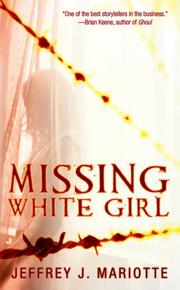
This Missing White Girl review reads Jeffrey J. Mariotte's novel as a horror-thriller shaped by selective attention, social unease, and the uneasy overlap between dread and spectacle.
- Author
- Jeffrey J. Mariotte
- First published
- 2007
View source
https://openlibrary.org/works/OL8267277WMissing White Girl review: horror built around selective attention
This Missing White Girl review argues that Jeffrey J. Mariotte's 2007 novel is most interesting when read not simply as a horror title with thriller edges, but as a book whose very name forces a reader to think about attention: who is seen, who is protected, who becomes a public obsession, and how quickly fear can turn into spectacle. That pressure gives the novel a sharper identity than a generic shelf label can capture.
Placed in both horror and mystery and thriller, Missing White Girl promises unease before it promises explanation. The title is confrontational. It suggests not only danger or disappearance, but a social hierarchy of concern. For contemporary readers, that phrase carries a public history of selective sympathy, sensational coverage, and moral panic. Any review that ignores that charge would flatten the book before the discussion even starts.
That is the central thesis here: Missing White Girl matters less because it can be slotted into a simple plot category and more because it invites an ethical reading alongside a genre reading. The most valuable question is not whether it is scary in the narrowest sense. The better question is whether the novel can turn a loaded premise into sustained atmosphere, pressure, and thought rather than relying on provocation alone.
What the title makes unavoidable
Some books arrive with neutral titles and build their meaning gradually. Missing White Girl does the opposite. Before a scene, character, or reveal is discussed, the title already introduces race, gender, vulnerability, and the politics of public attention. That makes the novel unusually exposed to misunderstanding, but it also gives it unusual potential.
In practical terms, a title like this can do one of two things. It can function as a blunt hook, using discomfort as a shortcut to interest. Or it can make the reader uneasy on purpose, pushing the story into a broader conversation about who gets centered when fear enters public life. A serious review has to judge the book against that second possibility, because otherwise the discussion collapses into surface reaction.
What makes the book suitable for Online Library is that the title changes the reading posture. Readers do not come to Missing White Girl expecting detached elegance or generic thrills. They come expecting friction. That friction can be productive when it is tied to mood, pacing, and moral ambiguity. It can be exhausting when it is handled carelessly. Either way, the title ensures that the novel is read in relation to more than plot.
This is also why the book sits comfortably beside works that use dread to expose social nerves rather than merely to trigger jumpy momentum. The category fit is real, but the stronger appeal lies in what the book asks readers to notice about panic, attention, and the stories societies tell themselves about innocence and threat.
How the book balances horror and thriller
The most useful way to approach Missing White Girl is to expect a blend rather than a purity test. Horror and thriller are neighboring forms, but they produce tension differently. A thriller tends to organize fear around pursuit, concealment, and revelation. Horror is often less interested in solving pressure than in letting it spread through the emotional weather of the book. When a novel touches both, the important question becomes which mode it trusts more.
Missing White Girl appears built for that overlap. The title encourages suspense because it implies crisis, absence, and pursuit. At the same time, it encourages horror because the phrase itself is socially radioactive. Even before events are clarified, readers are placed inside a climate of dread shaped by projection, story-making, and unequal concern. That is a recognizably horror-driven effect.
If the novel works, it likely works because it understands that dread does not need to come only from physical threat. It can come from a community's appetite for narrative, from the way rumor sharpens fear, or from the way an apparently singular case begins to stand for broader anxieties. That sort of pressure sits closer to horror than to a cleanly engineered mystery, even when the book borrows thriller pacing.
This hybrid identity is a strength for readers who like books that move but do not become mechanically procedural. It is a caution for readers who want a strict puzzle structure, a neat investigative cadence, or a resolution-centered reading experience. Missing White Girl seems more compelling as a book of atmosphere and implication than as a title to be judged only by clue management.
Reader fit: who this novel is likely to reach
The best audience for Missing White Girl is made up of readers who do not mind discomfort that is thematic as well as emotional. This is not simply a matter of scare tolerance. It is a matter of whether the reader is willing to sit with a title and premise that touch raw cultural material without expecting the book to offer immediate moral reassurance.
Readers who often enjoy horror that brushes against social critique may find the book especially worthwhile. The attraction here is not likely to be ornate world-building or cozy suspense. It is the chance to read a novel that uses genre pressure to ask what a culture chooses to amplify and what it lets disappear into the background. That makes the book a plausible fit for readers who like horror that lingers as an argument after it finishes being a plot.
Readers who should proceed more cautiously are those looking for a straightforward detective engine or a comfortably distant form of fear. The title suggests emotional and cultural exposure. Even if the novel remains accessible at the level of page-turning suspense, its framing is unlikely to feel neutral. That matters because disappointment often comes less from the book failing than from the reader wanting a different contract.
In the Online Library ecosystem, that reader-fit profile places Missing White Girl in a useful position. It can serve horror readers who want more social edge, thriller readers who do not mind moral unease, and crossover readers who use genre as a way into larger questions rather than as a protective boundary.
Strengths: why the book earns a place in the catalog
The clearest strength of Missing White Girl is conceptual sharpness. Plenty of horror novels promise danger. Fewer arrive with a title that instantly creates an argument about attention, value, and visibility. That does not automatically make the book good, but it does make the book legible as more than an interchangeable genre entry. Readers can approach it expecting not just sensation, but a charged framework for sensation.
Another strength is the book's likely ability to generate layered tension. Because the premise carries both thriller and horror signals, the novel can create suspense on multiple tracks at once: immediate unease about what is happening, broader concern about how the surrounding world responds, and lingering dread about what the title itself implies. When that layering is handled well, it gives the reading experience more depth than a single-channel chase narrative.
The novel also has clear comparison value inside the site. Readers drawn to psychological unease in family or community settings may want to move next to A Dark-Adapted Eye, which similarly benefits from close attention to what is withheld and what a social surface conceals. Readers who want a more overt tension between suspense and ambient dread can compare it with We Used to Live Here. Readers who prefer a cleaner mystery-thriller line can contrast it with When No One Was Looking. Those routes help define what Missing White Girl is by showing what it is not.
Finally, the book has discussion value. Some novels are easy to recommend and easy to forget. A title like Missing White Girl is almost designed to provoke conversation about framing, ethics, and genre. That makes it useful in a review library, because readers are not only choosing what to enjoy next; they are also choosing what kind of reading question they want to live with.
Cautions: sensitive material and expectation management
The strongest caution is also the most obvious one: the title involves loaded language around race and vulnerability, and readers should not be surprised if that discomfort is central rather than incidental. A review should say that plainly. Even without recounting plot specifics, it is reasonable to warn that this is the kind of book that may unsettle as much through implication and framing as through conventional horror material.
There is also a tonal caution. Readers who prefer horror to announce its terms clearly may find the book's hybrid identity challenging. A novel that draws tension from social dread can feel diffuse to readers who want either pure menace or pure investigation. The overlap between horror and thriller is productive, but it also means the book may resist the satisfactions of both when judged too narrowly.
Another caution concerns interpretation. Because the title is so pointed, some readers will understandably judge the book first on whether it handles that material with sufficient seriousness. Others will approach it primarily as genre entertainment. Neither response is illegitimate, but the gap between those reading habits can produce very different verdicts. That is one reason the novel is better treated as a book that invites debate than as one that offers universally stable pleasures.
For sensitive readers, the practical advice is simple: do not approach Missing White Girl expecting emotional neutrality. Approach it expecting friction, ambiguity, and the possibility that the book's most unsettling feature is the cultural script it invokes rather than any single scare mechanism.
Context and alternatives within Online Library
Within the broader catalog, Missing White Girl strengthens the bridge between horror and mystery and thriller. That bridge matters because many readers do not actually want genre purity; they want books that borrow the propulsion of one form and the emotional residue of another. This novel appears built for exactly that crossing point.
It is also a useful reminder that horror is not limited to monsters, gore, or the supernatural. Horror can emerge from social arrangements, from public fixation, from the unequal distribution of empathy, and from the stories a culture tells about innocence and danger. Even when a novel uses familiar suspense architecture, those deeper pressures can change the feel of the whole book.
For readers choosing among alternatives, the next step depends on what part of Missing White Girl seems most promising. If the appeal is ethical unease and buried social tension, A Dark-Adapted Eye is a smart comparison. If the appeal is mood-heavy dread with a contemporary edge, We Used to Live Here offers a different flavor of destabilization. If the appeal is primarily suspense and the desire to watch information tighten scene by scene, When No One Was Looking provides a cleaner line of contrast.
That set of alternatives clarifies the niche Missing White Girl occupies. It is not merely "a horror book" or "a thriller with a dark title." Its place in the catalog comes from the way it sits in the overlap between social provocation and genre machinery. Books in that lane tend to divide readers, but they also tend to reward more thoughtful engagement than safer, flatter entries.
Final verdict
Missing White Girl deserves a place in the catalog because it raises a serious question before the first page is even discussed: can a horror-thriller turn a culturally loaded phrase into meaningful dread rather than easy sensationalism? That is a better reason to read the book than simple curiosity about plot.
The answer this review offers is cautiously favorable. The novel's strongest value lies in the charged field around it: the title, the implied social panic, the unstable line between fear and spectacle, and the tension between horror atmosphere and thriller momentum. Readers looking for a frictionless recommendation should probably look elsewhere. Readers looking for a book that may be more interesting than comfortable, and more arguable than tidy, have a clearer reason to pay attention.
In other words, Missing White Girl is best treated as a purposeful crossover title. It is for readers willing to examine not only what frightens a culture, but what that culture chooses to watch. That focus gives the book a sharper identity than many catalog-fill horror entries, and it explains why the novel remains worth reviewing with care.


