Book review
My Secret Garden Review
This My Secret Garden review examines Nancy Friday's landmark nonfiction book as a candid, uneven, still-provocative study of fantasy, secrecy, and the pressure of gendered expectations.
- Author
- Nancy Friday
- First published
- 1973
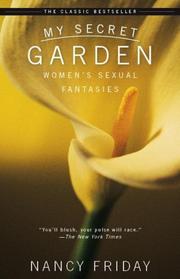
View source
https://openlibrary.org/works/OL733144WMy Secret Garden review
This My Secret Garden review begins with the most important correction a new reader may need: Nancy Friday's My Secret Garden is not a fantasy novel, but a nonfiction book about fantasy itself. Published in 1973, it gathers reported sexual fantasies from women and frames them as evidence that private desire often develops under pressures that public culture either denies, simplifies, or punishes. The result is a book that matters less as a source of titillation than as a cultural document about secrecy, performance, shame, longing, and the split between outer respectability and inner life.
That distinction shapes the whole reading experience. Friday is not building a plot, a cast, or a fictional world. She is arranging testimony, commentary, and interpretation in order to argue that fantasy deserves to be taken seriously as part of how people think, cope, rehearse, resist, and imagine. Whether a reader agrees with every conclusion is almost beside the point. The book's lasting force comes from how plainly it insists that desire has a history, a social environment, and a language problem.
The thesis is straightforward: My Secret Garden remains worth reading because it treats fantasy as meaningful human material rather than as scandal, but it works best when approached as a historically situated intervention rather than a final authority on women's interior lives. Its candor still gives it energy. Its editorial confidence still gives it bite. Its limitations are also visible on the page, which is part of why it remains discussable.
Why My Secret Garden still matters
What gives My Secret Garden durability is not that it settles a debate. It does the opposite. It opens one. Friday's project asks readers to look at the distance between what women were expected to say about sex and what some women privately imagined. That gap is the real subject of the book. Fantasy here is not treated as a literal plan for action, nor as a simple confession of stable identity. Instead, it becomes a medium through which power, fear, rebellion, vanity, tenderness, resentment, and curiosity can all appear in forms that everyday speech does not always permit.
That is why the book still has critical value even when parts of its framing feel anchored to its decade. It captures a moment in which private speech was being pulled into public argument. The text carries the urgency of someone trying to make hidden experience legible before that experience is flattened by moral panic, sentimentality, or easy liberation slogans. Friday wants fantasy to count as evidence that inner life is more unruly than official culture admits.
The book also remains useful because it refuses a childish division between respectable surface and disreputable depth. Friday treats fantasy as interpretive material. Some entries suggest fear, some compensation, some theatricality, some loneliness, some power play, some wish for surrender, some wish for control. The point is not that every fantasy means the same thing. The point is that the mind does not speak in clean civic language. Readers interested in literature, psycho-social criticism, or feminist debates about embodiment will recognize how fruitful that claim still is.
What the book is actually doing on the page
The structure of My Secret Garden is central to how it persuades. Friday presents fantasies and surrounds them with explanation, comparison, and argument. That method gives the book a double rhythm. On one level, it offers the immediacy of private voice. On another, it keeps redirecting those voices toward a larger thesis about culture and gender. Sometimes that combination feels exhilarating because the book seems to widen the space of permissible thought. Sometimes it feels controlling because the editor's interpretation threatens to outrun the material.
That tension is one of the book's most interesting features. Friday is not pretending to be invisible. She is clearly shaping the archive she presents. Readers who want neutral sociology will not find it here. Readers who want a forceful act of framing, however, may find the book more alive because it openly argues with its own evidence instead of hiding behind passive summary.
The prose is generally accessible, and that accessibility matters. Friday writes to be read beyond a specialist audience. She wants the subject to leave the locked room of euphemism and embarrassment. As a result, the book often feels closer to public-facing criticism than to academic theory. That is a strength if you want a book that can still spark serious conversation outside the classroom. It is a weakness if you want stricter methodology, clearer sampling logic, or more disciplined distinctions between anecdote and general claim.
Another thing the page reveals is repetition. Across many entries, similar pressures recur: the burden of pleasing others, the need to stage oneself, the wish to step outside decorum, the confusion between desire and dominance, the fantasy of being seen, the fantasy of being relieved of self-management. That repetition can feel blunt, but it is also part of the book's cumulative design. Friday wants readers to notice patterns, not only incidents.
Strengths: candor, pattern recognition, and argument
The strongest quality of My Secret Garden is candor with purpose. Plenty of books can be frank. Fewer can make frankness intellectually useful. Friday does that by insisting that fantasy is not just colorful material but interpretive material. She pushes the reader to ask what social life produces, rewards, and distorts in private imagination. Even when one resists her conclusions, the challenge itself is productive.
A second strength is the book's ability to connect individual scenes of thought to broader scripts of femininity. Friday repeatedly returns to the idea that women have been taught roles, manners, and poses that do not fully account for their mental and emotional range. The book is therefore not just about sex. It is also about performance, obedience, authorship, and the strain of being intelligible within narrow models of womanhood. That gives it a wider cultural reach than its title alone suggests.
Third, the book invites unusually good discussion because it sits at the intersection of psychology, social expectation, and narrative form. Readers can debate whether Friday overinterprets. They can debate whether her categories travel well across class, race, generation, or sexual identity. They can debate whether fantasy reveals desire, compensates for reality, or simply borrows the drama available in a given culture. Those are rich questions, and the book does not become uninteresting when the reader pushes back.
Finally, My Secret Garden is memorable because it refuses to reduce fantasy to literal endorsement. That remains one of its most valuable insights. Inner life is messy, symbolic, contradictory, and sometimes theatrically exaggerated. A mature reading of the book recognizes that distinction and sees why Friday thought it mattered to state it publicly.
Cautions and where the book shows its age
The main caution is that Friday often sounds more certain than her evidence can comfortably support. She is a persuasive writer, and persuasive writers can sometimes move from pattern to pronouncement too quickly. Readers trained to ask hard questions about method will notice the looseness. Whose voices are present? How were they selected? What pressures shaped what could be told, omitted, stylized, or remembered? The book does not answer those questions with the rigor many contemporary readers expect.
There is also a historical caution. My Secret Garden belongs to a specific cultural moment, and its assumptions about womanhood can feel narrower than the conversations readers bring to the subject now. That does not make the book disposable. It means the book is best read with a sense of historical framing. Some of its power comes precisely from exposing the boundaries of the discourse available to it.
Another caution involves repetition and emphasis. Because the material is arranged to build a case, some sections can feel less exploratory than cumulative. Readers looking for a finely balanced map of possibilities may find the book too insistent. Readers looking for a sharp, interventionist argument will probably find that insistence part of its appeal.
None of these cautions cancel the book. They simply establish the right contract. This is not the final word on desire, not a universal account of women, and not a detached study in the modern academic sense. It is a pointed act of interpretation whose interest lies partly in what it reveals and partly in how it reveals it.
Who should read it, and who may want something else
My Secret Garden is best for readers who like nonfiction that opens a private subject into a broader cultural argument. If you read for the overlap between inward experience and public language, the book has plenty to offer. It will also appeal to readers interested in feminist criticism, the history of speaking about sexuality, and the question of how fantasy functions as symbol rather than direct instruction.
It is a good fit for reading groups that can handle disagreement without flattening the book into either celebration or dismissal. The text benefits from conversation because so much of its energy comes from interpretation. One reader may value its boldness; another may distrust its generalizations; both reactions can be intellectually serious.
It is less ideal for readers who want memoir, romance, or academically neutral social science. Friday's book is not confessional literature in the modern memoir sense, and it is not a carefully delimited research monograph. It is a hybrid of compilation and argument. That hybrid shape is part of what makes it distinctive, but also part of what may frustrate some readers.
Readers who prefer a more contemporary and fluid approach to intimacy, identity, and embodiment may be better served by The Argonauts, which thinks differently about the relation between language and lived experience. Readers who want a foundational meditation on women's access to creative and intellectual space should look to A Room of One's Own. Readers who want a fiercer political extension of feminist argument about institutions, violence, and public life may find Three guineas a more natural companion.
Context, alternatives, and the value of comparison
One of the best ways to read My Secret Garden is comparatively. On its own, it can look like a singular provocation. In context, it becomes part of a larger argument about who gets to narrate private life, how social roles colonize consciousness, and what kinds of speech become possible at different historical moments.
Placed beside A Room of One's Own, Friday's book looks less like a book merely about sex and more like a book about permissions: permission to think, permission to disclose, permission to interpret oneself outside approved scripts. Woolf approaches that problem through material and artistic conditions; Friday approaches it through fantasy and secrecy. The methods differ, but both books care about the costs of constriction.
Placed beside Three guineas, My Secret Garden looks less institutional and more intimate, yet the comparison is clarifying. Woolf's later polemic asks how public systems shape human behavior and moral imagination. Friday narrows the lens to interior scenes, but she is still asking what a culture trains women to do with power, fear, and self-presentation. The scale changes; the pressure does not disappear.
Placed beside The Argonauts, Friday's book can also be read as an earlier, more categorical attempt to think through bodies and language. Nelson's book is more contemporary in tone and less invested in grand summarizing claims, but the pairing helps reveal what has changed in how writers handle desire, identity, and embodiment in nonfiction.
These are useful alternatives not because they duplicate Friday, but because they expose what is distinctive in her project. My Secret Garden is unusually committed to making hidden fantasy legible as social evidence. That commitment remains provocative, even when the categories around it no longer feel sufficient.
Final assessment
My Secret Garden is a serious, flawed, enduringly discussable book. Its greatest strength is that it treats fantasy as meaningful rather than trivial. Its greatest weakness is that it sometimes presses its interpretations harder than the evidence can bear. Between those poles lies the reason to read it: the book makes interior life available for criticism without pretending that criticism can finally master it.
For the right reader, that is more than enough. If you want polished consensus, this is not the book. If you want a nonfiction work that shows how hidden desire, social performance, and feminist argument can collide on the page, it still earns attention. The best way to approach it is with openness, skepticism, and a willingness to see it as both a period document and a living prompt for better questions.


