Book review
Nanhua jing Review
This Nanhua jing review offers a professional critical reading of the text as philosophical literature, with attention to form, translation, reader fit, strengths, cautions, and comparison paths.
- Author
- Zhuangzi
- First published
- 1889
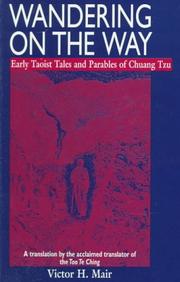
View source
https://openlibrary.org/works/OL2423610WNanhua jing review: a classic of philosophical play and serious doubt
A strong Nanhua jing review should begin by clearing away one common mistake: this book is not best approached as a container for detachable wisdom sayings. Nanhua jing, the classical text traditionally associated with Zhuangzi and often encountered in English under related titles, works through parables, dialogues, reversals, jokes, and thought experiments. Its effect is not to deliver one rigid doctrine and then defend it in orderly sequence. Its effect is to loosen the reader's grip on habits of judgment that feel stable until the book starts turning them around.
That is why the text still matters. It belongs on the philosophy and psychology shelf, but it behaves less like a manual and more like a mobile field of tests. It keeps asking what happens when people become too certain about usefulness, status, knowledge, moral seriousness, political control, or even the categories through which they describe the world. The result is a book that can feel playful on the surface and deeply demanding underneath.
The thesis is straightforward. Nanhua jing remains one of the most rewarding classical philosophical works for readers willing to accept an indirect method. Its greatest strengths are tonal range, memorable images, and a refusal to let abstract confidence harden into intellectual vanity. Its main limits are equally real: the text can feel episodic, translation-sensitive, and frustratingly open to readers who want clear system before ambiguity. Read slowly, it is vivid and durable. Read too quickly, it can be reduced to mood or slogan.
What kind of book Nanhua jing actually is
One reason readers misjudge Nanhua jing is that they approach it as if it were supposed to behave like a continuous treatise. It does not. Its movement is closer to a sequence of scenes, arguments, stories, and meditative provocations than to a ladder of premises and conclusions. A figure speaks, a situation flips, an image opens, a certainty collapses, and the reader is asked to stay with the instability rather than repair it immediately.
That structure matters because form is part of the philosophy. The book repeatedly undermines the assumption that truth always arrives in the most direct or solemn format. Sometimes it appears through miniature narrative. Sometimes it appears through irony. Sometimes a seemingly comic episode carries more force than a page of formal exposition would. Nanhua jing is therefore a deeply literary philosophical book. Its style is not ornamental wrapping around ideas; the style is how the ideas do their work.
This helps explain why summary is so limited here. You can list themes such as freedom, spontaneity, perspective, language, mortality, or the limits of social ambition, and still miss what reading the text feels like. What matters is the sequence of pressures. The book encourages a reader to settle into one frame of interpretation and then shifts that frame. It creates philosophical motion rather than simply presenting philosophical content.
That makes it productively different from more systematically argumentative works such as The Republic or more self-addressed ethical texts such as Meditations. Those books guide the reader through clearer structural expectations. Nanhua jing instead builds its authority through movement, surprise, and recurrence. It teaches by dislodging.
Why the style matters as much as the ideas
The first great strength of Nanhua jing is tonal variety. Many philosophical classics survive because they are historically central. This one survives because it is lively. It can be sharp, humorous, strange, patient, skeptical, and mournful without becoming shapeless. The writing often gives the impression that solemnity itself is being tested. If a reader expects philosophical seriousness to sound heavy and fixed, this text immediately widens the possibilities.
That liveliness is not accidental. The book often works by contrast between what sounds settled and what turns out to be unstable. A distinction that appears obvious becomes questionable. A confident speaker becomes exposed. A practical judgment reveals its narrowness. A category that once felt firm starts to look provisional. The pleasure of reading Nanhua jing comes partly from this rhythm of unsettlement. It does not merely announce that perspective matters; it makes perspective unstable on the page.
This is also why the book is so resistant to reduction into inspirational fragments. Once isolated from their setting, some passages can sound like general advice about calmness or detachment. In context, however, the text is usually doing something more exact and more disruptive. It is probing the costs of mental rigidity. It is asking what kinds of damage follow when people mistake convention for necessity or control for wisdom.
Readers who have spent time with Tao te Ching will notice an instructive contrast. Both books can be brief, indirect, and resistant to system, but Tao te Ching tends toward compression and aphoristic density, whereas Nanhua jing is often more expansive, dramatic, and narratively playful. Put beside Also sprach Zarathustra, the difference becomes sharper again: Nietzsche's book performs philosophical intensity through prophecy and rhetorical elevation, while Nanhua jing often uses wit, displacement, and shifts of scale to unsettle certainty.
Translation, voice, and the problem of certainty
Any professional review of Nanhua jing has to say plainly that translation is not a side issue. For most English-language readers, the book arrives through choices about diction, rhythm, commentary, arrangement, and tone. Because the writing depends so much on nuance, irony, and compression within scenes, those choices can shape the reading experience substantially. One version may sound plainer, another more lyrical, another more scholarly, another more conversational.
This does not mean the text becomes unreadable across versions. It means humility is part of reading it well. A confident claim that the book "really means" one thing in every passage can miss the nature of the object. Nanhua jing has endured partly because it can hold several layers of pressure at once: literary, ethical, skeptical, political, and existential. Translation does not create that complexity from nothing, but it certainly affects how readers feel it.
That is one reason the text is easy to misuse. Some readers turn it into a universal endorsement of spontaneity without friction. Others turn it into a vaguely mystical mood board. Still others flatten it into anti-rational posturing. None of those reductions captures the actual reading experience very well. The book is often suspicious of rigidity, but suspicion of rigidity is not the same thing as contempt for thought. It uses indirection to complicate judgment, not to abolish judgment.
This carefulness also matters because the work sits within a sensitive area of intellectual and religious reception. A responsible modern reader does not need to pretend the text is simple, timelessly transparent, or available without mediation. It is better to say that Nanhua jing remains powerful because it survives contact with new readers while still resisting complete possession by them. Its distance is part of its value.
Reader fit: who will get the most from it
This is an excellent choice for readers who enjoy philosophical literature that works by image and pressure rather than by full formal exposition. If you like books that leave room for rereading, that make you question the vocabulary of usefulness or seriousness, and that treat parable as a serious instrument of thought, Nanhua jing offers a great deal.
It is also especially strong for comparative readers building a route through classical and modern philosophy. Put beside Xunzi, the book highlights how differently two classical Chinese texts can handle instruction, authority, and order. Put beside Meditations, it reveals the difference between a disciplined inward ethical notebook and a text that keeps dissolving the very stance from which one might try to master life. Put beside Zen and the Art of Motorcycle Maintenance, it shows how a modern philosophical narrative can pursue questions of quality, understanding, and selfhood through very different formal means.
The book is less ideal for readers who want a beginner-friendly overview with stable definitions and clearly staged arguments. It is also less ideal for readers who mainly want direct practical instruction. Nanhua jing can affect practical judgment, but it does so obliquely. Its lessons, if that is the right word, come through changed perception rather than checklist guidance.
Temperament matters too. Some readers love texts that shift tone quickly and refuse closure. Others experience that same refusal as evasive. Neither response is illegitimate. What matters is fit. A good review should not pretend that every major classic is equally welcoming to every reader. Nanhua jing rewards openness, patience, and tolerance for conceptual motion.
Strengths of Nanhua jing
Its first major strength is memorable philosophical dramatization. Many classics discuss freedom, knowledge, usefulness, or human limitation. Nanhua jing repeatedly stages those concerns in forms that are easy to remember because they are embodied in scenes and voices rather than left at the level of abstraction. The reader often remembers the turn of an episode before remembering the concept it exposed, and that is a real literary advantage.
Its second strength is intellectual flexibility without total vagueness. The book can sustain ethical, literary, political, and existential readings, yet it does not feel empty at the center. Across its episodes one keeps meeting recurring pressures: suspicion of rigid distinctions, interest in perspective, resistance to vanity, and attention to the costs of forcing life into overly narrow frames. That continuity gives the work shape even when it refuses system.
Its third strength is durability. The book remains alive because it does not merely answer questions; it changes the quality of the questions readers ask next. After spending real time with Nanhua jing, a reader may become slower to confuse social approval with wisdom, quicker to notice how language freezes living situations, and more alert to the ways certainty can become a form of blindness. That is a substantial critical achievement.
Another strength is its value inside a reading path. Readers who start here can move toward the compressed political and ethical pressure of Tao te Ching, the more disciplinary and argumentative texture of Xunzi, or the self-scrutinizing moral steadiness of Meditations. The comparisons help clarify what is singular about Nanhua jing: it is less interested in giving rules than in unsettling the impulse that wants rules to settle everything.
Cautions and limits
The main caution is interpretive overconfidence. Because Nanhua jing contains memorable passages and strong images, readers can come away feeling they have "got" it after a small sample. In practice, the book tends to widen under rereading. Apparent simplicity becomes tonal ambiguity; apparent freedom becomes a more demanding challenge to judgment; apparent ease reveals structural craft. The danger is not obscurity alone. The danger is premature certainty.
A second caution is structural. Readers trained to expect cumulative linear argument may find the text episodic or discontinuous. That does not mean it lacks design. It means the design is recursive rather than sequential. One must accept return, variation, and indirect pressure as part of the method.
There is also a limit to how far the book can serve readers who want philosophical writing to resolve itself into direct doctrine. Nanhua jing is often more interested in exposing the stiffness of doctrinal certainty than in replacing it with another rigid frame. Some readers will find that liberating. Others will find it unsatisfying. A fair review should name that without apology.
Finally, the book can be flattened by cultural overhandling. When treated as a source of generalized wisdom detached from textual texture, translation history, and literary form, it loses much of what makes it powerful. Respectful reading here means refusing both condescension and easy romanticization. The text deserves more than either gesture.
Best alternatives and reading paths
If you want a nearby classic that is shorter, more aphoristic, and more compressed in its pressure, start with Tao te Ching. If you want a more argumentative and socially disciplinary counterpart from classical Chinese thought, try Xunzi. If you want a book of inward ethical practice with clearer continuity and less narrative play, choose Meditations. If you want a modern philosophical text that uses voice and performance rather than treatise form, Also sprach Zarathustra is a strong contrast case.
Those paths matter because Nanhua jing is not simply a book to admire in isolation. It is a comparison tool. It helps readers feel the differences between system and parable, counsel and provocation, ethical discipline and philosophical play. In a serious review catalog, that is part of its lasting usefulness.
Final assessment
Nanhua jing remains a major philosophical classic not because it offers tidy certainty, but because it makes certainty itself harder to wear. Its best pages are playful without being slight, skeptical without collapsing into emptiness, and humane without becoming sentimental. The book keeps testing the reader's appetite for fixed distinctions and rehearsed seriousness, and that pressure is still fruitful.
For the right reader, this is a genuinely rewarding work: subtle, memorable, and stronger with rereading than with extraction. For the wrong reader, it may seem elusive, fragmentary, or too resistant to direct application. That split is not a defect in the review process; it is part of the book's identity. The most honest verdict is that Nanhua jing is worth reading not as a shortcut to wisdom, but as a demanding exercise in loosening the mind's attachment to overly confident ways of seeing.


