Book review
Profiles of the future Review
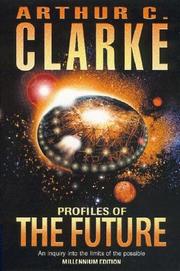
Arthur C. Clarke's 1962 essay collection asks where physical possibility ends, warns against failures of nerve and imagination, and speculates about transport, communication, energy, intelligence, and space.
- Author
- Arthur C. Clarke
- First published
- 1962
View source
https://openlibrary.org/works/OL17414WProfiles of the future review: forecast the limit, not the launch date
This Profiles of the future review treats Arthur C. Clarke's 1962 book as nonfiction: a collection of essays asking about the limits of the possible. The opening discussions of failures of nerve and imagination supply its most durable method. Experts may assume a development cannot occur because present engineering is difficult, or imagine a future device without grasping the physical principles that could make it work. Clarke wants speculation disciplined by science but not imprisoned by current machinery.
That position does not make him an infallible prophet. The book ranges across transport, communication, gravity, speed, space travel, energy, replication, altered bodies, artificial intelligence, and long human futures. Some possibilities became ordinary, others remain remote, and several depend on assumptions that deserve challenge. Its value lies in learning how a technically informed writer constructed possibility in the early 1960s.
Failure of nerve is institutional, not merely personal
Clarke's first hazard appears when established authorities underestimate what developing knowledge and engineering can accomplish. Expertise can become conservative because it is calibrated to systems that already exist. A distinguished scientist may understand present constraints so well that an emerging method looks unserious.
The warning is attractive to innovators, but it can be abused. Every rejected proposal cannot claim vindication merely because earlier experts were wrong. Clarke's argument works when it demands reasons and distinguishes fundamental prohibition from practical difficulty. It fails if converted into a slogan that treats skepticism as cowardice.
Readers in science and nature should therefore use the chapter as a question: which part of an objection comes from known physical law, which from cost and engineering, and which from institutional habit? The categories require different evidence.
Failure of imagination has the opposite danger
The second hazard arises when a forecaster extrapolates familiar devices without imagining a different principle or social arrangement. A future built from larger versions of present machines can miss discontinuity. Clarke's science-fiction practice helps him vary premises and follow consequences beyond ordinary planning horizons.
Imagination, however, does not guarantee breadth. The book is often bolder about devices than about politics, gender, labor, or unequal access. A communication system may become technically universal while ownership and censorship remain unresolved. Abundant energy does not decide who controls infrastructure. The future can be mechanically transformed and socially familiar.
This imbalance is a central caution. Technical imagination should include institutions and distribution, not just hardware. History and ideas offers routes for placing invention inside political context.
Transport and communication reveal different futures of distance
Essays on vehicles, speed, and a world without distance examine how movement can change daily scale. Clarke considers ground-effect transport, air travel, spaceflight, and communication capable of binding remote locations. Reading these chapters after global networks have become routine produces recognition and estrangement.
Some anticipations look perceptive because Clarke follows physical and economic tendencies. Others preserve a mid-century fascination with maximum speed when later priorities include efficiency, congestion, climate, and digital substitution for travel. Faster motion does not automatically produce equitable mobility.
Communication is particularly revealing. Reducing delay can connect people while centralizing platforms and surveillance. Clarke sees the transformative power of access more clearly than the politics that would govern it. The gap is not grounds for ridicule; it marks where futurology needs disciplines beyond engineering.
Energy, replication, and the fantasy of abundance
Clarke speculates about immense energy and devices approaching material replication. These possibilities support an “age of plenty” in which production constraints radically change. The move resembles post-scarcity science fiction: if material goods become cheap, social life should be reorganized.
Yet abundance of capacity is not the same as abundance of access. Ownership, ecological externalities, and political power can preserve scarcity artificially. The book sometimes treats technological supply as if it will carry its own distribution system. Modern readers should separate the physical thought experiment from its social conclusion.
For a fictional reputation economy after scarcity, Down and Out in the Magic Kingdom provides a useful comparison. Doctorow shows status intensifying after money recedes; Clarke is more interested in the pathway toward technical plenty.
Space sets both imaginative freedom and hard limits
The space essays move from the Solar System toward the formidable barriers around interstellar travel. Clarke's enthusiasm does not eliminate constraint. Distance, energy, time, and human biology impose costs that no rhetoric can repeal. This is where the subtitle earns its weight: the inquiry concerns limits as much as marvels.
The book's planetary knowledge belongs to its era, and later discoveries alter details. Its broader method remains legible. Ask what physics permits, what engineering might eventually manage, and what time scale makes a statement meaningful. “Possible someday” is not a forecast for a budget cycle.
Posterior Analytics belongs to a radically older account of demonstration, while Statistical Thermodynamics supplies a technical rather than speculative science route. Clarke occupies the middle ground of public reasoning.
Revised editions complicate prediction scoring
Profiles of the Future appeared in revised forms. An assessment that praises or mocks a prediction must identify the edition and date. Later comments may acknowledge developments unavailable in 1962. Treating all versions as one fixed oracle corrupts the historical test.
Even with an edition fixed, prediction scorecards can be shallow. A forecast might miss a date but identify a governing principle; a correct device might arrive through an unforeseen path; a social effect might matter more than the apparatus. Clarke himself emphasizes ultimate possibility more than a precise timetable, despite including charts.
The better reading asks what assumptions organized each essay. Which limits were physical, which economic, and which cultural? That reconstruction teaches more than counting hits.
Reader fit and final assessment
The collection suits readers of science history, forecasting, engineering speculation, and science fiction's nonfiction border. Expect dated scientific details, mid-century social assumptions, techno-optimism, and different contents or comments across editions. It is not a novel and should not be judged for character or plot.
Clarke is most convincing when he makes humility point in two directions. We should distrust declarations that a difficult thing is impossible, and distrust fantasies that ignore hard constraint. Profiles of the Future remains worth reading because the balance is difficult. Its individual forecasts form a historical record; its larger challenge is methodological: imagine farther, identify the governing laws, name the assumptions, and remember that a technically possible future is not automatically a desirable or fairly distributed one.
Clarke's laws are arguments, not magic passwords
The maxims associated with Clarke are often detached from the essays that give them pressure. The claim that sufficiently advanced technology appears magical describes a relation between observer and capability; it does not mean scientific explanation has become unnecessary. The warning about distinguished experts concerns negative claims about possibility, not every cautious estimate.
Treating the laws as applause lines would betray the book's method. They should prompt better questions about evidence, physical constraint, and historical imagination. A proposed perpetual-motion device is not rescued by boldness. A technically possible network is not socially inevitable.
The absent climate question changes modern reading
Mid-century futurism often celebrates energy, transport, and production without giving ecological cost the central place it now demands. Profiles of the Future contains environmental awareness, but its grand abundance can understate carbon, extraction, waste, and planetary limits. Modern readers cannot simply add those concerns as footnotes.
The omission becomes a lesson in forecasting. A future may be physically inventive while failing to imagine which constraints society will later regard as decisive. Clarke encourages the reader to look beyond present assumptions; applying that encouragement to Clarke is a form of respect, not dismissal.
Revision should be visible rather than silent
Later editions allowed Clarke to comment on events and adjust material. Such revision makes the book a record of forecasting in motion. It becomes misleading only when a later correction is credited as if it were present in 1962.
A careful edition identifies dates and preserves the distinction between original claim and retrospective note. Readers can then observe intellectual updating: where new evidence changed confidence, where a principle survived, and where enthusiasm remained. That history of correction may be more educational than the image of an author who simply foresaw the world.


