Book review
Raven's Gate Review
Anthony Horowitz opens The Power of Five with a fast, ominous story about coercion, buried power, and a teenager learning whom not to trust.
- Author
- Anthony Horowitz
- First published
- 2005
View source
https://openlibrary.org/works/OL84772WRaven's Gate review: fast horror built on powerlessness
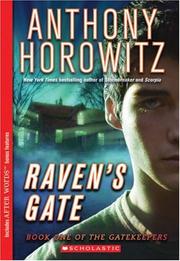
This Raven's Gate review sees Anthony Horowitz's first Power of Five novel as a story about unequal power before it becomes a story about supernatural power. The author's official description begins with Matt, a foster child sent to Yorkshire through a rehabilitation programme, where sinister events lead him toward an ancient conflict involving the Old Ones. That structure matters. Matt does not enter the mystery as a secure young investigator who can call home when things turn dangerous. He arrives already constrained by adults, institutions, and a past that makes his warnings easy to dismiss.
Horowitz uses that vulnerability to make the fantastic threat credible. A strange village, a controlling guardian, and a landscape full of concealed purpose would be less frightening if Matt had reliable authority behind him. Instead, each discovery increases both knowledge and isolation. The novel's thesis is simple and effective: evil gains room to operate when a young person can be watched, disbelieved, and punished by the same structures that claim to be helping him.
From social trap to supernatural conspiracy
The opening situation is recognizably mundane. A teenager has made bad choices, the justice system assigns a corrective placement, and an adult appears to offer order. Horowitz gradually changes the meaning of those facts. Supervision becomes surveillance; rural calm becomes confinement; rehabilitation becomes a pretext for control. The horror develops through reinterpretation rather than immediate spectacle.
Once the larger mythology appears, the book shifts from claustrophobic suspicion to series-scale fantasy. The Old Ones, their attempted return, and the role of gifted children widen Matt's problem beyond personal escape. That escalation is exciting, but the earlier social trap remains important. Cosmic evil is not presented in a vacuum. It works through people willing to manipulate institutions, secrecy, and fear.
The result is accessible because the plot delivers information in practical increments. Matt learns only what he needs to survive the next danger. Readers who want a dense encyclopedia of the supernatural may find the mythology initially spare. Readers who prefer discovery under pressure will likely find the restraint useful.
Matt Freeman as a reluctant protagonist
Matt's appeal lies in his lack of preparation. He is not a polished hero and does not begin with a noble mission. His unusual abilities create uncertainty as much as confidence, because he cannot simply command them at will or fully interpret their purpose. That limitation prevents the novel from turning into effortless wish fulfillment.
His foster-care background and contact with the justice system also shape the way he reads adults. Suspicion is not a stylish pose; it is a learned form of self-protection. Horowitz does not turn that experience into a detailed social-realist portrait, but he gives Matt enough defensiveness and need for belonging to make his decisions emotionally legible. The boy's courage consists partly in continuing to seek the truth when every incentive tells him to comply or run.
This makes the book a productive comparison with SilverFin, another story that places a young protagonist near adult conspiracy. Matt, however, has fewer institutional protections and a more openly supernatural problem. The contrast clarifies what kind of suspense the reader wants.
Strengths: pace, setting, and controlled revelation
Horowitz knows how to construct a sequence in which each answer produces a more dangerous question. Strange local behavior suggests organized secrecy. Attempts to leave reveal the strength of the trap. Moments of apparent safety become opportunities for the conspiracy to show its reach. The chapters move quickly, but the acceleration usually feels earned because it follows Matt's shrinking options.
The Yorkshire setting is also effective. Fields, roads, farms, and villages appear ordinary enough to ground the story, yet isolation allows that ordinary surface to become uncanny. The book does not need a remote invented kingdom to create vulnerability. It makes familiar English geography feel closed and watched.
The supernatural elements remain visually and conceptually clear. Horowitz favors strong images, direct danger, and decisive reversals over ambiguous dream logic. That clarity suits younger teen readers moving from mystery into horror-fantasy. It also means readers seeking subtler, more psychologically unresolved terror may find the machinery visible.
Cautions: intensity, archetypes, and series dependence
The story includes coercion, ritual threat, death, and repeated situations in which a child cannot trust the adults around him. That emotional pattern can be more disturbing than graphic detail. Readers sensitive to institutional betrayal or hostile guardians should approach with care. The book is written for young readers, but it does not treat danger as harmless.
Some antagonists are deliberately archetypal. Their menace comes from certainty and reach rather than complex inner conflict. This is consistent with the novel's pulp-horror energy, though it can make the moral field feel stark. Supporting characters sometimes exist chiefly to reveal information, block escape, or demonstrate the conspiracy's scale.
The ending also establishes a larger struggle. The immediate crisis has shape, but the mythology and Matt's role continue across The Power of Five. Readers who require a completely self-contained novel may feel the forward pull. Series readers are more likely to experience it as a promise.
Context among young adult supernatural fiction
Raven's Gate sits at the intersection of school-age adventure, conspiracy thriller, and occult horror. It is darker than a conventional magical apprenticeship because Matt has no welcoming institution that explains the rules. It is more direct than much literary horror because the danger becomes external and actionable. The combination makes the novel a useful bridge for readers who enjoy Horowitz's suspense but want supernatural stakes.
The official author page describes the book as part of The Power of Five and frames Matt's discovery around guardians who once banished the Old Ones. That source establishes the series architecture without resolving later developments. Readers should therefore judge this volume by how well it creates the first threshold: a boy learns that his private unease belongs to a much older danger.
For adjacent reading, Wild Magic offers a different model of a young person's relation to extraordinary power. The Devil's Arithmetic uses the fantastic in a historically grounded and ethically distinct way. Those comparisons should not collapse the books together; they show how different forms of displacement ask young protagonists to act before they feel ready.
Reader fit and alternatives
Choose Raven's Gate for brisk chapters, ominous rural atmosphere, a widening secret, and a protagonist who survives through skepticism as much as strength. It suits readers who enjoy discovering a supernatural system while the plot is already moving and who accept that the first volume will open questions for later books.
Readers wanting elaborate magic training may prefer Wild Magic. Those seeking espionage and period adventure without cosmic horror can move toward SilverFin. Readers drawn to historical memory rather than occult conspiracy should consider The Devil's Arithmetic, with the caveat that its subject and emotional responsibilities are very different.
Final verdict
Raven's Gate is strongest when it makes Matt's lack of power the basis of suspense. The ancient evil matters, but the immediate fear comes from being trapped inside a system that can define a vulnerable teenager before he can speak for himself. Horowitz converts that pressure into a clean supernatural thriller with effective atmosphere and a clear series hook. Character depth sometimes yields to momentum, and the antagonists are drawn in bold lines, yet the book knows its audience and its engine. For teen readers who want conspiracy, horror, and reluctant heroism without a slow introduction, it remains a persuasive opening.


