Book review
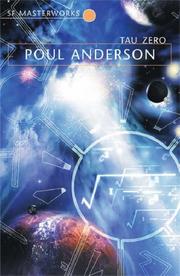
Tau Zero Review
Poul Anderson traps fifty travelers aboard the damaged Bussard ramjet Leonora Christine, where relativistic acceleration converts a failed colonizing voyage into a confrontation with cosmic time.
- Author
- Poul Anderson
- First published
- 1970
View source
https://openlibrary.org/works/OL90571WTau Zero review: acceleration turns destination into deep time
This Tau Zero review boards the Leonora Christine with fifty people bound for a planet roughly thirty light-years from Earth. Poul Anderson equips the ship with a Bussard ramjet that gathers interstellar material and permits sustained acceleration. A collision with matter in a nebula damages the system needed to slow down. The ship can survive only by continuing to accelerate while the crew searches for conditions in which repair might become possible. Relativistic time dilation then transforms a colonizing mission into a voyage beyond familiar history.
The premise has unusual discipline. Faster motion is not liberation; it is the mechanism that keeps narrowing every human option while expanding the scale outside the hull.
The Leonora Christine cannot simply turn around
Many space adventures treat damaged propulsion as a reason for repair scenes and suspenseful deadlines. Anderson builds the novel around an asymmetry: the ramjet's continued operation protects the ship, but the loss of effective deceleration makes arrival lethal.
That constraint prevents easy rescue. Even if Earth could be contacted, relativistic separation makes response meaningless. The crew must locate a physical environment suitable for an extremely dangerous maneuver while velocity continues to rise.
The technical explanations are central rather than decorative. Readers need to understand why apparently obvious solutions fail. The cost is expository density, especially when characters sometimes sound like lecturers for one another's benefit.
Tau measures a shrinking connection to ordinary time
The title refers to the relativistic factor through which time aboard the ship relates to time outside it. As velocity approaches light speed, the crew's subjective interval corresponds to enormous external duration. Tau tending toward zero expresses both mathematical extremity and emotional severance.
This is the novel's imaginative leap. Distance ceases to be the primary measure of exile. The travelers may live through manageable spans while stars, galaxies, and cosmic conditions change beyond them.
Anderson repeatedly brings numerical abstraction back to loss. Everyone and every institution on Earth can vanish into the past without anyone aboard choosing to abandon them further.
Charles Reymont treats morale as ship infrastructure
The ship's constable, Charles Reymont, assumes responsibility for social stability. He believes despair, jealousy, faction, or panic can kill as surely as mechanical failure. His role makes psychology part of engineering.
Reymont's decisiveness can be persuasive under impossible pressure. A community facing irreversible danger may need routines, conflict intervention, and someone willing to name facts. Yet his methods also become paternalist and coercive. He can treat other adults' relationships as variables to manage.
The novel often confirms his judgment, limiting the space for democratic alternatives. Readers should distinguish the need for coordination from the assumption that one forceful man must define it.
Fifty people must remain more than passengers
The crew was selected to establish a colony, so technical specialization and interpersonal compatibility matter from the beginning. After the accident, their future profession disappears, but their dependence on one another intensifies.
Anderson uses parties, work assignments, romances, resentments, and scientific briefings to show a miniature society under compression. No privacy can be complete, and a broken relationship may affect a colleague needed for survival.
The ensemble is more schematic than fully individualized. Several characters embody responses—hope, despair, rivalry, adaptability—rather than receiving equal depth. Still, the social dimension prevents the novel from becoming a diagram of relativity alone.
Gender assumptions narrow the imagined future
The Leonora Christine carries women and men with professional competence, but the narrative often gives sexual pairing and male authority disproportionate weight in assessing morale. Women's interior lives can become instruments in conflicts among men.
These conventions reflect a strand of mid-century science fiction that could imagine radical machinery more readily than radical gender relations. Context helps locate the limitation but does not make it invisible.
The problem grows sharper because the book claims to examine the reconstitution of human society. Who gets to define emotional health and reproductive purpose is not secondary to that claim.
Cosmology enlarges a survival problem
As acceleration continues, the crew confronts phenomena and timescales far beyond the original mission. Anderson draws on the cosmological theories available when the novel was published in 1970, turning scientific speculation into the final terrain of adventure.
Modern cosmology should not be read backward as a simple fact-check against a work using then-live models. The scientific value lies in disciplined extrapolation: given its assumptions, how far can the predicament go?
For a terrestrial catastrophe organized around moral and supernatural opposition, Swan Song offers the inverse scale. McCammon's survivors inherit too little world; Anderson's crew outlives almost everything they knew.
Hard science carries existential feeling
Equations and diagrams are not the only way Tau Zero creates wonder. The book makes physical law the source of grief and sublimity. No villain designed the accident, and courage cannot negotiate with light speed.
This indifference distinguishes the novel from Space Viking, where political choices organize danger. Here leadership matters inside the ship, but the largest antagonist is constraint itself.
The prose can become grand when cosmic events multiply, yet the best moments retain the contrast between a comprehensible human conversation and an incomprehensible external span. Scale does not eliminate feeling; it changes what feeling can reach.
Reader fit, scientific context, and cautions
Tau Zero suits readers in science and nature and science fiction who enjoy propulsion concepts, special relativity, closed-community strain, and cosmic extrapolation. It is less suitable for readers who want lush characterization or present-day social assumptions. Expect death, radiation threat, despair, jealousy, coercive leadership, and the permanent loss of home.
The novel's cosmology is historically situated, and its gender politics require active critique. Neither limitation erases the structural feat. Anderson begins with one damaged function on one spacecraft and follows the consequence until “arrival” itself must be reconceived.
For a set of shorter experiments in astronomical and social perspective, Tales of Space and Time is the natural alternative. Tau Zero earns its reputation when it holds two truths together: fifty people remain petty, loving, fearful animals, and their damaged machine carries them into a timescale where every inherited institution is temporary. That conjunction, more than technical display alone, gives the novel its endurance.
A colonizing mission loses the future it selected for
The fifty travelers began with a destination, professional roles, and the expectation that their relationships would help establish a human settlement. Selection gave sacrifice a bounded purpose. The accident removes that purpose without removing the habits built around it.
This creates a quieter crisis beneath the physics. An agronomist, engineer, physician, or administrator can continue essential work aboard ship, but nobody can be sure that the imagined colony will exist. Identity must survive the disappearance of its projected social use.
The novel only partly develops this problem because Reymont and the cosmic predicament dominate. Still, the lost colony distinguishes the crew from accidental passengers. They were prepared to leave Earth once, not to outlive every meaningful route back to human history.
Repair is a scientific hope and a psychological instrument
The search for a region where the ship can repair its damaged system gives labor a horizon. Even when probabilities worsen, investigation, calculation, and maintenance keep despair from becoming the only honest response.
Hope here is not confidence that everything will work. It is organized attention under uncertainty. That makes the technical program socially valuable even before it succeeds.
Reymont's mistake is sometimes to treat morale as another mechanism whose output he controls. People need tasks, but they also need room to grieve a loss no engineering solution can reverse.
The ending asks what counts as human continuity
Relativistic travel makes biological survival an inadequate definition of success. If the crew persists while every remembered culture vanishes into cosmic history, what have they preserved?
Anderson answers through knowledge, relationship, and the capacity to begin again, but he leaves room for unease. Fifty people are not humanity in its former diversity. Their continued existence carries enormous contingency.
That tension keeps the final scale from becoming mere spectacle. The voyage is triumphant only if renewal acknowledges how much has been lost. Tau Zero's scientific grandeur works because its smallest unit remains a finite group trying to make continuation mean more than motion.


