Book review
The 4-Hour Workweek Review
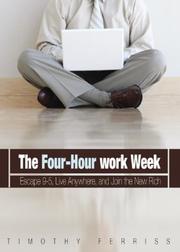
This The 4-Hour Workweek review examines Timothy Ferriss's manifesto of mobility, outsourcing, and selective refusal as a sharp but uneven business classic whose provocations are stronger than its worldview.
- Author
- Timothy Ferriss
- First published
- 2007
View source
https://openlibrary.org/works/OL3353439WThe 4-Hour Workweek review: a business classic that is most useful when read skeptically
This The 4-Hour Workweek review argues that Timothy Ferriss's book endures not because its title should be taken literally, but because it dramatizes a fantasy that many work-centered readers immediately recognize: the fantasy of escaping administrative drag, status performance, and the idea that seriousness must always look exhausting. The 4-Hour Workweek is part provocation, part productivity manual, part entrepreneurial pitch, and part cultural artifact from an era that treated remote leverage as a newly available path to personal reinvention.
That mixture is the reason the book still matters. Ferriss does not merely offer tips. He reframes ambition itself. Instead of asking how to climb within the ordinary script of career advancement, he asks why that script should be treated as normal in the first place. The book belongs on the business and growth shelf because it is explicitly about work design, delegation, income, and leverage. But it also reaches into philosophy and psychology because its deepest subject is not business mechanics alone. It is desire: what people think they are working for, why they tolerate performative overwork, and how easily productivity becomes a moral identity.
My thesis is positive but guarded. The 4-Hour Workweek is an important and often entertaining business book because it teaches readers to question inherited assumptions about work, time, and prestige. It deserves credit for that. Yet it is also a narrow book with conspicuous blind spots. Its freedom story depends on unusually favorable conditions, its ethical treatment of outsourcing is often thin, and its tone can make structural obstacles look like mere failures of imagination. Read critically, it is vivid and useful. Read devotionally, it becomes flatter and more irresponsible than its reputation suggests.
What the book is actually trying to do
One reason the book is often misread is that readers approach it as if it were a literal operating manual for a drastically reduced work schedule. That is not quite what gives it force. The real engine of the book is rhetorical. Ferriss is trying to shock readers out of compliance with what he treats as the default life sequence: work hard now, endure routine, accumulate money, and defer real living until some later stage that may never arrive in the form promised. The title is therefore less a measurable claim than an act of positioning. It signals refusal, compression, and theatrical contrast.
Inside that frame, the book circles a handful of recurring ideas. Eliminate low-value obligations. Question social scripts that reward visible busyness. Separate output from time spent. Use systems, delegation, and selective absence to create more autonomy. Replace deferred retirement with periods of mobility or experimentation throughout life. None of those ideas are trivial, and some of them remain refreshingly clarifying even now. A great deal of business culture still rewards responsiveness, accumulation, and symbolic exhaustion. Ferriss attacks all three with unusual confidence.
The book also knows that it is selling a feeling as much as a framework. Its chapters are organized to produce momentum, not scholarly balance. Ferriss wants the reader to feel that ordinary constraints are more negotiable than they appear. That is why the book is so readable. Even its critics often admit that it has propulsion. It keeps translating large anxieties about work into smaller acts of refusal, redesign, and skepticism.
This is also where caution becomes necessary. The book is far more persuasive at criticizing empty work habits than at building a universally credible replacement for them. Its central questions are alive and worthwhile. Its answers are selective, sometimes opportunistic, and often shaped by a particular kind of entrepreneurial self-image.
Why the book became so influential
To understand the book's staying power, it helps to see how many nerves it presses at once. It speaks to workers who suspect they are trapped in loops of email, meetings, and maintenance. It flatters readers who think they are more independent-minded than the average office professional. It speaks to entrepreneurial readers who want leverage without large organizations. It also arrived during a moment when digital work, global contracting, and online distribution made location-independence feel newly imaginable to a broad audience.
Ferriss's real talent is packaging. He knows how to turn restlessness into a sequence of bold, memorable claims. The book gives readers a language of escape that feels more concrete than vague anti-corporate complaint and more glamorous than ordinary efficiency manuals. That matters. Many business books promise improvement inside the same worldview. The 4-Hour Workweek promises a change of worldview. Readers do not merely feel they are becoming more organized. They feel they are seeing through a social illusion.
That is a powerful experience, and it explains why the book still sits in conversation with titles that are otherwise quite different. Compared with The E-Myth Revisited review, Ferriss is less interested in building repeatable business systems for long-term institutional stability and more interested in extracting personal freedom from work architecture as quickly as possible. Compared with The Personal MBA review, he is less systematic and less interested in teaching a broad business vocabulary. What he offers instead is a sharper emotional jolt.
There is a genuine contribution in that jolt. Many readers need one book in the category that says, plainly, that prestige scripts can be foolish and that a swollen schedule is not automatically a meaningful life. Ferriss provided that message in a form people remembered. The influence is not mysterious. The book names a hunger that more cautious business writing often tiptoes around.
What the book gets right
Its strongest insight is not about outsourcing software, inbox management, or travel imagery. It is about the moral confusion that surrounds work. Ferriss understands that many professionals absorb bad assumptions so thoroughly that they stop appearing as assumptions at all. The obligation to be constantly reachable. The instinct to equate effort with value. The idea that a full calendar is proof of seriousness. The belief that freedom must be postponed until enough money or status has been accumulated. The book is at its best when it attacks those assumptions directly.
That attack matters because it widens the category. Without books like this, business shelves can become too obedient to conventional success narratives. Ferriss introduces useful friction. He asks what work is for, not just how to do more of it. Even readers who reject his conclusions may come away more alert to how much modern work depends on theater: response theater, importance theater, exhaustion theater, optimization theater.
The book also deserves praise for refusing to worship complexity. Ferriss repeatedly searches for leverage points, simplifications, and asymmetries. Sometimes that search becomes reductive, but it is also the source of many of the book's memorable pages. He is good at making readers suspicious of sprawling maintenance tasks that quietly eat the whole week. He is also good at naming how often people protect inefficiency because inefficiency feels like proof of effort.
Another strength is stylistic. Ferriss writes with a sharp commercial rhythm. The chapters are engineered for retention. Claims are compressed, contrasts are vivid, and the prose keeps moving. That is not a small virtue in a business book. Plenty of books in the genre have respectable concepts and lifeless execution. The 4-Hour Workweek is the opposite. Even when it overstates, it rarely drones.
For readers building a broader path through the category, that energy makes it a particularly revealing contrast text. Read beside Deep Work review, for example, Ferriss and Cal Newport seem to diagnose different illnesses within the same culture. Newport fears fragmentation and the destruction of concentration. Ferriss fears administrative captivity and the surrender of autonomy. The tension between those diagnoses is useful. It shows that "better work" can mean very different things depending on whether your central value is mastery, freedom, or stability.
Where the book is weakest
The main weakness is not that Ferriss is provocative. Provocation is part of the point. The problem is that the book often treats contingency as if it were universal design. Opportunities available to a narrow slice of readers are presented with a confidence that can make ordinary constraints look like excuses rather than realities. The book repeatedly benefits from optionality it does not fully theorize: flexible skills, mobility, social confidence, a tolerance for risk, and the ability to reframe instability as adventure.
This matters because business self-help tends to become cruel when it mistakes privilege for courage. A reader working inside caregiving obligations, rigid schedules, immigration constraints, disability, debt pressure, or organizational dependence is not merely lacking imagination. Ferriss occasionally acknowledges limits, but the book's performance style keeps pulling toward a more flattering story: that most barriers are mental, inherited, or lazily accepted. That is too simple.
The treatment of outsourcing is another serious problem. Ferriss often frames delegated labor as a clean friction-removal device inside his own autonomy project. But the human reality of that labor is thinly drawn. Other people's time appears mainly as a lever. That narrowing is not unique to this book, yet here it is especially exposed because the book presents itself as a liberation manual. Liberation for whom, under what conditions, and at whose expense are not examined with enough seriousness.
There is also an evidentiary issue. The book is built more from anecdotal force, selective examples, and performative certainty than from careful argument. That does not make it valueless. Many influential books in this genre are not academic works. But it does mean readers should resist taking its cleaner formulas as settled truth. Ferriss is often more convincing as a reframer of stale assumptions than as a reliable guide to what generalizes across lives and labor conditions.
Finally, the book can drift into a tone of selective exceptionalism. It implies that the sharper reader can see through the trap while others remain stuck inside it. That tone is exhilarating in small doses and tiring in large ones. It also ages the book. What once felt daring can start to feel self-dramatizing, especially when paired with claims that underestimate how much ordinary institutions still depend on sustained, shared, sometimes unglamorous work.
Style, structure, and the book's peculiar charm
Part of the reason The 4-Hour Workweek survives criticism is that it is simply well packaged. Ferriss has a keen sense of chapter architecture. He understands suspense, escalation, and contrast. He knows when to insert a tactic after a larger philosophical challenge so the reader feels both awakened and equipped. That sequencing gives the book a momentum many competitors lack.
It also helps that the book operates in multiple registers at once. It is a self-help book, but it is also a performance of self-help. It is a business book, but also a stage-managed argument about identity, refusal, and social intelligence. Ferriss is not trying to sound neutral. He is trying to sound like someone who has already crossed a threshold the reader has not yet crossed. That persona is a source of both attraction and irritation.
The attraction is easy to understand. Readers often come to business books wanting confidence borrowed in advance. Ferriss supplies it. He writes as if the world is more pliable than timid people believe. That can be clarifying, especially for readers stuck in inherited routines they have never examined. The irritation comes when the confidence starts doing too much work. Once tone becomes a substitute for complexity, some of the book's smoother passages begin to look under-argued.
Still, the book's style is not an accidental wrapper around the content. It is part of the content. Ferriss is selling an attitude toward work as much as a set of methods. That is why the book remains worth discussing even when one rejects parts of it. It is not forgettable. It projects a coherent temperament: skeptical of bureaucracy, impatient with prestige rituals, drawn to asymmetry, and convinced that social permission structures can be rewritten.
Reader fit: who will find value here, and who may not
The best reader for this book is not necessarily the person who wants direct instructions for building a business or reducing work hours. The best reader is someone interested in how business self-help can function as criticism. If you want to see a high-energy attack on professional conformity, on compulsive busyness, and on the emotional prestige of overwork, this book remains one of the category's clearest examples.
It is also valuable for readers mapping the range of business writing. Some books in the space are procedural, some analytical, some managerial, some motivational. Ferriss occupies the provocative entrepreneurial edge of that spectrum. He is useful precisely because he is not a neutral survey writer. He presses the question of autonomy hard enough that even skeptical readers have to decide what they think freedom at work should mean.
Readers who prefer operational depth may do better elsewhere. If your interest is building repeatable business systems rather than dramatizing escape from employment scripts, The E-Myth Revisited review is sturdier. If you want a broader conceptual map of how business functions without the same amount of rhetorical swagger, The Personal MBA review is more even-handed. If your main concern is preserving concentration rather than redesigning the whole relationship to labor, Deep Work review is a better fit.
There is also a temperament issue. Some readers are energized by polemical certainty and strong self-positioning. Others immediately become suspicious of it. That divide matters here. If you tend to resist guru-style voice, you may still appreciate the book's core challenge while disliking the packaging. If you enjoy audacious framing, you may find it thrilling but should still keep a firm grip on its limits.
For the site's broader map, this is one of those books that earns its place partly by disagreement. A useful review library should not contain only books that are moderate, balanced, or institutionally polite. It should also contain books that sharpen readers by forcing them to argue back.
Context, alternatives, and the smartest way to place the book in a reading path
Within Online Library, The 4-Hour Workweek works best as a hinge book rather than as an endpoint. It opens a debate about autonomy, leverage, and performance that other titles can then refine, correct, or complicate. Readers who want more grounded operational thinking can move from this book to The E-Myth Revisited review, where the emphasis shifts from personal escape velocity to durable systems. Readers who want a broader vocabulary of business ideas can continue into The Personal MBA review, which is less intoxicating and more comprehensive.
Readers interested in the internal psychology of attention rather than lifestyle design should turn to Deep Work review. Newport is not more exciting than Ferriss, but he is often more disciplined about the nature of knowledge work and the cost of distraction. Readers who want to stay within the wider shelf can browse the business and growth category, where this book's provocations become easier to judge in relation to more managerial, strategic, and behavioral titles.
That context matters because Ferriss is strongest as one voice in an argument, not as the argument's final authority. He is the reader's irritant, challenger, and anti-bureaucratic showman. That is a legitimate role. But the healthiest reading path is comparative. Place him beside the systems-minded, the analytical, and the discipline-minded books. Doing so reveals what he contributes and what he leaves out.
This is also why the book retains value as a historical marker. It captures a moment in business culture when remote leverage, personal branding, and selective digital independence felt like a new frontier of self-authorship. Some of that mood now feels familiar rather than radical, and some of it looks more naive in retrospect. But that does not make the book obsolete. It makes it legible in a richer way.
Final assessment
The 4-Hour Workweek remains worth reading, but not because it provides a realistic template for most working lives. Its real value lies elsewhere. It punctures the worship of busyness, attacks prestige-based overwork, and insists that many professional routines survive mainly because people stop interrogating them. That is a live and useful challenge. Ferriss deserves credit for making it memorable.
The review verdict, then, is neither dismissal nor surrender. This is a smart, energetic, flawed book whose best pages make business culture look newly strange. Its weakest pages confuse selective possibility with broad truth and treat delegated labor too casually for a book supposedly concerned with freedom. Readers who want a complete or morally settled theory of work will not find one here.
But readers who want a sharp, arguable, high-voltage entry in the business canon will find something real. Read it skeptically. Read it comparatively. Read it as a book that widens the question rather than closes it. In that role, The 4-Hour Workweek still earns its place in the catalog.


