Book review
The Body Keeps the Score Review
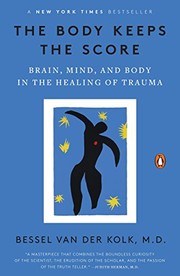
This The Body Keeps the Score review examines Bessel van der Kolk's influential trauma book through its argument, clinical framing, reader fit, strengths, cautions, and alternatives.
- Author
- Bessel van der Kolk
- First published
- 2014
View source
https://openlibrary.org/works/OL18147687WThe Body Keeps the Score review: thesis and scope
This The Body Keeps the Score review argues that Bessel van der Kolk's book remains influential because it gives ordinary readers a memorable framework for thinking about trauma, memory, embodiment, and treatment, yet its authority comes as much from rhetorical force as from careful limitation. That tension is the book's real subject. It is persuasive because it refuses to treat trauma as a purely mental event, but it is also debatable because it often writes as if a compelling synthesis were the same thing as a settled conclusion.
Read at its best, The Body Keeps the Score is not simply a manual, a memoir, or a technical survey. It is a bridge text. It tries to translate clinical experience and scientific vocabulary into a narrative ordinary readers can follow, and it does so with unusual confidence. That confidence is a large part of the book's appeal. Readers come away with a vivid sense that trauma can alter perception, self-protection, bodily response, and relationship in ways that standard language often understates.
The book is also stronger when it is approached as a big interpretive map rather than as a final authority. Van der Kolk wants to persuade the reader that trauma cannot be understood only through verbal recollection or abstract diagnosis. He insists that the body, the nervous system, habits of vigilance, and disruptions in safety belong at the center of the conversation. That claim gives the book its urgency, and it is why the title has stayed so memorable.
My thesis is straightforward: The Body Keeps the Score is worth reading for its conceptual reach, clarity of voice, and ability to make trauma legible to non-specialists, but it is most convincing when it describes patterns of injury and adaptation, less convincing when it drifts toward sweeping implication, and most useful for readers who can hold both admiration and skepticism at once. On the philosophy and psychology shelf, it earns its place not because it closes the topic, but because it opens the topic with unusual force.
What the book is trying to do
Many books about psychology either narrow their scope until they read like professional summaries or broaden their scope until they become generic self-explanation. The Body Keeps the Score avoids both extremes for long stretches by building a layered argument. It presents trauma as a lived disturbance of time, sensation, expectation, and social trust. Rather than treating traumatic experience as a past event that has simply been remembered badly, the book argues that trauma can remain active through bodily alarm, dissociation, fragmented memory, and defensive adaptation.
That is an ambitious project, and part of the book's success comes from how clearly it names what many readers feel but cannot yet organize. Van der Kolk writes as though the standard split between mind and body is too crude to explain trauma. He is not content to say that painful events leave a mark. He wants to show that the mark can be physiological, perceptual, emotional, and relational all at once. The result is a book that often feels larger than its immediate topic because it also asks what a person is when safety has been interrupted for a long time.
The book's structure reflects that ambition. It moves across clinical stories, broad explanatory passages, and treatment-oriented chapters that attempt to show how traumatic disturbance may be understood from different angles. That mixture helps the book stay readable, but it also explains why readers sometimes experience it as both compelling and uneven. A clinician's case-based intuition, a public-facing synthesis, and a treatment overview do not always produce the same kind of certainty. Van der Kolk often writes as if they do.
Still, there is a reason the book has mattered to so many readers. It supplies a language of pattern. It tells readers that recurring fear, bodily alarm, disconnection, or emotional shutdown may not be signs of weakness or incoherence but part of how an organism has adapted under pressure. Even readers who resist the book's broadness may find that reframing powerful. It enlarges the moral imagination around trauma by shifting attention away from blame and toward survival logic.
Where Bessel van der Kolk is most persuasive
The book is most persuasive when it stays close to its core insight: trauma affects not only what a person remembers, but how a person inhabits the present. That claim gives the book its human and intellectual weight. Van der Kolk is very good at explaining why traumatic distress may appear through bodily response, hypervigilance, numbness, or sudden emotional overwhelm rather than through tidy narrative recall. He makes the practical point that a person can intellectually know that danger has passed while still responding as if danger were nearby.
This is also where the book becomes genuinely clarifying for general readers. It offers a way to understand why trauma can disrupt ordinary continuity. Memory is not presented as a neutral archive. Attention is not presented as fully voluntary. Bodily response is not treated as a simple servant of conscious intention. Those arguments help explain why the book travels beyond a narrowly clinical audience and sits comfortably alongside other crossover psychology titles in the science and nature reviews catalog.
Another strength is accessibility. Van der Kolk has a gift for giving conceptual shape to an emotionally charged subject without burying the reader in specialist jargon. That does not mean the book is light, because it is not. It deals with painful material and assumes a reader willing to encounter distressing cases. But it does mean the book can bring difficult ideas into public conversation without sounding merely academic. In review terms, that matters. A book can be rigorous and unreadable, or warm and vague. The Body Keeps the Score is neither. It is vivid, structured, and deliberately public-facing.
The book is also strongest when it resists reduction. Trauma is not treated as a single symptom pattern or a one-size-fits-all narrative. Instead, the book keeps returning to disorganization, fragmentation, and adaptation. That gives its better chapters a humane seriousness. They do not promise neatness. They suggest that after overwhelming experience, a person's strategies for staying intact may themselves become sources of difficulty. That is a complex idea, and the book communicates it well.
Finally, the book deserves credit for insisting that treatment conversations must take experience seriously in its embodied dimension. Even readers who do not accept every emphasis in the book can see the value in that correction. The public understanding of psychological distress often becomes too verbal, too linear, or too moralized. Van der Kolk pushes against all three habits.
Where the book becomes less convincing
The book's limits appear when its confidence outruns its discipline. Van der Kolk is an effective synthesizer, but synthesis can create an illusion of settledness. When a book moves fluently from case material to theoretical framing to treatment discussion, readers may not always notice when the kind of evidence has shifted. That matters here because the writing often invites broad trust. The prose says, in effect, that this is how trauma works. Sometimes that authority feels earned. Sometimes it feels asserted.
The most serious caution is not that the book is wrong in some simple, total way. It is that the book can encourage overgeneral reading. Because its central framework is powerful, readers may be tempted to use it as a master key for every form of suffering, social rupture, or emotional difficulty. The book itself encourages that temptation at times by expanding from acute trauma into wider patterns of disconnection, dysregulation, and distress. That expansion is often interesting, but it also increases the risk that a persuasive lens will start to look universal.
There is also a stylistic drawback to the book's moral urgency. Van der Kolk writes with conviction, and conviction helps the book cut through abstraction. But conviction can flatten uncertainty. Readers who prefer tightly delimited argument may wish the book marked more clearly where interpretation ends and stronger inference begins. A book can be generous to non-specialists without sounding final on every point. The Body Keeps the Score does not always make that distinction visible enough.
Repetition is another limit. Because the book's thesis is memorable, some chapters can feel like returns to the same central revelation under slightly different headings. Readers new to the topic may appreciate that reinforcement. More analytical readers may begin to notice that the book often circles its strongest insight rather than always deepening it. The result is that the book can feel simultaneously urgent and diffuse.
None of these cautions erase the book's value. They simply change the best way of reading it. It works best as a serious, influential framing text that deserves engagement and questioning, not as a book that should end the conversation for a reader. On a site built around comparative reading, that distinction matters a lot.
Reader fit: who will get the most from it
This is a strong choice for readers who want an accessible entry point into trauma theory and who are comfortable reading a work that mixes clinical storytelling with large explanatory claims. If a reader is trying to understand why this book has become such a major reference point in public conversations about trauma, it is absolutely worth reading. The writing is clear, the governing idea is memorable, and the book opens a wider vocabulary for discussing bodily memory, fear, and adaptation.
It is especially useful for readers who prefer big crossover books that link psychology, neuroscience, and human experience in one frame. In that sense it sits well beside books like The Happiness Hypothesis, which also translate specialist conversations into public argument, though the tone and stakes are obviously very different. Both books are interested in making complex psychological material legible to general readers. Van der Kolk is more clinically charged and morally urgent; Jonathan Haidt is more synthetic and comparative.
The book is less ideal for readers seeking a narrow, methodical, textbook-style survey. It is also less ideal for readers who want distance from painful material. Even when it is not graphic in a sensational way, the subject matter is heavy, and the book does not pretend otherwise. Readers looking for a calmer behavioral framework may find more immediate value in Predictably Irrational, which focuses on judgment and decision-making rather than clinical trauma, or in Stumbling on Happiness, which examines misprediction and self-understanding through a different psychological lens.
One more fit question matters here: what does the reader want from a review of a trauma book? If the expectation is a recommendation engine that says simply yes or no, this review would be too cautious. The better answer is conditional. Read The Body Keeps the Score if you want a widely discussed, intellectually ambitious, emotionally serious account of trauma's embodied dimensions. Read it with alertness if you dislike expansive frameworks or want every claim tightly hedged. And do not read it as medical advice, because that is not what this site exists to provide.
How the writing shapes the argument
Van der Kolk's prose is a major reason the book has endured. He writes in a way that makes abstract concepts feel immediate. His sentences often move from observation to implication very quickly, and that speed creates momentum. A reader rarely doubts that the author thinks the subject matters. The tone is not detached. It is interpretive, insistent, and committed to showing that trauma is misunderstood when it is framed too narrowly.
That style has advantages. First, it keeps the book from becoming sterile. Trauma is not presented as an academic puzzle but as a lived crisis that reorganizes experience. Second, it helps the book reach beyond specialist audiences. Third, it lets the book build a coherent emotional atmosphere. Even when readers question particular emphases, they can feel that the book is oriented by genuine seriousness rather than trend-driven simplification.
But style also creates some of the book's risk. The same fluency that makes the book readable can blur distinctions between vivid explanation and sufficient proof. Because the prose is confident and humane, readers may not always pause where they should. A more technical book forces the reader to notice its caution and boundaries. This book often persuades through continuity: one clear case, then one convincing explanation, then one broader implication. That movement is graceful. It is not always equally exact.
So the writing is not just packaging. It is part of the argument. The book persuades because it makes trauma interpretable. It offers a language that feels coherent where experience often feels fragmented. That achievement should be respected. It should also be read critically, because powerful explanatory language can become too comfortable if it is never pushed back against.
Context on the psychology shelf
Within Online Library, The Body Keeps the Score belongs to a cluster of books that help readers think about how psychology writing works when it leaves the lab, the clinic, or the seminar room and enters public reading culture. It is not just a book about trauma. It is a book about translation: how specialist knowledge becomes a mass-read framework.
That makes it a useful neighbor to other review pages in the site's psychology catalog. The Happiness Hypothesis turns moral philosophy, social science, and practical reflection into a wide public argument about flourishing. Stumbling on Happiness examines why people misjudge their own future feelings. Predictably Irrational brings behavioral economics into reader-friendly narrative form. Van der Kolk's book shares their crossover ambition but differs sharply in tone. It is heavier, more clinical, and more morally charged.
That difference matters because readers sometimes assume all popular psychology books perform the same function. They do not. Some clarify bias. Some organize well-being advice. Some summarize research problems. The Body Keeps the Score works differently. It tries to change the reader's intuitive model of trauma itself. Instead of asking whether people reason badly or predict happiness poorly, it asks what happens when terror or overwhelming stress reshapes bodily expectation and self-protection.
Seen in that context, the book's importance is easier to judge. It is not the most cautious book on the shelf, and it is not the most methodically narrow. What it offers is a durable public framework. That is why it belongs in both philosophy and psychology and science and nature reviews: it sits at the point where explanation, ethics, embodiment, and interpretation meet.
Alternatives if you want a different angle
If what interests you most is not trauma specifically but the larger question of how people misunderstand themselves, Stumbling on Happiness is a better next read. It is lighter in tone, more focused on forecasting and cognition, and less clinically intense. It does not attempt the same moral or embodied range, but it is excellent for readers who want psychological insight without the same emotional burden.
If you want a book that compares multiple frameworks for human flourishing and behavior, The Happiness Hypothesis offers a broader reflective map. It is less concentrated on injury and recovery, and more interested in how old moral insight and modern psychology can be placed into dialogue. Readers who admire The Body Keeps the Score for its ambition but want a calmer, more comparative tone may find that switch refreshing.
If your interest lies in decision-making, irrationality, and the mechanics of choice rather than trauma, Predictably Irrational gives a different kind of accessible psychology writing. It is conceptually tidier, more bounded in scope, and easier to read in short bursts. It does not reach for the same existential seriousness, but that narrower focus can be a virtue.
Those alternatives do not replace Van der Kolk's book because they are solving different problems. The point of linking them is comparative clarity. Online Library works best when a reader can move from one strong book to the next with a sharper sense of what kind of argument, tone, and subject matter they actually want.
Final assessment
The Body Keeps the Score remains one of the most significant crossover books in the trauma and psychology space because it gives readers an unforgettable model of how experience can be carried in body, emotion, memory, and relationship long after an event has passed. It is readable without being slight, serious without being cold, and ambitious without pretending to be a neutral encyclopedia. Those are real strengths.
Its limits are equally important. The book's authority can become broader than its own framing always justifies. Its repetitions can make insight feel more comprehensive than it is. Its confidence, while often earned, can also reduce the visibility of uncertainty. For a critical reader, these are not fatal flaws. They are reasons to read the book with attention rather than surrender.
So the verdict is not simply that the book is good or bad. It is that the book is important, persuasive, and imperfect in ways that matter. It deserves its reputation as a major public account of trauma's embodied dimensions, but it is best treated as a strong starting point for thought, not the final destination. That makes it exactly the kind of book a review site should keep in circulation: not because it ends debate, but because it gives serious readers better terms for having one.


