Book review
The Golden Compass Review
This The Golden Compass review offers a professional critical reading of Philip Pullman's fantasy novel, focusing on reader fit, themes, strengths, cautions, context, and useful next reads.
- Author
- Philip Pullman
- First published
- 1995
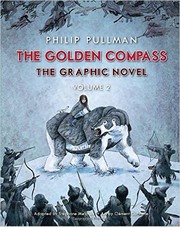
View source
https://openlibrary.org/works/OL17615692WReaders looking for a The Golden Compass review usually want to know two things at once: whether Philip Pullman's novel still works as an adventure for younger readers, and whether its reputation for seriousness, controversy, and thematic ambition is actually earned. The answer is yes on both counts. The Golden Compass remains one of the most persuasive crossover fantasies of its era because it gives readers a genuinely transportive invented world while also asking unusually sharp questions about authority, innocence, loyalty, knowledge, and the stories institutions tell in order to preserve power.
The Golden Compass review: a children's adventure with unusual moral and intellectual range
The easiest mistake to make with The Golden Compass is to describe it too narrowly. It is often shelved as children's or young adult fantasy, and it certainly delivers the pleasures associated with that space: a compelling young protagonist, an immediately intriguing world, secretive adults, dangerous discoveries, and a plot that moves with confidence. But the novel's enduring force comes from how much more it is doing beneath those pleasures. Pullman writes an adventure story that is also a book about consciousness, obedience, institutional power, and the painful process by which a child begins to understand that the adult world is structured by conflict rather than benevolence.
That double register is what makes the novel last. On one level, it is simply very readable. It knows how to seduce the reader through atmosphere, motion, and curiosity. On another, it is constructing a moral education. Lyra's growth is not presented as a matter of becoming tidier, better behaved, or more conventionally admirable. It is about learning how to interpret motives, how to recognize manipulation, and how to act when affection, trust, and power become tangled together. The book does not sentimentalize childhood. It treats childhood as a condition of openness, ignorance, instinct, and courage all at once.
Pullman also benefits from writing fantasy that feels specific without becoming inertly encyclopedic. The world of the novel is strange almost at once, but its strangeness is dramatized through lived details rather than lecture. The famous daemons are a perfect example. They are memorable because they are not just decorative creatures or branding devices for the world. They externalize inward life in a way that changes how readers think about intimacy, shame, maturity, and personhood. Very quickly, they stop feeling like a gimmick and start feeling like a structural principle.
This is one reason the novel remains such a strong gateway text. Readers can enter through the story, then discover that the story opens into bigger questions than they expected. In a catalog, that gives The Golden Compass a valuable position between the young adult and fantasy shelves. It is accessible, but it is not slight. It is imaginative, but it is not empty spectacle.
Why the world feels so alive so quickly
Many fantasy novels ask readers to do a lot of patient setup work before the world becomes vivid. Pullman is better than that. He creates immediate conviction. The institutions, social codes, regional differences, technologies, and mythic undertones of the book come into focus with an ease that makes the novel feel larger than it is. The reader does not need to memorize a system in order to feel oriented. Instead, orientation develops through use. We understand the world because characters move through it, depend on it, and fear it.
That skill matters because The Golden Compass is a book built on competing forms of knowledge. There is official knowledge, experimental knowledge, secret knowledge, child knowledge, street knowledge, and spiritual knowledge, and the plot gains force from the way these systems overlap and collide. Pullman never lets the world become a mere backdrop for ideas. The ideas are embodied in places, customs, institutions, and relationships. The best fantasy often works this way: the setting is not there to be admired from a distance, but to make moral pressures tangible.
The daemon concept deserves separate praise because it is the novel's boldest imaginative device and one of its richest. Daemons enlarge the emotional field of every scene. Fear, affection, embarrassment, aggression, and tenderness all become more visible because inward states are partially externalized. This gives Pullman access to a kind of dramatic shorthand that is also philosophically suggestive. The book can ask what it means to wound, constrain, separate, or misread another person in terms that remain concrete rather than abstract.
Just as important, the world is not built only for wonder. It is built for unease. From early on, the novel lets readers feel that beneath its grandeur there are coercive structures, hushed cruelties, and competing adult agendas. That tension is central to the atmosphere. The Golden Compass is not a cozy magical-world invitation. It is a fantasy of discovery in which discovery itself becomes morally costly. That darker undercurrent is part of why the novel still reads as more than a charming classic.
Lyra Belacqua is the book's great achievement
A fantasy novel can survive some softness in plot mechanics if its central consciousness is vivid enough, and Lyra is more than vivid. She is one of the most convincing child protagonists in modern fantasy because Pullman allows her to be messy in the right ways. She is brave, but not abstractly noble. She is imaginative, but not merely whimsical. She is socially intelligent, impulsive, proud, affectionate, deceptive, and hungry for attention and freedom. The result is a heroine who feels active from the first pages rather than ceremonially destined.
What makes Lyra especially strong is that her intelligence is not the sanitized intelligence of a model student. She reads people quickly. She improvises. She lies well. She notices status, tone, and danger. Pullman understands that a child moving through adult structures often survives by forms of intelligence that institutions themselves may undervalue. This gives the book a different texture from fantasies in which a young protagonist mainly succeeds by discovering hidden exceptionalism. Lyra is exceptional, but not in a way that excuses her from learning. Her errors matter, and some of them hurt.
That moral vulnerability is a major part of the novel's seriousness. Pullman does not flatten Lyra into innocence. He is interested in what innocence means when it is brave, cunning, exposed, and gradually forced into knowledge. The book respects child perception without pretending children already understand everything. That balance is hard to achieve. Too many novels either overidealize youth or write children as miniature adults. The Golden Compass does neither. Lyra feels like a child whose experiences are enlarging faster than her framework for interpreting them.
Her relationships are equally important. Without getting into heavy spoilers, the novel repeatedly places her in situations where love, dependence, admiration, and mistrust blur together. Adults in this book are not stable moral authorities. Some are admirable in one register and catastrophic in another. Some are seductive because they seem protective. Some are terrifying because they make care and control difficult to separate. Lyra's development therefore becomes a test not just of courage but of judgment. That is one reason adult rereads often reveal more than first readings did.
The book's themes: authority, innocence, and the cost of knowledge
The novel's thematic ambition is unusually high for a book so readable. Pullman is interested in theology, science, governance, freedom, and the uses of myth, but he is too strong a storyteller to let those concerns harden into lecture. Instead, they emerge through narrative pressure. The story continually asks who is allowed to define truth, whose version of morality becomes law, and what happens when institutions claim to protect the vulnerable while quietly demanding submission from them.
That question about authority is where the book's religious dimension matters. The Golden Compass is not casually anti-religious, and it is not simply using church-coded imagery as villainous atmosphere. It is more precise than that. Pullman is skeptical of authoritarian religious power, especially when it seeks to regulate curiosity, bodily life, and the development of independent consciousness. Readers who come to the book expecting that dimension to be incidental will misread it. It is central. At the same time, a balanced reading should note that the novel's true target is not private faith as such, but structures that sacralize control.
Innocence is another major concern, though not in the sentimental sense. The novel does not treat innocence as pure goodness that must remain untouched forever. It treats innocence as a state of possibility that becomes meaningful only because it is vulnerable to experience. Knowledge in Pullman is not automatically liberating. It can wound, estrange, and implicate. But ignorance is not romanticized either. The book is at its strongest when it shows that growing up involves losses that cannot be avoided, only interpreted.
This is why the novel continues to speak to older readers. Younger readers often feel the urgency of the adventure and the fear of compromised adults. Adult readers tend to see more clearly how the book stages a conflict between systems that want obedience and individuals who become human through complexity, attachment, and thought. In that sense, The Golden Compass belongs in conversation not only with fantasy but also with morally compressed speculative novels such as The Giver review and larger authority-centered dystopias such as 1984 review. It is not doing exactly what those books do, but it shares their concern with what organized power fears most in human beings.
Reader fit: who will love it, and who may bounce off it
This novel works especially well for readers who want fantasy to be genuinely transporting without being intellectually vacant. If you want a book that offers adventure, mystery, and strong visual imagination while also giving you something serious to think about afterward, The Golden Compass remains an excellent choice. It is also a strong recommendation for younger teen readers ready to move from plot-first fantasy into books where moral ambiguity and institutional critique have more weight.
Adult readers who skipped the book when they were younger may be surprised by how well it holds up. Pullman writes clearly enough for younger readers, but he never writes down to them, and he never assumes that accessibility requires simplification of theme. Adults who admire novels in which childhood perception collides with larger systems of power will find plenty to respect here. It is a particularly good crossover recommendation for parents, teachers, and book-club readers who want fantasy that invites discussion rather than only immersion.
The book is less ideal for readers who want fantasy to provide emotional safety or complete explanatory closure. It contains darkness, and not merely the theatrical kind. Some scenes and implications are disturbing in ways that linger. Pullman also prefers momentum and resonance over fully spelled-out metaphysical explanation. Readers who want every element of the world clarified, or every emotional thread tied up within one volume, may feel that the novel is opening doors faster than it closes them.
It can also be a poor fit for readers who are allergic to overt thematic intent. The Golden Compass is not a neutral entertainment machine. It has convictions. It wants to be read as a book about power, dogma, and consciousness, not just as a parade of interesting fantasy inventions. For many readers, that is exactly what gives it weight. For others, it may feel a little too purposeful. A good review should say that openly rather than pretending the novel is universally frictionless.
Pullman's style and pacing are stronger than the reputation for controversy
Because the book's themes have been discussed so often, especially in relation to religion and censorship debates, there is a risk that the novel gets reduced to its surrounding argument. That flattening does Pullman a disservice. Whatever one's response to the themes, The Golden Compass is first of all a skillfully written novel. Pullman controls scene construction well, escalates stakes with clarity, and knows how to move from institutional mystery to physical danger without making the story feel mechanically segmented.
His prose is not lush in the decorative high-fantasy sense, but it is exact where it needs to be. He can sketch a place or an emotional situation in a few strokes and then let dramatic movement do the rest. That economy is one reason the book remains readable across ages. Younger readers are carried by the action and atmosphere. Older readers can see how much structural control lies behind that apparent ease.
The pacing is especially good in the first half, where the book steadily enlarges its field of concern without losing immediacy. What begins in one local world grows outward into wider landscapes and wider conflicts, yet the narrative never feels as if it has abandoned its human center. Pullman understands that scale in fantasy only matters if readers continue to care about the people moving through it.
He is also very good at tonal layering. Wonder, menace, affection, grief, and curiosity coexist in this novel without canceling one another out. That balance gives the book its particular weather. It does not offer the relentless bleakness of some dystopian fiction, nor the pure consolatory warmth of gentler children's fantasy. Instead, it inhabits a middle register in which delight and dread constantly sharpen each other. That is a harder tonal space to manage than it looks.
Cautions and limits a professional review should name
The most obvious caution is thematic. Readers for whom criticism of religious authority feels inherently hostile may find the book difficult to receive generously. That does not mean the novel should be dismissed as merely provocative, but it does mean the reading experience can be strongly shaped by a reader's prior commitments. Pullman wants argument here. He is not hiding that.
A second caution is emotional intensity. Although the novel is often given to younger readers, it includes scenes and ideas that can be unsettling, especially because Pullman does not soften all consequences into moral reassurance. The book earns its darkness, but it does not always cushion it. Parents, teachers, and discussion leaders should think of it as a serious fantasy for younger readers rather than a universally gentle one.
There is also a structural limit worth mentioning. As the opening volume of a larger sequence, The Golden Compass provides a satisfying movement of discovery and transformation, but not every reader will consider it fully self-contained. If you prefer standalones that close every major conceptual loop, this may frustrate you somewhat. The novel ends at a meaningful point, but part of that meaning lies in what has only begun.
Finally, some readers may resist the book's combination of child adventure and philosophical seriousness. They may want more of one and less of the other: either a swifter, cleaner quest or a more adult, more intricate intellectual novel. Pullman is deliberately occupying the territory between those options. For many readers that hybrid quality is the triumph. For others it will be the sticking point.
What to read after The Golden Compass
The best follow-up depends on which part of the novel stays with you. If you want another young-reader classic that turns speculative elements into moral inquiry, A Wrinkle in Time review is a strong next stop. It is gentler in some ways, stranger in others, and similarly interested in the relationship between childhood, knowledge, and larger metaphysical conflict.
If what you admired most was the combination of youth, conscience, and critique of organized power, move to The Giver review or The Hunger Games review. Lowry is quieter and more allegorical; Suzanne Collins is more public, violent, and overtly political. Together they show three different ways young protagonists can be used to explore systems of control.
If your favorite element was the fantasy of moral formation itself, A Wizard of Earthsea review is one of the best possible companions. Ursula K. Le Guin is doing something less rebellious and less institutionally polemical than Pullman, but she shares his seriousness about growth, responsibility, and the inner cost of gaining knowledge. Readers who want a more emotionally direct and contemporary experience might also try A Monster Calls review, which is not a worldbuilding fantasy in the same way but is similarly unwilling to patronize younger readers about grief and truth.
These onward routes are part of why The Golden Compass matters in a library context. It is not just a famous book to check off. It is a junction title that helps readers discover whether they want more philosophically charged fantasy, more youth-centered dystopia, or more intimate coming-of-age fiction with speculative force.
Final assessment
The Golden Compass remains a major recommendation because it does several difficult things at once and does them with real authority. It gives readers an exciting fantasy world without relying on empty lore accumulation. It builds a child protagonist who is vivid, flawed, and genuinely alive. And it stages large questions about power, belief, and human development without sacrificing narrative momentum. That combination is rarer than the book's fame can make it seem.
Its limits are real. Some readers will resist the anti-authoritarian religious critique. Some will want a more self-contained ending or a more fully articulated metaphysical system. Some younger readers may find its darker material heavier than expected. But those cautions belong beside the recommendation, not in place of it. The novel's seriousness is one of its strengths, not a burden readers must excuse.
So the verdict of this The Golden Compass review is clear: Philip Pullman wrote a fantasy novel that still deserves to be read as both adventure and argument. It remains one of the best entry points for readers who want young adult fantasy to carry wonder, danger, and genuine intellectual consequence in the same breath.


