Book review
The Keep Review
F. Paul Wilson's 1981 horror novel traps German soldiers, a Jewish scholar, and an ancient force in a Romanian keep where evil resists easy comparison.
- Author
- F. Paul Wilson
- First published
- 1981
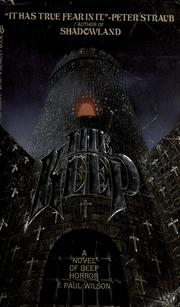
View source
https://openlibrary.org/works/OL108168WThe Keep review: two forms of evil behind one wall
This The Keep review concerns F. Paul Wilson's 1981 horror novel, the opening novel of the Adversary Cycle in the author's official bibliography. In 1941, German soldiers occupy an isolated keep in Romania and begin dying under impossible circumstances. SS authority intensifies the crisis. A Jewish scholar, Theodore Cuza, and his daughter Magda are forced into the site because knowledge of the building may help explain what is killing the occupiers.
The premise creates an immediate moral hazard. A force attacking Nazis may appear useful without being good. Wilson builds horror from that mistaken equivalence. Human evil is historically recognizable, organized, and armed. The older presence in the keep is initially obscure and can exploit the hope that any enemy of fascism must be an ally. The novel is strongest while motive remains uncertain and architecture, occupation, and fear reinforce one another.
The keep is a machine for uncertainty
The fortress is not merely remote scenery. Its walls, chambers, metal crosses, blocked spaces, and unfamiliar design make every attempt at explanation provisional. Soldiers can secure entrances without controlling what the building contains. Military occupation therefore fails at the level of knowledge before it fails at force.
A sealed setting also concentrates suspicion. Orders circulate through a hierarchy already shaped by fear and brutality. Each death can be interpreted as sabotage, local resistance, internal betrayal, or supernatural attack. The building prevents quick escape while preserving too many possible causes. On the horror shelf, this is classic spatial dread used with unusual historical pressure.
Nazi occupation cannot become neutral background
The soldiers and SS do not enter the keep as ordinary victims. They are agents of an occupying regime, and Theodore and Magda's forced presence is shaped by antisemitic power. The novel's suspense depends partly on readers refusing to identify vulnerability in one scene with innocence overall.
That distinction is ethically important. Supernatural threat does not erase historical responsibility. At the same time, depicting Nazis in danger can tempt a story to use fascism as instant moral shorthand. Wilson avoids the simplest version by giving the human hierarchy conflicts and choices, though the setting still requires readers to bring historical knowledge beyond the thriller's frame.
Cuza's knowledge is obtained through coercion
Theodore Cuza is valued for expertise while denied ordinary freedom and safety. His scholarship becomes a resource the occupiers believe they can command. The situation exposes the violence behind apparently practical requests for help. He is not a consultant entering a mystery voluntarily; he is a persecuted man forced to navigate between immediate captors and an unknown presence.
His perspective also complicates the temptation to welcome whatever kills German soldiers. Relief, vengeance, survival, and moral judgment cannot be cleanly separated under coercion. The supernatural force can use those pressures, offering apparent aid to someone whose suffering gives every reason to want the occupiers destroyed.
Magda keeps the stakes personal
Magda's presence prevents the conflict from remaining a contest among soldiers, scholars, and mythic powers. She must assess threats to her father, threats from the occupiers, and claims made by figures who appear to offer protection. Her choices have emotional urgency because neutrality is unavailable.
The novel's early-1980s gender dynamics can narrow her role when romance and protection enter the plot. Still, she is more than a witness to male conflict. Her skepticism and loyalty matter to how alliances are evaluated. Readers should notice where the story grants her judgment and where its genre conventions redirect agency elsewhere.
The enemy of an enemy is not salvation
The central thematic strength is the manipulation of comparison. Nazi brutality is so immediate that an older force opposed to it can present itself through contrast. If one side is visibly monstrous, the other may need only to appear less monstrous. The keep's mystery gives that logic time to work.
Wilson thereby turns a familiar strategic proverb into horror. Temporary alignment can conceal incompatible ends. A being capable of attacking oppressors may still regard every human life instrumentally. The novel does not ask readers to balance or equate evils. It asks how desperate people judge an unknown power when the known power already threatens them.
Strengths of The Keep
The first strength is atmosphere. Isolation, stone, weather, military occupation, and unexplained death create a sustained closed-system dread. The second is moral architecture. The supernatural plot cannot be removed from 1941 without losing the temptation that drives it.
A third strength is escalation from investigation to mythology. Clues in the structure and deaths create a mystery before the larger conflict becomes visible. Some readers will prefer the first phase, but the expansion gives the novel a place within Wilson's broader Adversary Cycle. The mystery and thriller shelf is therefore as relevant as horror.
Cautions about violence and mythic explanation
The book includes fascist violence, antisemitism, coercion, torture, murder, bodily violation, and supernatural horror. Historical victims share pages with invented evil, and readers should not let the fantasy flatten the specificity of the Holocaust-era setting.
As the mythology becomes explicit, dread can shift into confrontation and exposition. Readers who prefer an unexplained haunting may find the later shape less frightening. Some characterization and romance also reflect the period of publication. The novel's strongest moral question survives these dated elements, but not every scene handles them with equal nuance.
Reader fit and series position
Choose The Keep if you want historical horror, a fortified location, competing explanations, and a plot that eventually opens into cosmic conflict. Avoid it if you need quiet ambiguity through the final page or if Nazi settings are currently too difficult.
The author's bibliography identifies the novel with the Adversary Cycle, but it can be read as the first encounter with that mythology. No earlier volume is required. Later books expand the conflict, so readers who prefer a wholly sealed standalone should know that the novel's larger forces do not end with one building.
Alternatives and final verdict
For another horror story in which a building holds an old threat, compare The House on Hackman's Hill review. For historical supernatural terror centered on racist institutions, The Reformatory review offers a different and more recent approach. For moral uncertainty around private punishment, The Evil Shepherd review shifts from supernatural war to legal crime.
The Keep remains effective because its central temptation is morally exact. People trapped under fascist power have every reason to welcome its destruction, and that reason makes them vulnerable to another force's story about itself. Wilson's mythology can become more conventional than his opening mystery, but the Romanian fortress, the coerced scholar, and the fatal appeal of comparative evil give the novel lasting force.
The danger of choosing the useful monster
The supernatural presence gains leverage because the human evil around the keep is immediate, organized, and historically recognizable. Under occupation, a force that kills German soldiers can appear liberating before anyone understands what it wants. Wilson uses that temptation to complicate the familiar fantasy of fighting one darkness with another. The choice is not made by people with safe alternatives; coercion and persecution narrow their field of judgment, which makes easy condemnation inadequate. At the same time, desperation does not transform a destructive power into an ally.
This comparative structure is the novel's strongest moral device. The ancient threat risks becoming less frightening when the mythology is explained, while the human regime never needs supernatural enlargement to establish its brutality. Readers should therefore resist treating the two evils as interchangeable symbols. Their origins and forms of responsibility differ. The horror lies in the way one creates conditions that let the other solicit trust, promising protection to people whose real persecutors have made almost any counterforce look welcome.


