Book review
The Mysterious Affair at Styles Review
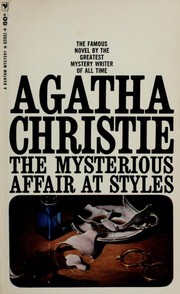
Poirot's first published case turns the poisoning of Emily Inglethorp into a test of domestic observation, timing, documents, and Hastings's confidence.
- Author
- Agatha Christie
- First published
- 1920
View source
https://openlibrary.org/works/OL472715WThe Mysterious Affair at Styles review: Poirot's method begins at home
This The Mysterious Affair at Styles review argues that Agatha Christie's first novel works because the poisoning of Emily Inglethorp is simultaneously a chemical puzzle and a family crisis. Arthur Hastings, recovering during the First World War, visits Styles Court and encounters resentments around money, marriage, inheritance, and wartime displacement. When Emily dies, the household's intimate knowledge creates suspects rather than clarity.
Hercule Poirot's debut establishes many pleasures of mystery and thriller fiction: small physical details, a companion who misreads them, staged questioning, and a final reconstruction. The book's period class assumptions remain visible, but its clue design is more than historical curiosity.
Arthur Hastings and the confidence of a partial witness
Hastings narrates with sincerity, romantic susceptibility, and a firm belief that he recognizes suspicious behavior. Christie uses those qualities to manage information. He reports accurately enough for a reader to compete, then interprets according to melodramatic expectations. His errors feel plausible because they arise from temperament.
As a war-injured officer, Hastings also provides the route into Styles and the Belgian refugee community nearby. His reunion with Poirot links private hospitality to a displaced Europe. Yet Hastings tends to treat servants, women, and foreigners through conventional categories. The narration's charm should not make those filters invisible.
Emily Inglethorp and a household organized by money
Emily is wealthy, energetic, controlling, and newly married to the much younger Alfred Inglethorp. Her financial authority sustains the household while generating dependence and resentment. The murder therefore cannot be reduced to one obviously mercenary husband. Wills, allowances, work, and expectation connect everyone to her decisions.
Christie gives Emily enough force that her absence changes the social structure. Even so, we know her largely through potential heirs and suspects. The investigation recovers the mechanics of her death more fully than her interior life. This imbalance would remain common in Golden Age fiction.
Alfred Inglethorp and the danger of looking guilty
Alfred's appearance, manner, and marriage make him an immediate object of suspicion. Hastings's dislike encourages the reader to treat obvious motive as proof. Poirot insists on sequence and material compatibility instead. A person can be unpleasant, secretive, and financially interested without every apparent clue fitting the crime.
The handling of Alfred demonstrates Christie's interest in overdetermined suspicion. Evidence that seems to settle a case may have been arranged precisely because everyone expects it. The detective's work is not simply to find a hidden fact but to ask who benefits from a fact being conspicuous.
Strychnine, timing, and the material puzzle
The poisoning depends on medicine, household access, purchases, documents, and a carefully constructed timeline. Christie expects readers to attend to when substances are taken, how they behave, and which testimony fixes an event. The chemistry belongs to the solution rather than serving as exotic decoration.
Current readers need not reproduce the procedure, and the novel is not a medical guide. Its craft lies in distributing necessary information among mundane details. A cup, a locked box, a stain, or a written word changes meaning when the chronology is corrected. Readers of science and nature should value the evidentiary role without assuming every historical toxicological claim transfers directly to modern practice.
Poirot's little grey cells and ethical concealment
Poirot observes order, behavior, and inconsistency. His phrase about the little grey cells names reflection rather than mystical intuition. He rearranges known facts and sometimes withholds his synthesis from Hastings. The final gathering turns explanation into public judgment.
His method already includes manipulation. Poirot may allow suspicion to develop or stage pressure to obtain a response. The novel treats this as legitimate because the true culprit is dangerous. Readers can still ask how much control a private detective should exercise over people who have not been charged.
Styles Court during wartime
The country house is not sealed from history. Hastings's convalescence, Poirot's refugee status, nursing and war work, and disruptions of ordinary roles place the case in 1916 even when publication came later. The war remains background rather than central trauma, but it explains unusual proximities and absences.
This context adds poignancy to Poirot's position. His expertise enters English society through forced displacement, while some characters regard foreignness with suspicion. The novel both uses and occasionally reproduces national stereotype. A historically alert reading should keep both elements in view.
Fair play, misdirection, and the final assembly
Christie plants clues early, but fair play does not mean ease. Readers must remember documents, relationships, and physical timing while resisting Hastings's emphases. The solution is audacious because it revises how separate actions relate without declaring the earlier evidence false.
The final explanation is lengthy by modern standards. It rewards close reading and can overwhelm anyone who treated the middle as atmosphere. That density defines the book's reader fit: puzzle lovers will enjoy reconstruction, while readers seeking intimate psychology may feel character has been subordinated to mechanism.
Mary, John, Cynthia, and domestic roles under suspicion
The Cavendishes and Cynthia Murdoch give Styles more than a list of motives. John lives under financial dependence and marital strain; Mary protects an interior independence Hastings finds difficult to read; Cynthia works in a dispensary and occupies an uncertain place in the household. Their roles determine access, gossip, and how suspicious conduct is interpreted.
Hastings is especially prone to romantic narratives about women. Poirot's method corrects some of these errors without making the novel free of period gender assumptions. The household's emotional secrecy is not identical with criminal concealment, an important distinction in a story where nearly everyone has something to hide.
Christie thereby establishes a recurring technique: solve the murder by disentangling overlapping secrets. A false inference can be reasonable because the observed behavior points to a real concern, just not the poisoning.
Dorcas and the evidentiary value of household labor
Dorcas and other servants know rooms, habits, clothing, meals, and changes in routine because maintaining the house requires attention. Their testimony is indispensable, even though class hierarchy positions them as observers of a drama centered on employers. Poirot treats mundane knowledge as evidence more seriously than Hastings often does.
The mystery depends on this asymmetry. People with social authority may control wills and accusations, while people doing domestic work know who moved where and what was out of place. Christie uses that knowledge without fully exploring the servants' own stakes after Emily's death.
A class-conscious reading should preserve both facts: the clue architecture recognizes labor's observational power, and the narrative still returns interpretive ownership to Poirot. The country house is solvable because many people sustain it, not because its wealthy residents see everything. Styles Court is therefore both a family home and an information system whose least powerful participants may notice the most.
Alternatives for comparison
A comparison with Metamorphosis Review helps test how another narrative distributes knowledge, danger, and responsibility.
Final verdict and alternatives
This is an excellent starting point for readers curious about Poirot's origin and a useful comparison with later classic literature mysteries. It contains murder, poisoning, class hierarchy, wartime prejudice, and period attitudes, but little graphic violence. An annotated edition can clarify medical and historical details.
The Mysterious Affair at Styles endures because Emily Inglethorp's household is a system of money and feeling before it becomes a list of suspects. Arthur Hastings makes error readable; Alfred Inglethorp demonstrates the trap of obvious guilt; Poirot makes chronology moral. The debut is less polished than Christie's finest novels, yet its central mechanism remains both fair and surprising.


