Book review
The perennial philosophy Review
This The perennial philosophy review examines how the book frames enduring spiritual and philosophical questions for reflective readers.
- Author
- Aldous Huxley
- First published
- 1945
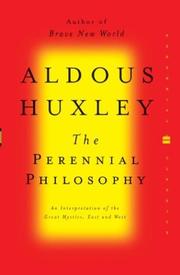
View source
https://openlibrary.org/works/OL64463WThe perennial philosophy review: what kind of book this is
The perennial philosophy review is best understood as a review of method as much as of content. The book is not simply collecting agreeable quotations or assembling a decorative sense of wisdom. It is trying to build an interpretive frame through which spiritual and philosophical traditions can be compared. That means the reader is not only evaluating claims; the reader is also evaluating the act of comparison itself.
That makes the book unusually important inside a catalog that serves readers with different expectations. Some readers want philosophy that stays close to argument. Some want a broader humanistic synthesis that links ideas to practice. Some want a book that can sit between philosophy and psychology, because they are less interested in disciplinary boundaries than in the lived problem of how people understand suffering, meaning, discipline, and attention. The perennial philosophy review helps sort those motives before the book is opened.
The philosophy and psychology shelf is the obvious home, but the adjacent business and growth shelf shows how often readers reach for this book when they want language for development, self-understanding, or disciplined change. That does not make the book a productivity manual. It means the catalog needs to explain the gap between reflective reading and instrumental reading.
This review matters because The perennial philosophy is not easy to reduce to a single recommendation. It is a book of claims about what lasts, what matters, and what counts as meaningful knowledge. Readers need to know whether they want that kind of synthesis before they commit.
The book's central task
The central task in The perennial philosophy is synthesis. The book tries to show that apparently different traditions can be read as speaking to one another. That is an ambitious move, and ambition is not automatically a virtue. It creates an obligation to justify selection, emphasis, and interpretation.
The perennial philosophy review should therefore ask whether the synthesis is illuminating. Does the book help a reader notice common pressures across traditions, or does it smooth out differences that ought to remain distinct? That question is more valuable than a simple yes-or-no judgment because the book's power lies in the tension between broad pattern and specific doctrine.
Readers who value comparison will likely appreciate the book's attempt to turn many voices into a usable framework. Readers who prefer carefully bounded historical argument may feel the pressure of the book's scope. Both reactions are valid. The real issue is whether the synthesis produces insight without becoming so general that it loses force.
When the book works, it gives the reader a way to think about meaning as a practice rather than as a slogan. It treats attention, ethics, suffering, discipline, and inward life as linked problems. That is the kind of reading that can stay with a person because it changes how later books are encountered.
Why readers still return to it
Readers still return to The perennial philosophy because it answers a stubborn question: what survives when particular doctrines, historical settings, and cultural vocabularies are set side by side? The book is not merely asking what different traditions have in common. It is asking what kinds of attention are required to notice that commonality without flattening the differences that give each tradition its shape.
That is why the book remains interesting even when a reader disagrees with some of its choices. Disagreement is not always a sign of failure. Sometimes it means the book has successfully framed the problem in a way that now demands a more precise answer. The perennial philosophy review therefore treats the book as an engine for reflection. The reader may not assent to every claim, but the book can still sharpen the reader's sense of what counts as a good question.
The book also remains relevant because many readers want a bridge between text and practice. They want philosophy to be more than abstraction, but they do not want an easy moral lesson. This book sits in that interval. It is serious about spiritual and philosophical inheritance, and it assumes that interpretation matters because interpretation affects how life is lived.
Reader fit and likely response
The perennial philosophy is a better fit for readers who do not mind slow argument and comparative thinking. It rewards readers who enjoy testing claims against one another and who are willing to move between traditions without needing every transition to be tidy. That kind of reader often values reflection over immediacy and synthesis over isolated insight.
Readers who want a single doctrine defended with narrow precision may find the book too wide-ranging. Readers who prefer philosophy to remain strictly within academic method may also resist the book's blend of interpretation, spiritual language, and psychological interest. None of that makes the book weak. It just means the book asks for a different kind of patience.
The strongest fit is therefore a reader who wants to compare ancient counsel, modern psychology, existential thought, and applied frameworks for human behavior without pretending those modes are identical. That reader may come to The perennial philosophy expecting a guide to meaning and leave with a sharper sense of how complicated such a guide must be.
Strengths and cautions
One strength of The perennial philosophy is that it gives structure to a vast topic. Without structure, books about meaning can dissolve into atmosphere. This book tries to keep the subject legible. It brings together ethics, attention, suffering, and self-transformation in a way that lets the reader compare disparate ideas without losing the thread.
Another strength is conversational reach. The book can sit beside The Voice of the Master, John Brown, and Dictionnaire philosophique as a way of showing how different forms of philosophical writing handle authority, argument, and human value. Those comparisons do not erase the book's distinct voice. They make its method easier to see.
The caution is that synthesis can become totalizing. A book that tries to gather too much under one interpretive umbrella may make some readers uneasy. That unease is worth taking seriously. If the book seems too confident in its pattern, the reader should ask whether the pattern is clarifying the material or constraining it. The question is not whether the book is profound in the abstract. The question is whether it remains precise while reaching broadly.
Context and comparisons
The catalog context matters because The perennial philosophy is often read for different reasons at once. On one hand, it belongs to philosophy and psychology, where readers look for interpretive frameworks, ethical vocabulary, and attention to inward life. On the other, the business and growth placement reminds us that some readers approach it as a practical aid to self understanding. The review is most helpful when it keeps those uses separate enough to remain honest.
The related reviews help here. The Voice of the Master can show how a book frames authority and teaching. John Brown can show how moral seriousness changes under historical pressure. Dictionnaire philosophique can show how philosophical writing can be compressed, sharp, and polemical without losing force. Together they give The perennial philosophy a richer context than any single shelf label could.
That context is not decorative. It helps readers decide whether they want a book that synthesizes or a book that challenges synthesis from the start. The perennial philosophy lives in that tension.
Final assessment
The perennial philosophy deserves its place in the catalog because it is serious about the problem of meaning. It does not simply collect ideas; it asks what survives comparison and what the reader owes to the traditions being compared. That makes the book valuable for readers who want philosophy to carry ethical and spiritual weight.
The book is most persuasive when the reader accepts that its ambition is part of its method. The synthesis may not satisfy every reader, but it gives the reader a clear position from which to think. For Online Library, that is enough to make the book useful: it creates a route into larger questions, and it does so with enough structure that the next choice becomes more informed.


