Book review
The Sixth Extinction Review
This The Sixth Extinction review evaluates climate-facing science communication and examines how Kolbert links deep-time ecology to present policy urgency.
- Author
- Elizabeth Kolbert
- First published
- 2014
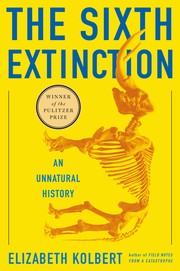
View source
https://openlibrary.org/works/OL16820830WThe Sixth Extinction review: a landmark of environmental narrative nonfiction
This The Sixth Extinction review argues that Elizabeth Kolbert's book remains one of the clearest and most unsettling works of general-audience environmental writing because it changes the reader's sense of scale. Rather than treating extinction as a distant scientific abstraction, Kolbert presents it as a pattern visible across field sites, species histories, and human systems of extraction, transport, and denial. The book's thesis is severe but disciplined: humanity is not merely witnessing ecological disruption from the outside but participating in a planetary event that will be read, in deep time, as one more extinction interval. What makes the book memorable is that Kolbert does not deliver that argument in the language of apocalypse alone. She builds it through scenes, encounters, and explanatory compression, making a vast subject feel narratable without pretending it has become manageable.
That quality gives the book strong placement in history and ideas, even though many readers will first approach it as science writing. The Sixth Extinction is not a technical handbook, a policy brief, or a synthetic textbook on ecology. It is a work of reported argument. Kolbert moves between past extinction events and present ecological stress in order to show how public understanding is shaped: what counts as evidence, what kinds of losses become legible, and why slow-moving damage is so difficult to feel at the scale where institutions usually make decisions. The result is a book that is both highly readable and intellectually sobering.
The central judgment of this review is that The Sixth Extinction is excellent when read for orientation, moral seriousness, and narrative clarity. Its strengths are considerable: vivid field reporting, elegant control of explanatory pace, and a rare ability to connect paleontology, evolutionary history, and contemporary environmental disruption without collapsing them into one undifferentiated alarm. Its cautions are equally important. The book is selective rather than exhaustive, emotionally cumulative by design, and better at persuading readers that the crisis is real than at giving them a full framework for scientific method or policy choice. Read with those limits in view, it is an unusually strong example of public-facing nonfiction that sharpens both attention and judgment.
What Kolbert is actually doing on the page
One of the book's achievements is that it understands extinction not only as a biological topic but as a narrative problem. Species loss is difficult to dramatize because it often unfolds unevenly, across long timescales, through mechanisms that are technically complex and emotionally indirect. Kolbert solves that problem by refusing to write a purely abstract overview. Instead she travels, observes, interviews, and stages the subject through concrete places and living systems. The reader moves through caves, reefs, forests, laboratories, and research communities, encountering extinction not as a single event but as a series of pressures that accumulate into a pattern.
That structure matters. A weaker version of this book would have been content to announce a thesis and then pile up examples as confirmation. Kolbert is more controlled than that. Her chapters are not interchangeable case files. Each one slightly adjusts the reader's understanding of causation, vulnerability, and scale. Sometimes the emphasis falls on habitat disruption, sometimes on invasive spread, sometimes on ocean chemistry, sometimes on the sheer historical strangeness of human beings becoming a geological force. The book gains its authority from this movement across registers. It teaches by recontextualizing.
This is why The Sixth Extinction should not be mistaken for a neutral survey of all environmental knowledge. Kolbert is choosing scenes that can carry argumentative weight for non-specialist readers. She is building a pattern that can be felt. That selectivity is not a defect in itself; it is part of the book's form. But it does mean readers should understand the difference between a powerful synthesis and a comprehensive scientific account. The book earns trust through responsible explanation and careful reporting, yet it remains an authored arrangement of evidence rather than an exhaustive map of every ecological debate.
Readers who know Kolbert's later Under a White Sky review will notice a family resemblance. Both books ask what happens when human activity reorganizes natural systems at large scale. But The Sixth Extinction is more foundational and more haunting. Where Under a White Sky often turns toward managed interventions in already damaged systems, The Sixth Extinction is preoccupied with the historical and biological fact of loss itself: what disappears, what lingers, and what it means to recognize catastrophe while still living inside its opening chapters.
How the book turns deep time into present-tense pressure
Kolbert's signature move is temporal compression. She takes a subject that properly belongs to geological and evolutionary timescales and brings it into ordinary reading time without trivializing it. That is harder than it sounds. Once a writer invokes "deep time," the prose can easily become foggy, grandiose, or numbingly remote. Kolbert avoids those traps by alternating between the ancient and the immediate. Extinction is framed as a recurring feature of life's history, but the present moment is never allowed to dissolve into abstraction. The book keeps reminding the reader that the current episode differs from earlier ones because its driving agent is not an asteroid or volcanic episode but a species remaking habitats, climates, and movement patterns at unprecedented speed.
This temporal method is one reason the book has had such durable cultural influence. It gives readers a way to think historically without relieving them of contemporary responsibility. If the book only emphasized present-day alarm, it might feel journalistic and time-bound. If it only emphasized the long history of planetary change, it might feel coolly detached, even fatalistic. Kolbert keeps both frames in tension. She writes as though understanding the ancient past should increase, not decrease, the force of present attention.
That tension also explains the book's atmosphere. The Sixth Extinction is not shrill, but it is unrelenting. The reader is repeatedly asked to hold two thoughts together: life has survived immense upheavals before, and survival at the level of life in general tells us very little about the losses experienced by particular creatures, habitats, or human communities. Kolbert does not sentimentalize the nonhuman world, yet she is alert to how language can flatten it. The cumulative effect is not simply sadness. It is a sharpened sense of asymmetry between the scale of what is being changed and the ordinary habits through which societies continue to speak about progress.
For readers who want a broader science-writing comparison, A Short History of Nearly Everything review offers a useful counterpoint. Bill Bryson's book is curious, generous, and wide-ranging in its approach to scientific discovery. Kolbert is narrower in scope and more morally focused. Bryson tends to expand wonder; Kolbert narrows it into consequence. Reading both highlights how much tone matters in popular science when the underlying question is not only what the world is like, but what humans are doing inside it.
Strengths: clarity, structure, and the discipline of scene
The first major strength is explanatory economy. Kolbert can condense technical material without making it feel flattened or condescending. She knows how much a general reader needs at any given moment and when to return from theory to observed detail. That balance is one of the hardest things in science-adjacent nonfiction. Too much explanation and the narrative stalls; too little and the argument depends on atmosphere rather than understanding. The Sixth Extinction stays persuasive because it usually gives the reader enough structure to know why each example matters.
The second strength is scene construction. Kolbert is a reporter, and the book benefits from her sense of place, procedure, and expert encounter. Researchers are not treated as interchangeable talking heads whose only job is to validate the thesis. Their work environments, methods, uncertainties, and habits of attention matter. That gives the book texture and helps prevent it from drifting into a sermon about environmental guilt. The argument becomes more credible because it arises through contact with working knowledge rather than detached opinion.
The third strength is proportion. Kolbert understands that public environmental writing often fails by choosing one false solution or the other: either technocratic coolness that drains the subject of moral weight, or total emotional escalation that makes every paragraph sound like the last warning before collapse. Her book is urgent, but its urgency is modulated. She allows bewilderment, irony, and even moments of strange fascination to coexist with alarm. That tonal range is part of why the book feels literary rather than merely informational.
Another strength is that Kolbert rarely writes as though humans stand outside the systems they study. This may sound obvious, but much environmental prose still falls into a split between observers and damage, as if the reader were being shown a crisis happening somewhere else. The Sixth Extinction is more destabilizing. It keeps implying that modern transport, consumption, development, and scientific mastery are not side notes to the story. They are part of the mechanism. That implication gives the book civic force without reducing it to advocacy copy.
It also makes the book a good companion to The Invention of Nature review, which considers how natural systems have been understood, named, and interconnected in intellectual history. The two books differ sharply in mood, but they share an interest in scale and relation. Humboldt's world is one of expanding pattern recognition; Kolbert's is one in which pattern recognition arrives under conditions of damage. Read together, they show how descriptions of nature can move from wonder to warning without ceasing to be acts of thought.
Cautions: where the book narrows, simplifies, or presses too hard
The main caution is that The Sixth Extinction is stronger as environmental interpretation than as scientific totality. Kolbert's case studies are vivid, but vividness has consequences. A reader can come away remembering emblematic creatures and dramatic field moments more clearly than the full range of uncertainty, debate, or regional variation behind them. That is not because Kolbert is careless; it is because narrative is selective by nature. The book's power depends on that selectivity, and readers should be aware of it.
A second caution concerns mood. Kolbert's cumulative structure can create a reading experience in which every chapter deepens the sense of irreversible pressure. Many readers will rightly see this as honest to the subject. Others may find that the emotional continuity narrows their sense of agency. The book is excellent at making complacency difficult. It is less interested in dwelling on the uneven, procedural, sometimes frustratingly incremental ways institutions respond to ecological knowledge. That does not weaken the book as criticism, but it does shape its aftereffect.
There is also a boundary around method. Because the book is written for broad audiences, it does not spend equal time on the technical architecture behind every claim. Readers looking for deep methodological discussion, model comparison, or detailed policy design will need more specialized sources after finishing it. Kolbert's job here is to synthesize, not to recreate the full evidentiary machinery of ecology, conservation biology, paleontology, ocean science, and climate research inside one volume.
Finally, the book can sometimes make human beings feel conceptually uniform, even though in practice responsibility, vulnerability, and power are unevenly distributed. Kolbert certainly knows this, and the book is not naive about systems or history. Still, its scale is so large that differences among governments, industries, classes, and regions sometimes recede behind the species-level fact of human planetary force. That broad frame is essential to the thesis, but it also leaves room for readers to ask harder follow-up questions about politics, economics, and unequal exposure.
For a sharper comparison in rhetoric, The Uninhabitable Earth review is a useful next step. Wallace-Wells is more overtly essayistic and more concentrated on climate consequence as a public-imagination problem. Kolbert is steadier, more field-reported, and more biologically grounded. Some readers will prefer Kolbert's cooler discipline; others will find Wallace-Wells more explicit about cascading human stakes. The contrast helps clarify what kind of environmental writing you trust most.
Style, voice, and evidence boundaries
Kolbert's prose is deceptively plain. She does not depend on ornamental rhetoric to signal seriousness, and that restraint is one reason the book travels so well across audiences. The sentences are clear without being thin. They move quickly, but not carelessly. She knows how to turn a scientific premise into readable narrative momentum, and she knows when to let a fact stand without overdressing it in emotion. That stylistic self-command gives the book much of its authority.
Just as important is Kolbert's handling of expertise. She neither romanticizes scientists nor treats them as mere instruments for a predetermined argument. The book is interested in how knowledge gets made: in observation, classification, field difficulty, and disciplinary patience. That interest keeps the reporting grounded. Even when the book is making a large civilizational claim, it continues to return to particular investigators and specific forms of evidence. The result is a sense that the argument has been earned through contact with work, not merely assembled from headlines.
Still, readers should keep the evidence boundary visible. The Sixth Extinction is not a meta-analysis, a technical literature review, or a policy blueprint. It is a literary act of synthesis. That matters because books of this kind are sometimes praised or attacked for being the wrong genre. Supporters may treat them as definitive because they are compelling; skeptics may dismiss them because they are not exhaustive. Both responses miss the point. Kolbert is writing a serious general nonfiction book whose task is to reorganize perception and moral attention. Judged by that standard, it is highly effective.
That is also why this review pairs it meaningfully with The Immortal Life of Henrietta Lacks review. The subjects are very different, but both books understand that public knowledge depends on narrative form. Each translates specialized domains into humanly legible terms without pretending that translation is neutral. Each asks readers to notice not only the facts at issue, but the structures through which facts become socially meaningful.
Who should read it, and who may want a different book
The Sixth Extinction is best for readers who want environmental nonfiction that is intellectually serious, narratively controlled, and accessible without being lightweight. It will especially reward readers interested in biodiversity loss, science communication, environmental history, and the cultural problem of perceiving slow catastrophe. Teachers, journalists, policy-adjacent readers, and generally curious nonspecialists will all find something durable here, provided they want a book that sharpens awareness more than it supplies operational plans.
It is also a strong choice for readers who suspect they know the headline version of ecological crisis but have not yet felt its historical or biological dimension. Kolbert is very good at converting abstract concern into concrete understanding. She gives the reader mental furniture: extinction events, species vulnerability, human transport networks, disrupted habitats, and the uneasy fact that knowledge can expand even as the living world is diminished. That is a substantial gift, especially for readers entering the subject from outside science.
It may be less ideal for readers seeking either optimism or technical granularity. If you want a book centered on solutions, implementation pathways, or detailed institutional design, this is not primarily that book. If you want deep scientific method on every topic it touches, it is not that either. Its power lies in synthesis, structure, and moral pressure. Readers who come wanting those things will usually admire it. Readers wanting a technical manual may respect it without feeling fully satisfied.
Within UtoRead, it also works well as a bridge title for readers moving through best books for curious readers. It belongs there not because it is generically edifying, but because it changes the standard by which adjacent nonfiction is judged. After Kolbert, the reader is more likely to ask whether a book can connect expert knowledge to lived consequence without simplification. That is a valuable reading habit to acquire.
Alternatives and reading pathways
If what you most want is a continuation of Kolbert's environmental thinking in a later register, begin with Under a White Sky review. That book is less about announcing the reality of large-scale ecological damage and more about the strange, compromised future of managing it. It makes a strong sequel in sensibility, though it is less foundational as a first encounter.
If you want environmental writing that presses harder on climate consequence and public dread, move to The Uninhabitable Earth review. That book is more essayistic and more concentrated on human futures, whereas The Sixth Extinction spreads its attention across species history, field science, and evolutionary perspective. Readers deciding between them should ask whether they want a book about planetary loss broadly understood or one more tightly focused on climate-era human risk.
If you want a longer intellectual backdrop for how natural systems came to be understood as interconnected wholes, The Invention of Nature review is an excellent complement. Humboldt's world helps explain how ecological relation became thinkable; Kolbert's shows what it means to inherit that relational knowledge under conditions of accelerating damage.
And if what you most admire in Kolbert is her ability to make science readable without flattening it, A Short History of Nearly Everything review offers a broader, more companionable version of that achievement. Bryson is less severe, less ethically concentrated, and less single-minded about ecological loss, but the comparison is productive precisely because it reveals how popular science changes when wonder gives way to warning.
Final judgment
The Sixth Extinction deserves its standing because it is not content to inform the reader that environmental disruption exists. It reorders the reader's sense of where contemporary human life sits in the history of life itself. That is a formidable ambition, and Kolbert largely achieves it through restraint rather than spectacle: through lucid prose, careful scene selection, and a disciplined sense of what general readers need in order to grasp the stakes without being patronized.
Its limitations should remain in view. This is a selective narrative synthesis, not a complete technical account or a policy manual. It can leave readers with dread more readily than with institutional direction, and its species-level frame sometimes smooths over political unevenness. Even so, judged as professional environmental nonfiction for broad audiences, it is exceptionally strong. For readers who want a serious, memorable book about biodiversity loss, mass extinction, and the difficulty of recognizing planetary change while living through it, The Sixth Extinction is easy to recommend and hard to forget.


