Book review
The Sword of Shannara Review
A long-form review of Terry Brooks's The Sword of Shannara focused on classic fantasy structure, reader fit, and alternatives.
- Author
- Terry Brooks
- First published
- 1976
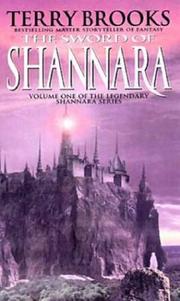
View source
https://openlibrary.org/works/OL5683445WThe Sword of Shannara review: why the book belongs in the catalog
The Sword of Shannara review reads The Sword of Shannara as a foundational quest fantasy: a novel that uses inherited myth, peril, and travel to test magic, power, invented history, moral scale, and the cost of wonder. The Sword of Shannara belongs first on the fantasy shelf, but it becomes more useful when the reader treats category as a doorway rather than a verdict. Its secondary link to Young Adult Reviews matters because the book's adventure logic often reads with the directness and momentum associated with coming-of-age fantasy, even when its scale is more expansive.
The main reason to review The Sword of Shannara is not reputation alone. Terry Brooks's novel gives readers a specific problem to test: how a work handles magic, power, invented history, moral scale, and the cost of wonder. That question is more useful than asking whether the book is simply famous, influential, or familiar.
Online Library needs books like The Sword of Shannara because a large catalog should help readers compare expectations before they commit time. A review should make the next choice easier, and The Sword of Shannara does that by clarifying a route through fantasy that prizes quest architecture, clear danger, and the feeling of a world arranged beyond the page.
What The Sword of Shannara is doing
The Sword of Shannara works as a large-scale quest fantasy because Brooks commits to inheritance, pursuit, companionship, and a moral object that gathers the story around it. The novel is not built around ambiguity first. It is built around movement: a vulnerable heir, dangerous territory, older powers, and a world whose past keeps pressing on the present.
That design gives the book its clearest use. Readers meet a fantasy mode in which landscape, lore, and threat are arranged to make the quest feel consequential. The pleasure is not only in surprise. It is in watching a familiar adventure pattern become legible piece by piece, with danger, guidance, and testing placed along the road.
A plot summary can describe the journey, but it cannot show how Brooks uses distance, delay, and companionship to create scale. The world matters because it changes how the reader experiences the road. Mountains, ruins, hidden histories, and hostile powers are not neutral background. They make the quest feel as if it is crossing an old world rather than simply moving between scenes.
Reader fit and likely response
The Sword of Shannara will work best for readers choosing between immersive worldbuilding, character-led adventure, and more literary forms of enchantment. That reader is likely to appreciate its earnest quest structure instead of demanding that it behave like a more compressed or ironic fantasy.
Readers may struggle with The Sword of Shannara if they want compressed modern plotting, constant irony, or a fantasy world that hides its debt to earlier quest traditions. Brooks writes in a mode that is open about its appetite for prophecy, fellowship, dark power, and moral burden. The book is easiest to value when that openness is treated as part of its design.
The practical test is whether the reader wants a direct quest experience: a long road, escalating danger, and a story that treats courage and inheritance seriously. Readers who find that mode stirring may respond warmly. Readers who want denser psychological shading or sharper formal disruption may want to pair this with a contrasting fantasy rather than make it the endpoint.
Strengths of The Sword of Shannara
The strongest argument for The Sword of Shannara is its clarity of shape. Brooks understands the appeal of a quest that begins with ordinary vulnerability and expands toward ancient conflict. The novel gives readers companions, thresholds, dangers, and revelations in a pattern that is easy to enter and broad enough to sustain a long adventure.
The second strength is its catalog value as post-Tolkien popular fantasy. The book helps readers see what happens when epic fantasy becomes a mass reading path rather than only a literary inheritance. It carries familiar materials into a more accessible adventure rhythm, and that makes it useful even for readers who later prefer stranger, tighter, or more self-aware fantasy.
The Sword of Shannara also has route value. Placed beside Maskerade, Winnie-the-Pooh: The House at Pooh Corner, and John Dough and the Cherub, it helps show how fantasy can move between earnest questing, comic revision, and child-friendly enchantment. The comparison is not about sameness. It is about seeing how different books manage wonder, danger, and narrative promise.
Cautions and limits
The main caution is familiarity. Readers who have read widely in epic fantasy may feel the outlines quickly: the hidden heir, the perilous journey, the older evil, the mentor logic, and the symbolic object. That familiarity can feel comforting or limiting depending on the reader's appetite for classic quest design.
Pacing is the second caution. The novel often asks readers to accept journey rhythm rather than constant compression. Its length and movement can create immersion, but readers who prefer sharp scene economy may feel the distance more than the suspense.
Another limit is tonal earnestness. The Sword of Shannara does not always invite the wry distance that later fantasy often uses to examine its own traditions. It should be placed near Fantasy Reviews and Young Adult Reviews because those shelves expose both its adventure momentum and its direct moral style.
Form, style, and pacing
The form of The Sword of Shannara is deliberately quest-shaped. The book moves by departure, pursuit, peril, counsel, separation, and return toward confrontation. That structure can look conventional from a distance, but inside the reading experience it provides the scaffolding for suspense and moral pressure.
Pacing deserves particular attention because the novel's sense of scale depends on duration. Brooks lets the road take up room. The effect is strongest when the reader enjoys travel as a fantasy device: not only a way to get somewhere, but a way to reveal political geography, old wounds, hidden loyalties, and the scale of the threat.
The prose is plain and earnest more often than ornate. That choice suits the book's direct adventure mode, though it also means readers looking for linguistic density may not find that to be the main reward. The style works best when it carries the story forward with clear stakes and when the worldbuilding adds pressure to the next decision.
The useful editorial question is concrete: does the quest structure still carry enough momentum for the reader now approaching it? For some readers, yes, because the book offers the clean pleasures of peril, fellowship, and inherited responsibility. For others, the value may be historical or comparative, helping them understand how later fantasy accepts, revises, or resists this model.
Context in Online Library
In the wider catalog, The Sword of Shannara gives the fantasy shelf more depth. It also creates useful bridges toward Fantasy Reviews, Young Adult Reviews, and Maskerade, which helps the site behave like a reading map rather than a set of disconnected cards.
That mapping matters at scale. With hundreds of reviews, readers need routes more than isolated praise. The Sword of Shannara can sit in one primary category while still helping a reader move sideways into a neighboring question about structure, inheritance, and tone.
That neighboring question is part of the value. The Sword of Shannara is not only a recommendation; it is a comparison tool. It helps readers decide whether they want earnest epic motion, comic disruption, gentler enchantment, or a different fantasy register altogether.
Suggested reading route
A strong route starts with The Sword of Shannara, then moves to Maskerade for fantasy that questions genre machinery through comedy. From there, John Dough and the Cherub offers a much lighter adventure pattern, while Winnie-the-Pooh: The House at Pooh Corner shows how enchantment can become intimate rather than epic.
After reading The Sword of Shannara, return to Fantasy Reviews and choose one contrast from Young Adult Reviews if the book's coming-of-age momentum was the most appealing part. Choose a comic or gentler fantasy if the quest scale felt too heavy.
Readers who use The Sword of Shannara this way get more than a yes-or-no recommendation. They learn whether they want traditional quest architecture, a more playful fantasy voice, or a book that keeps wonder closer to domestic and emotional scale.
Final assessment
The Sword of Shannara earns its place because it gives readers a concrete way to think about classic quest fantasy after Tolkien. Its appeal lies in scale, fellowship, danger, and moral clarity, not in radical reinvention.
The best reason to read The Sword of Shannara is that it clarifies a taste. If the reader responds to its long road and earnest stakes, a whole branch of fantasy opens naturally. If the reader resists it, that resistance is still useful because it points toward tighter, stranger, funnier, or more psychologically intricate alternatives.
For Online Library, The Sword of Shannara strengthens both its category and the cross-category reading routes around it. It helps the catalog distinguish between fantasy as epic inheritance, fantasy as comic revision, and fantasy as intimate enchantment.


