Book review
The Taggerung Review
This The Taggerung review treats Brian Jacques's novel as a serious fantasy about loyalty, coercion, and identity.
- Author
- Brian Jacques
- First published
- 2001
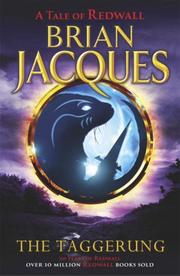
View source
https://openlibrary.org/works/OL465980WThe Taggerung review: loyalty, coercion, and the shape of moral life
The Taggerung review treats Brian Jacques's novel as a serious piece of children's fantasy rather than a decorative adventure. The Taggerung works because it understands that a story for younger readers can still ask hard questions about belonging, training, captivity, loyalty, and the identities that are built for a person by other people. The book's animal cast gives it warmth, but the warmth is never an excuse to make the moral world simple.
The book sits naturally near Fantasy Reviews and Young Adult Reviews, but it gains even more clarity when read beside The Tale of Despereaux, The Tangle Box, and The Swords of Lankhmar. Those comparisons help show how differently fantasy can handle danger and moral formation. The Taggerung is more ceremonious than Leiber, less delicate than DiCamillo, and more direct than Brooks, yet it shares with all three a concern for how a story organizes pressure.
The central argument for The Taggerung is that the book is strongest when it is read as a meditation on coercion and selfhood. The plot matters, but the plot matters because it carries questions about what happens when a life is named, trained, and used by someone else's system. That is a richer claim than simply saying the book is adventurous.
What kind of book The Taggerung is
The Taggerung is a fantasy novel that combines the pleasure of series familiarity with the seriousness of an inward story. Brian Jacques writes in a register that is immediately accessible, but that accessibility should not be mistaken for thinness. The book's world is vivid because it has rules, habits, songs, routines, and social pressures that feel inherited rather than invented on the fly.
The animal setting matters because it lets the book dramatize forms of community and domination without becoming abstract. A child's novel can sometimes hide behind allegory, but The Taggerung uses its fable-like surface to make the social reality sharper. The result is a book that can feel comforting in texture while remaining morally uneasy in the right places.
That unease is important. The violence in The Taggerung is not there to shock for its own sake. It is part of the book's design for showing how coercion works when it becomes ordinary. Readers who are sensitive to fantasy violence may still find the book worthwhile, but the violence should be taken seriously rather than passed off as harmless because the cast is anthropomorphic.
Reader fit and likely response
The Taggerung will appeal most to readers who want a fantasy story that takes loyalty and identity seriously without losing narrative momentum. It suits readers who enjoy series worlds but still want a novel with its own internal argument. It is especially strong for readers who appreciate children's and middle-grade literature that trusts younger audiences to notice that being brave is not the same thing as being simple.
The book may be less satisfying to readers who want fantasy to be either purely whimsical or purely dark. The Taggerung stays in a middle register. It has tenderness, but it is not sweet in a sugary sense. It has danger, but it does not try to convert danger into grit as an identity. That balance is one of its best qualities, though it can be difficult to describe cleanly because the book refuses easy labels.
For comparison, The Tale of Despereaux offers a different kind of moral clarity, one that is more openly fable-like and more focused on forgiveness and interior courage. The Tangle Box shows how a fantasy series can treat disruption with a lighter surface. The Taggerung is more concerned with what a system does to a person over time, which makes it a good fit for readers who like the emotional stakes to feel cumulative.
Strengths that give it weight
The Taggerung's clearest strength is its moral seriousness. Brian Jacques does not treat belonging as decorative. The book keeps asking what it means to be claimed, mistaken, trained, searched for, and remembered. Those questions give the story its energy. Even when the book is moving briskly, it remains attentive to how identity can be shaped by force and by care.
Another strength is the book's emotional readability. The Taggerung does not require a graduate seminar to be felt, but it also does not flatten feeling into a single moral lesson. It allows loyalty to look admirable, dangerous, confused, and costly in different scenes. That range is part of why the novel stays alive across rereading. It recognizes that children's fiction can be direct without being simplistic.
The prose helps too. Jacques often works with a clear narrative voice and a rhythmic sense of event, which gives the book a shared-story feeling. That style can make the novel feel almost oral at times, as if it were meant to be heard as much as read. For many readers, that creates trust. The voice says that the story knows where it is going, even when the characters do not.
Cautions and limits
The biggest caution is that the book's moral directness can be mistaken for moral simplicity. It is true that The Taggerung knows who its heroes and villains are, but that does not mean the novel is crude. The more careful reading is that the book uses clear lines to ask complicated questions about identity and obligation. Readers who dismiss it as merely straightforward may miss the tension that gives it force.
Another limit is dependence on atmosphere and series memory. Readers arriving without familiarity with the larger Redwall world may still enjoy the book, but some of the pleasure comes from inhabiting a well-established imaginative space. That can be welcoming, yet it can also make the novel feel less surprising than a one-off fantasy. The book is not trying to reinvent its setting each time it turns a page.
The final caution concerns violence. The Taggerung is not bleak, but it does not pretend that coercion is a minor inconvenience. Readers expecting a fully cozy experience may find that the book carries more emotional hardness than they anticipated. That hardness is part of the book's moral shape, not a defect to be apologized for.
Context, comparisons, and alternatives
In context, The Taggerung helps explain why animal fantasy can matter beyond charm. It shows that the form can hold questions about lineage, socialization, rescue, and the stories that communities tell about themselves. For readers tracing that idea through the catalog, Fantasy Reviews and Young Adult Reviews are good starting points, but the more interesting comparisons come from adjacent reading moods.
The Tale of Despereaux is the best internal comparison if the reader wants another children's fantasy with moral seriousness and a strong fable-like core. The Swords of Lankhmar gives the opposite kind of lesson: how fantasy can be witty, urbane, and fast without being morally empty. The Tangle Box sits somewhere else again, showing how series fantasy can balance continuity with comic or domestic complication.
Those comparisons matter because they keep The Taggerung from being reduced to "just another fantasy for younger readers." It is more exact than that. It is a novel about what happens when identity is pressed into shape by institutions, memory, and the stubborn possibility of return.
Final verdict
The Taggerung is one of those fantasy novels that gains value when read closely enough to see how much feeling is being organized under the surface. It is accessible, but it is not shallow. It is adventurous, but the adventure is doing moral work.
Readers who want fantasy that treats loyalty and belonging as serious literary material should find The Taggerung rewarding. It belongs in the catalog as a book that can be enjoyed in the moment and also thought about afterward, which is exactly the kind of double usefulness a strong children's or young-adult fantasy should have.


