Book review
Up the Line Review
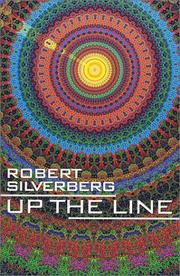
Robert Silverberg's 1969 black comedy follows Jud Elliott into time-tourism work in 2059, where Byzantine desire and broken rules produce escalating paradox.
- Author
- Robert Silverberg
- First published
- 1969
View source
https://openlibrary.org/works/OL1960654WUp the Line review: time tourism as a machine for bad decisions
This Up the Line review argues that Robert Silverberg's 1969 novel is most successful as black comedy about regulation. Jud Elliott, bored with legal work in 2059, becomes a Time Courier who guides tourists to famous events while protecting the timeline. Training supplies rules against interference, duplication, and contact with ancestors. Jud understands them well enough to violate them with increasing ingenuity.
His fascination with Byzantine history gives the book a less familiar destination than the usual prehistoric or future spectacle. It also leads into sexual obsession and paradox. The escalation is clever; the male gaze and treatment of women are severe limitations rather than harmless period flavor.
Time tourism as an industry
Silverberg imagines time travel not as a unique scientific expedition but as organized leisure. Customers want proximity to famous religious, political, and violent events. Couriers manage schedules, crowding, authenticity, and causal risk.
This commercial frame is a major strength. Once travel exists, bureaucracy follows. Rules distinguish official visitors from unauthorized interference, while tourists' desire for spectacle threatens the past they consume.
The industry also raises an ethical question the comedy does not fully develop: historical people cannot consent to being observed as attractions. The novel is sharper on paradox than exploitation, but the premise makes the issue visible.
Jud Elliott: charming guide and unreliable moral center
Jud narrates with confidence, appetite, and enough knowledge to make irresponsibility entertaining. He is not an innocent who misunderstands one technicality. His violations grow from desire, vanity, and the belief that he can manage exceptions better than rule makers.
That makes the spiral satisfying. Every attempted correction creates another condition to conceal. Jud's intelligence increases the damage because it gives him more elaborate interventions.
The reader's amusement should not become endorsement. Jud objectifies women persistently and treats access to the past as access to bodies. The novel sometimes satirizes his appetite and sometimes shares it.
Byzantium beyond decorative scenery
The Byzantine setting supplies court politics, religious ceremony, dynastic complexity, architecture, and a dense timeline in which a courier can specialize. Silverberg's enthusiasm gives the episodes color and distinguishes the novel from generic time corridors.
This is still comic historical fiction, not a dependable introduction to Byzantine history. Characters and events are selected for narrative usefulness, and erotic fantasy shapes the view. Readers interested in the period should use current scholarship alongside the novel.
The best effect is structural: history feels crowded and contingent. A small intervention can cross family, political, and chronological lines whose consequences no visitor fully maps.
Paradox rules and comic escalation
Time-travel stories depend on constraints. Up the Line establishes rules, then finds increasingly tangled ways for Jud to encounter duplicates, ancestry, and causal danger. The pleasure comes from watching a manageable infraction proliferate.
Silverberg keeps explanation relatively brisk. The system is rigorous enough for jokes and reversals without becoming a physics argument. Consistency matters more than plausibility.
Readers who demand one perfectly closed model may find ambiguities. Black comedy permits some flexibility because Jud's inability to calculate every outcome is part of the point.
Tourism, authenticity, and the appetite for witness
Tourists seek moments whose importance they already know. That knowledge changes observation: they arrive prepared for a climax and may ignore ordinary lives around it. The past becomes a sequence of approved highlights.
The novel jokes about crowded historical events, an idea that exposes the absurdity of limitless access. If too many visitors want the same scene, invisibility and noninterference become difficult. Authenticity is damaged by the industry designed to sell it.
This aspect feels newly relevant to discussions of mass tourism, heritage, and mediated experience, even though the technology remains impossible.
Sexual politics and the limits of satire
Jud's desire is central to the plot, but women frequently appear as conquests, temptations, relatives within a taboo joke, or beautiful historical surfaces. Consent and power receive much less analysis than chronological rules.
The novel includes incest-related paradox, sexual objectification, and age or power dynamics that modern readers may find disturbing. Calling the book a comedy does not remove those concerns. Satire can expose male irresponsibility while reproducing pleasure in it.
Readers who cannot tolerate a leering first-person voice should skip the book. Those who continue should distinguish criticism of Jud's misconduct from the text's uneven participation in his gaze.
Tone, pacing, and 1969 context
The prose moves quickly through training, tours, violations, and repairs. Exposition is delivered with comic confidence. The short episodic units suit the tourism premise and keep paradox from becoming static.
Published in 1969, the novel reflects a period of sexually explicit speculative comedy and changing censorship. Greater frankness could challenge convention while leaving male entitlement largely intact. Historical placement explains the combination; it does not excuse it.
The future of 2059 also reflects its era. Institutions, gender assumptions, and technology outside time travel may feel less imaginative than Byzantium.
Strengths and cautions
The major strengths are an original time-tourism profession, energetic Byzantine setting, escalating paradox, and a narrator whose rule-breaking generates precise comic consequence. The ending pays off the logic with appropriate sharpness.
Cautions include explicit sexual material, incest themes, objectification, coercive dynamics, historical violence, religious spectacle, and dated gender politics. The comedy can make harm feel lighter than it is. The book is adult science fiction, not young adult or fantasy.
Reader fit and alternatives
Up the Line suits readers of sardonic time travel, institutional comedy, Byzantine settings, and protagonists who cause their own disaster. It is a poor fit for readers seeking respectful romance or women with equal narrative authority.
The Time Machine offers a foundational journey structured by social speculation, while The End of Eternity examines an institution that alters history with greater procedural seriousness. Browse Science Fiction and Literary Fiction.
The courier's profession and responsibility for boredom
Jud enters time travel partly because ordinary work bores him. That motive links the future occupation to tourism's appetite for intensity. Historical catastrophe and ceremony become relief from a life he has not learned to value. The courier rules try to impose responsibility from outside, but no training can supply the humility Jud lacks. His boredom therefore matters morally: other people's past becomes material for his stimulation. Silverberg uses the flaw effectively when violations escalate, though the novel does not apply equal skepticism to every erotic fantasy. Reading the profession through boredom clarifies the black comedy. Unlimited access does not enlarge Jud's character; it enlarges the consequences of his refusal to govern himself.
The Byzantine specialization finally gives Jud something like genuine knowledge, which makes his misconduct more pointed. He is not merely an ignorant tourist. Expertise can deepen respect, but it can also create entitlement when the expert thinks familiarity confers possession. The novel uses that failure more sharply in temporal rules than in sexual ethics.
Final assessment
Up the Line turns time travel into a regulated service and lets one courier's appetite demonstrate why the regulations exist. Its paradox machinery and Byzantine enthusiasm remain lively, and the black-comic escalation is expertly controlled.
The sexual politics substantially narrow the book. Readers must decide whether formal cleverness compensates for extended objectification. For the right audience, it is an inventive period comedy whose worst features are as historically revealing as its best ideas.


