Book review
A Study of the Short Story Review
This A study of the short story review treats Henry Seidel Canby's 1913 book as a compact work of literary criticism and short-story history, valuable for its clarity, canon-making instincts, and limits.
- Author
- Henry Seidel Canby
- First published
- 1913
View source
https://openlibrary.org/works/OL1236233WA study of the short story review: criticism that makes the form easier to see
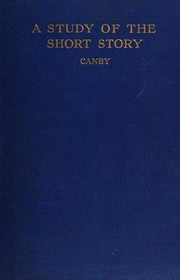
Any honest A study of the short story review has to begin by correcting the obvious mistake that can cling to old catalog copy. Henry Seidel Canby's 1913 book is not a horror novel, not a thriller, and not a disguised work of fiction at all. It is a compact work of literary criticism: a historically minded study of the short story in English and American literature, organized around representative writing and the formal question of what makes short fiction distinct.
That clarification matters because the right standard of judgment changes everything. A novel is judged by the pressure of its plot, the depth of its characters, the continuity of its imaginative world. A critical study like this one is judged by the sharpness of its distinctions, the usefulness of its historical framing, and the quality of the reading habits it encourages. On those terms, A Study of the Short Story remains genuinely worth attention. It is not the last word on the form, and it is certainly not a modern theory book. But it is still a lucid early attempt to explain how short fiction achieves force through proportion, concentration, and control.
The central thesis of this review is simple. Canby's book survives because it does real intellectual work for the reader. It helps make the short story legible as a form rather than a mere length category. It gives the reader a sense that brevity has its own demands, not just fewer pages than a novel. At the same time, the book also reveals the limits of early twentieth-century literary gatekeeping. It teaches, but it teaches from within a canon that now looks selective, settled, and narrower than it should.
That double character is exactly why the book belongs on UtoRead. It fits naturally beside classic literature because it is bound up with older English-language traditions, and beside history and ideas because its real subject is not only stories themselves but the history of how readers learned to classify, value, and teach them.
What kind of book this actually is
The most useful way to describe A Study of the Short Story is as a hybrid of literary history and critical guidance. In the preface, Canby frames the project as a brief but reasonably comprehensive account of the short story in English and American literature, built through selected examples. That aim is important. He is not writing a manifesto from pure abstraction, and he is not merely collecting famous pieces for casual enjoyment. He is trying to show a tradition in motion while also teaching readers what to notice in the writing.
That means the book works by arrangement as much as by assertion. Selection itself becomes part of the argument. Which authors matter? Which stories or story traditions are treated as turning points? Which qualities of short fiction are elevated as major rather than minor? These decisions are never neutral. A book like this quietly tells the reader what kinds of compression, narrative finish, atmosphere, irony, or moral design are worth respecting. In that sense, it is not only criticism of the short story. It is also a document of canon formation.
This is one reason the book still feels more interesting than a simple handbook. A weak handbook merely names features. A stronger critical survey creates a field of comparison. Canby wants the reader to move between periods, authors, and methods in order to feel what the short story can do when it is shaped with real discipline. Even if some of his judgments feel dated now, the comparative habit remains valuable.
It also helps to understand what the book is not. It is not a modern creative-writing manual built around workshop vocabulary. It is not a contemporary academic monograph with heavy theoretical apparatus. And it is not a free-floating anthology whose main purpose is variety for variety's sake. Readers expecting any one of those things may misread its virtues. Canby is closer to an older public critic and teacherly guide: serious about form, invested in lineage, and confident that literary standards can be argued for in clear prose.
That confidence can feel refreshing. Much modern criticism either overspecializes or flattens itself into recommendation culture. Canby belongs to neither mode. He assumes the reader is capable of following distinctions about structure, emphasis, and literary inheritance without needing either jargon or salesmanship. That assumption gives the book some of its continuing dignity.
What Canby understands about the short story
The book's best insight is that a short story is not simply a small novel. That sounds obvious now, but one reason it sounds obvious is that critics like Canby spent time making the point stick. He understands that short fiction depends on a more exact relation between material and effect. A story cannot afford to wander in the same way a long novel can. It must choose where to begin, what to omit, how sharply to focus pressure, and what kind of ending will complete or complicate the experience without feeling either thin or overexplained.
Canby is good at helping the reader feel that compression is an artistic principle, not a mechanical limit. The short story's brevity matters because it intensifies selection. Every scene, tonal shift, and descriptive gesture has to justify its place. That does not mean every story becomes a trick ending or a single dramatic blow. It means the form lives or dies by proportion. When Canby is at his strongest, he makes proportion visible. He trains the reader to ask not merely what a story contains, but whether its chosen scale suits its imagined effect.
He is also helpful on the relation between history and form. A short story is never just a timeless shape dropped from the sky. It emerges from traditions of anecdote, sketch, tale, magazine culture, moral narrative, and artistic self-consciousness. Canby may not offer the global or socially expansive account a present-day reader might want, but he does understand that the form has a history, and that history affects how readers interpret particular works. The short story is something that became recognizable through practice, not merely through theory.
Another durable strength is his attention to comparison. Books like this matter because they let one piece of writing illuminate another. Read in that spirit, A Study of the Short Story becomes less a monument and more a reading instrument. It can sharpen how you return to Tales of Edgar Allan Poe review, or how you think about later compact narratives such as The Adventure of the Speckled Band review. The value lies not in obeying Canby's every hierarchy, but in letting his distinctions improve your own.
There is a deeper reason the book lasts, too. Canby treats criticism as an aid to attention. He does not seem interested in replacing reading with authoritative summary. He wants readers to become better judges of design. That remains one of criticism's most honorable jobs. A good critical book does not save you from literature; it returns you to literature with better eyes.
Strengths: clarity, proportion, and historical usefulness
The first major strength of A Study of the Short Story is clarity. Canby writes in a way that invites reading rather than defensive decoding. He wants concepts to stay graspable. For readers tired of criticism that confuses difficulty with depth, this is a real advantage. The prose may belong to an older literary culture, but it usually aims for steadiness and legibility. That matters because his subject can easily become vague in weaker hands. General talk about "form" often dissolves into cliche. Canby is better than that when he focuses on concrete literary distinctions.
The second strength is his sense of proportion. He does not approach short fiction as if every story must perform every possible function. Some stories depend on atmosphere, others on irony, others on moral pressure, others on narrative economy. The book helps readers resist a common mistake: judging all short stories by the standards of one preferred kind. That habit alone makes the book useful. A strong reader of short fiction needs to know the difference between personal taste and formal failure. Canby often nudges the reader in exactly that direction.
Third, the book has lasting historical value. Even when a reader disagrees with it, the disagreement is instructive. This is an early twentieth-century attempt to stabilize the short story as a serious object of literary study. That means the book records assumptions about prestige, influence, and representativeness that shaped later reading culture. If you want to understand how the short story became teachable and discussable as a form, Canby is part of that story. He helps show the transition from diffuse narrative traditions to something more clearly named and defended.
That historical dimension also gives the book a double use. You can read it for what it says about short fiction, and you can read it for what it reveals about criticism itself. Why are some authors elevated? Why are some qualities treated as central? Why does the history move in this order and not another? Those questions turn the book into more than a source of information. They turn it into evidence about literary values in its own moment.
Finally, the book is useful because it sends readers outward. It belongs in conversation with other anthology or survey-minded books such as A Book of Short Stories review, where editorial choice becomes part of the reading experience. Canby's book may be more explicitly critical than that anthology, but both reveal that reading the short story well often means reading comparatively. The reader learns by contrast: one story against another, one mode against another, one editorial imagination against another.
Where the book shows its age
The most obvious limitation is canon narrowness. A book from 1913 that aims to define the short story in English and American literature is almost inevitably going to reflect exclusions that now look severe. Modern readers will notice that literary authority is treated as if it can be assembled from a relatively stable line of recognized writers and representative texts. That confidence is historically revealing, but it is also constricting.
This does not make the book worthless. It changes how it should be read. The right posture is alert rather than obedient. Canby can still sharpen your understanding of form, but he should not be treated as if he has settled the field once and for all. Readers who want a broader, more internationally alert, or more socially expansive account of short fiction will need to supplement him.
There is also a limit in the book's temper. Early critical surveys sometimes carry an air of firm judgment that can be bracing when the judgment is earned and irritating when it hardens into prescription. Canby is often better than the most dogmatic critics of his era, but he still belongs to a culture comfortable with ranking, selecting, and standardizing literary value from above. Some readers will welcome that confidence. Others will want a criticism more self-conscious about its own partiality.
Another caution is practical. If what you want is either pure reading pleasure or a modern craft manual with immediately transferable advice, this may not be the ideal first stop. The book lives in the middle register between those uses. Its pleasures are reflective. You read a section, test it against stories you know, and let the distinctions settle. That is rewarding, but it is not the same experience as sinking into a great collection straight through.
And then there is the question of modern relevance. Some books age into irrelevance because they solve a narrow contemporary debate that no longer matters. Canby does not quite do that. His questions remain alive. What ages is the frame around those questions: the narrower canon, the settled authority, the reduced sense of what counts as the field. So the proper conclusion is not that the book has expired. It is that the book is now strongest when read as both criticism and historical artifact.
Reader fit: who should read it now
This is a very good book for readers who care about how literature works and are willing to read criticism that is explanatory rather than trendy. If you enjoy asking why one short story feels inevitable while another feels merely brief, Canby has real value. He suits readers who like literary history in manageable form and who want the short story treated as an art with its own demands rather than as a secondary version of the novel.
It is also a strong choice for readers building a path through older short fiction. Someone moving from Poe to Hawthorne to later anthology culture can use Canby as a mapmaker. He helps explain why those writers and traditions became central to the story the culture told about short fiction. Even if you later revise that map, it is useful to see an influential version of it drawn clearly.
Readers coming from nonfiction shelves may also find something attractive here. This is criticism that behaves like thought in public. It is not trapped inside pure technicality. That is why it can sit on UtoRead between classic literature and history and ideas. The book is about literary art, but it is equally about standards, inheritance, and the making of cultural judgment.
The less ideal reader is easy to identify too. If you want contemporary global short-story criticism, a more diverse canon, or theory-forward arguments about gender, race, empire, and publication systems, this book will feel incomplete. If you want the immediate pleasures of actual stories more than a framework for thinking about them, you may be happier with a collection first and a study second.
Still, even for that less ideal reader, the book can function well in short stretches. It does not have to be read as scripture or even as a cover-to-cover obligation. It can be used selectively, as a way to sharpen attention before returning to the stories themselves.
Alternatives and the best reading path from here
If what you want is a companion volume that reveals how editorial choice shapes the reader's idea of the form, A Book of Short Stories review is the cleanest comparison. Sherman's anthology and Canby's study are not the same kind of book, but together they show two related ways early twentieth-century literary culture tried to make short fiction legible: through commentary on one side and curated selection on the other.
If you want to move from criticism back into a foundational practitioner, Tales of Edgar Allan Poe review is a strong next step. Poe matters here not just because he is famous, but because reading him after Canby makes the formal conversation more concrete. You can test claims about concentration, atmosphere, and narrative effect against stories that remain among the form's most forceful demonstrations.
For readers more interested in the detective line of short fiction, The Murders in the Rue Morgue review and The Adventure of the Speckled Band review offer a practical route from theory to example. They let you see how very different stories can both satisfy the short form while using it for distinct ends: analytic display in one case, suspenseful case construction in the other.
Readers who want a broader site route can also move outward through classic literature for primary texts or through history and ideas for other critical and intellectual works that help explain how literary traditions get built. That is the best way to keep Canby from becoming an isolated artifact. He is more rewarding when he stays in conversation with the stories he interprets and the critical habits he helped normalize.
The practical reading advice is simple: do not read this book as if it were supposed to replace a shelf of stories. Read it as a tuning instrument. Use a chapter or section, then go back to actual fiction and notice whether openings, pacing, closure, or tonal control have become easier to name. If they have, the book is doing exactly what good criticism should do.
Final assessment
A Study of the Short Story earns a real recommendation, but a precisely bounded one. It is not an all-purpose introduction to world short fiction, not a modern theory text, and not a neutral historical overview. It is an early twentieth-century critical study with clear virtues and visible limits.
Its virtues are substantial. Canby writes clearly, values formal proportion, and treats the short story as an art serious enough to deserve historical and critical explanation. He helps the reader understand that brevity is not reduction but design. He also leaves behind a revealing record of how literary culture once organized the short story into a teachable tradition.
Its limits are equally plain. The canon is narrow, the authority sometimes too settled, and the field smaller than modern readers know it to be. But those limitations do not cancel the book. They define the right way to use it: as a still-valuable guide to attention and as evidence of an older map of literary value.
So the final verdict is this: read A Study of the Short Story if you want to see short fiction becoming visible as a form, and if you enjoy criticism that can improve how you read without drowning you in jargon. Choose a modern companion if you need broader scope. But for readers interested in how the short story was historically taught, ranked, and clarified, Canby's book still has solid professional value.