Book review
Gideon the Ninth Review
A professional Gideon the Ninth review of Tamsyn Muir's bone-deep science-fantasy mystery, with clear guidance on tone, reader fit, strengths, cautions, and comparisons.
- Author
- Tamsyn Muir
- First published
- 2019
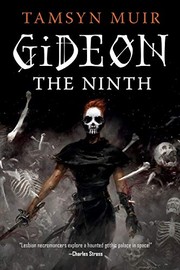
View source
https://openlibrary.org/works/OL20128158WGideon the Ninth review: thesis, tone, and why it still stands out
A strong Gideon the Ninth review has to start with the book's basic gamble: Tamsyn Muir takes ingredients that could cancel each other out - spacefaring empire, ossuary theology, locked-room murder mystery, swordplay, deadpan jokes, and a bitter servant-master bond - and makes them compete for control of the same novel. That gamble is the reason the book has such a devoted audience, and it is also the reason some readers bounce off it hard. Gideon the Ninth succeeds because its tonal instability is not accidental. The book wants to feel abrasive, funny, claustrophobic, and unnerving at once. When that fusion works, it feels genuinely singular.
At the center is Gideon Nav, an indentured swordswoman from the Ninth House who wants nothing more than to escape a life built from ash, bones, duty, and contempt. Instead, she is pulled into service by Harrowhark Nonagesimus, heir to the Ninth House and a formidable necromancer in her own right. Together they travel to a decaying palace where the heirs and cavaliers of the Nine Houses are expected to solve occult trials tied to imperial power. That premise gives the novel its immediate hook, but the book is more than a clever pitch. It lives in the friction between swagger and discipline, between forensic puzzle-solving and emotional injury, between ritual solemnity and contempt for solemnity.
The clearest thesis is this: Gideon the Ninth is a very good novel for readers who want speculative fiction to have teeth. It is not streamlined, and it is not polite. It asks the reader to sit inside confusion for a while, learn a strange social order on the move, and accept that comedy can sharpen horror rather than dilute it. Anyone looking for a smooth, transparent entry point into fantasy or science fiction may find it spiky. Readers who enjoy books that build identity through voice, pressure, and antagonistic intimacy will find much more to admire.
What Gideon the Ninth is actually doing beneath the pitch
It is easy to reduce the novel to its most marketable elements: lesbian necromancers, bones in space, murder mystery in a haunted palace. Those phrases catch some of the energy, but they flatten what Muir is actually attempting. The book is not merely piling on eccentric components for effect. It is using each element to test the others.
The locked setting matters because it turns the Houses into a social and forensic problem. Gideon and Harrow are not just solving puzzles in isolation; they are performing themselves under observation, suspicion, and competition. The palace setting lets the novel behave like a gothic chamber piece, but the wider imperial structure gives those chamber tensions a larger weight. The trials are about knowledge and power, not only survival, and that power is inseparable from sacrifice. Necromancy in this world is never decorative. It is material, theological, bodily, and often ugly.
That ugliness is important. Muir does not romanticize death magic into something clean or ornamental. Skeletons, laboratories, preserved remains, ritual language, and bodily cost are part of the novel's basic texture. The religious imagery is heavy with tombs, relics, vows, and martyr-like pressure, but the novel does not treat those ideas with simple reverence. Instead it stages belief as an institution that can sustain identity, deform intimacy, and justify cruelty.
The queer framing is handled in that same spirit of pressure rather than sentimentality. Gideon's desire, bravado, embarrassment, and defensive humor shape how the reader enters the book, yet Gideon the Ninth is not fundamentally a romance novel. Attraction exists, but it is entangled with hierarchy, resentment, dependency, and the emotional damage that years of confinement leave behind. Readers looking for a soft or conventionally reassuring love story may misread the book's aims. Muir is more interested in antagonism, loyalty, rivalry, and shared damage than in easy catharsis.
The novel is also much funnier than its death-haunted setting suggests. That humor is not an accessory. It is the mechanism that keeps the book from collapsing under its own mausoleum weight. Gideon's irreverence punctures the piety of the Houses and stops the story from becoming inertly grand. The result is a book that understands how comedy can expose systems of power, not just relieve them.
The novel's major strengths: voice, chemistry, and structure
The first and most obvious strength is Gideon herself. Muir gives her a brash, wounded, highly performative voice that can carry exposition without sounding dutiful. Gideon is funny, but she is not a joke machine. Her humor is a survival tactic, a form of refusal, and sometimes a sign that she does not know what to do with the seriousness gathering around her. Because the perspective is so strong, the novel can spend time in corridors, arguments, and deciphering without losing momentum.
The second major strength is the relationship between Gideon and Harrow. Many speculative novels offer antagonistic pairings; fewer make the hostility feel this specific. The connection between them is structured by class resentment, institutional obligation, old humiliations, mutual dependence, and gradually shifting recognition. Muir is patient about letting that relationship remain unpleasant for a while. That patience matters. If the novel softened them too soon, it would lose the hard edge that makes later emotional movement convincing.
Structure is another reason the book works. Gideon the Ninth is not a pure detective novel, but it borrows enough from the genre to give the narrative shape. Characters enter a dangerous, semi-isolated environment. Rules are incompletely understood. Bodies accumulate. Clues are partial, sometimes misleading, and tied to specialized knowledge. That framework gives the baroque setting a concrete engine. Readers do not have to love every strand of the lore to keep asking the essential question: what is happening here, and what will it cost to understand it?
Atmosphere is the final strength that turns the book from clever to memorable. Muir has a keen sense of spatial mood. Canaan House feels scholarly, ceremonial, and rotten all at once. The Ninth House background feels spiritually exhausted in a way that makes Gideon's hunger for escape fully legible. Even when the reader is still decoding the hierarchy of the Houses, the emotional temperature of a room is usually clear. That skill lets the novel maintain tension even during scenes that are more about alignment and suspicion than immediate action.
Readers who value the political and institutional side of space-set fiction may also appreciate how differently this book handles empire compared with a novel like A Memory Called Empire review. Arkady Martine builds tension through diplomacy and cultural seduction; Muir builds it through ritual, intimacy, and the body. The comparison is useful because it shows that Gideon the Ninth is not trying to be cleanly cerebral. Its intelligence is messier, more tactile, and more theatrical.
Where the book can lose readers
The opening stretch is the largest obstacle. Muir drops the reader into a highly specific vocabulary of Houses, titles, customs, and history without pausing to organize the world into beginner-friendly terms. That choice creates momentum for some readers and alienation for others. The book eventually teaches the reader how to read it, but it does not do so gently. Anyone who needs early clarity about every faction and every rule may spend too much energy catching up to relax into the story's pleasures.
The tonal mix is the second likely dividing line. A joke can land near a corpse. A scene of swagger can collapse into grief. A moment of grotesque physical detail can be followed by verbal sparring that borders on comic performance. For many readers that elasticity is part of the point: this is a novel about people using wit to live beside death. For other readers, the shifts can feel showy or destabilizing. The issue is not that the book lacks control; it is that its control depends on refusing a single emotional register.
There is also a caution to offer around content. The novel is saturated with death, remains, body manipulation, duels, coercive structures, and repeated imagery of bones, tombs, and violated bodies. It is not extreme in the sense of relentless graphic excess, but it is persistent. Readers sensitive to necromantic imagery, enclosed settings, ritualized violence, or emotionally harsh relationships should go in prepared. The book's religious atmosphere is equally intense: catacombs, relic-like remains, quasi-monastic duty, and empire-sized doctrines are part of its imaginative core.
Another potential barrier is that the supporting cast is deliberately uneven in accessibility. Some characters are immediately vivid; others are memorable more for type, role, or House style than for early emotional depth. That is not a flaw in every case, since the story is organized through Gideon's imperfect attention. Still, readers who want a broad ensemble to open quickly may find that the novel asks them to wait.
Reader fit: who should read Gideon the Ninth, and who may want something else
This is a strong recommendation for readers who enjoy voice-first speculative fiction. If a reader wants a narrator or focal character with attitude, vulnerability, and a defensive comic rhythm, Gideon the Ninth offers that in abundance. It is also a strong choice for readers who like genre fusion without needing the blend to become seamless. The book is happy to look like horror in one scene, a puzzle novel in the next, and a bruised relationship drama after that.
It is especially well suited to readers who enjoy hostile alliances. The emotional engine is not immediate trust, and it is not a neat found-family arc. Instead the book studies what happens when two people shaped by the same dying institution have no good way to separate themselves from each other. That focus gives the novel a sharper emotional profile than many adventure-driven fantasies.
Readers who may want a different entry point include those looking for lyrical gentleness, transparent worldbuilding, or a romance-centered payoff. If the desired reading experience is dark fantasy with a more linear folk-tale structure, Nettle and Bone review is a cleaner recommendation. If the interest is in the same universe but with a warmer, stranger, and more emotionally diffuse center of gravity, Nona the Ninth review points toward a very different flavor of payoff. If the appeal lies in imperial setting and political intelligence rather than gothic abrasion, A Memory Called Empire review is probably the closer fit.
The book is also a better match for readers willing to tolerate delayed explanation than for those who prefer immediate orientation. Muir assumes patience. That patience is rewarded, but it is required.
Context, cautions, and why the book matters in modern speculative fiction
Part of what makes Gideon the Ninth worth preserving in a review library is that it refuses the old shelf boundaries without pretending those boundaries never mattered. The novel clearly draws on gothic fiction, puzzle mysteries, and necromantic fantasy, but it stages them inside a future imperial system that belongs just as much to speculative science fiction. That is why it works so well as a bridge title between fantasy and science fiction. Readers who usually stay on one side of that border may find it productively destabilizing.
It also matters because Muir understands that voice can be a worldbuilding instrument. Many ambitious debut novels arrive with systems, terminology, and lore, but not all of them know how to make those things feel lived-in from inside a character. Gideon's mockery, lust, boredom, anger, and stubbornness do a great deal of that work. The book's invented culture becomes legible partly through what she resists in it.
There is a final caution hidden inside that achievement. Some readers may hear the contemporary edge of Gideon's humor and feel it rubbing against the archaic, ceremonial architecture of the setting. Whether that friction feels electric or distracting will depend on taste. It is one of the clearest litmus tests for the novel. Readers who need tonal purity may never be persuaded. Readers willing to let old bones and modern contempt share the same page may find that this very mismatch creates the book's personality.
Final assessment
Gideon the Ninth is not a universal recommendation, but it is an easy book to defend. Its world is thick with bones, faith, rivalry, exhaustion, and ambition. Its structure gives that world a real narrative engine. Its heroine is funny enough to keep the darkness moving and damaged enough to keep the jokes from floating free of consequence. Most importantly, the novel knows what kind of mess it wants to be.
The clearest reason to read it is not novelty alone. Plenty of books can be described in eccentric terms. What matters here is execution. Tamsyn Muir turns a deliberately unruly combination of tones and genres into a story with force, bite, and a memorable emotional center. Readers who want a clean, calming, or conventionally polished fantasy novel may prefer a different route. Readers who want speculative fiction that feels adversarial in the best sense - challenging, funny, morbid, and unexpectedly moving - should find that Gideon the Ninth more than earns its reputation.


