Book review
Ice Review
This Ice review considers Anna Kavan's bleak, surreal novel through reader fit, strengths, cautions, context, and reading alternatives.
- Author
- Anna Kavan
- First published
- 1967
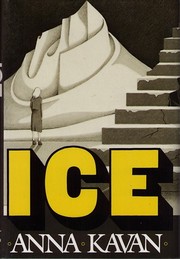
View source
https://openlibrary.org/works/OL11334034WIce review: Anna Kavan's novel of pursuit and collapse
This Ice review treats Ice as Anna Kavan's bleak, surreal novel of pursuit and collapse, not as a straightforward genre exercise. It fits the science fiction shelf, but only provisionally: the book uses speculative scaffolding to create a lived sense of dread, estrangement, and instability. That makes it especially useful for readers who want fiction that works by pressure rather than by exposition.
The main reason to review Ice is that it asks a sharper question than "Is this a classic?" It asks what happens when a novel turns repetition, pursuit, and environmental hostility into the engine of reading. Anna Kavan does not build comfort around the premise; she strips away comfort and leaves the reader inside a state of alertness. For that reason, Ice matters most to readers who care about atmosphere, formal intensity, and the emotional effect of narrative shape.
Online Library needs books like Ice because a large catalog should help readers sort their expectations before they commit time. A good review should not just praise a book's reputation. It should tell readers whether the book will reward their patience, their taste for ambiguity, and their tolerance for dread. Ice does that work unusually well because it is unmistakable about its own temperament.
What Ice is doing on the page
Ice works as science fiction only in the broadest sense. The novel is more interested in psychic weather than in worldbuilding. Its speculative frame gives shape to a landscape of pursuit, threat, and breakdown, but the book's real achievement is how it converts that frame into rhythm and anxiety.
On the page, Kavan keeps the reader off balance. She withholds stable ground, then returns to the same pressures in altered form, so the novel feels cyclical without feeling static. That matters because repetition in Ice is not merely stylistic; it is thematic. The book keeps circling obsession, possession, and escape, and each return makes the atmosphere more claustrophobic.
The novel's world also matters because it is never just a backdrop. The encroaching cold, the sense of breakdown, and the pressure of a hostile environment all register as more than setting. They make the reader feel that the book's reality is narrowing. That narrowing is part of why Ice can be read as literary horror, even though it does not depend on monster mechanics or explicit shock.
This is also where the book's treatment of trauma and gendered threat should be handled carefully. Ice does not reduce those pressures to slogan or allegory. It stages them in a way that is emotionally disturbing and deliberately difficult to settle. The violence is not decorative. It contributes to the novel's sense that escape routes are always partial, always compromised, and never fully safe.
Reader fit and likely response
Ice will work best for readers who like fiction to feel unstable in a disciplined way. If a reader enjoys literature that combines speculative structure with psychological pressure, the novel is likely to feel concentrated rather than opaque. If a reader likes books that make atmosphere do real work, Ice has a great deal to offer.
Readers who prefer visible mechanics, clean explanations, or a strong expectation that the narrative will resolve into certainty may struggle here. That is not because Ice is sloppy. It is because Kavan has chosen another priority. The novel wants the reader to inhabit uncertainty long enough for uncertainty itself to become meaningful.
The practical test is simple: does Ice sharpen your attention to mood, power, pursuit, and vulnerability? If so, the book is doing exactly what it intends to do. If not, the frustration may come from a mismatch between the reader's needs and the novel's design, not from a lack of control on the author's part.
For readers building a broader route through the site, this also helps explain where Ice belongs inside the catalog. It is not only a science fiction title. It is a pressure test for whether a reader wants speculative fiction that leans toward nightmare logic. That is a narrower and more revealing fit than a generic "classic SF" label would suggest.
Strengths of Ice
The strongest thing about Ice is the intensity of its atmosphere. Few novels sustain such a concentrated feeling of cold, pressure, and psychic unease without dissolving into monotony. Kavan keeps that from happening by making repetition active: each recurrence of fear, pursuit, or displacement feels like another turn of the screw.
Another strength is the novel's formal courage. Ice refuses to smooth its own edges for the reader's convenience. That makes it harder than many classics to summarize, but it also means the book has a durable afterlife: readers remember not just what happened, but how it felt to move through the text. That is a serious literary achievement.
There is also value in the book's ambiguity. Ice does not hand the reader a single interpretive key, and that restraint protects it from becoming schematic. The novel can be read through trauma, control, apocalypse, gendered threat, obsession, or ecological dread, but it does not collapse into any one of those readings. It keeps its meanings under pressure, which is one reason it feels alive rather than merely important.
For catalog purposes, that versatility matters. Readers who come to Ice through the Science Fiction Reviews hub will see one part of the book's identity; readers moving through Science and Nature Reviews may notice another. The novel has enough force to travel between categories without losing itself.
It also compares well with other books in the library because it clarifies what a genre novel can emphasize. The Moon Maid shows a more adventure-forward route, This Immortal shows a more expansive philosophical one, and Starman Jones shows a more classical competence-driven one. Ice is the severe outlier in that set, and that is part of its value.
Cautions and limits
The main caution is simple: Ice is not a warm entry point into Anna Kavan, nor is it a comfort read. Its mood is punishing by design. The novel's emotional world can be oppressive, and readers who need clear reprieve from dread may not find enough of it here.
Another caution is that the book can feel recursive. Kavan returns to images, fears, and tensions so often that some readers may experience the repetition as intensity while others experience it as constraint. Both responses are understandable. The question is whether the novel's pressure feels purposeful enough to justify that strain.
It is also worth noting that Ice is best approached with an appetite for interpretation rather than for simple plot satisfaction. The novel is not unclear because it lacks shape; it is unclear because it wants the reader to feel how a hostile world can destabilize explanation itself. That difference matters.
The book also asks the reader to sit with discomfort that is not just atmospheric but ethical. The threat in Ice is tied to coercion and vulnerability, so a casual or detached reading can flatten what the novel is doing. A careful reading does not need to over-explain the text, but it should respect the fact that its violence and menace are not merely ornamental.
For a broader route through the catalog, it helps to treat Ice as one strong node rather than as a final judgment on the whole field. Readers who want a different classic speculative experience can move to This Immortal for something less claustrophobic, or to The Moon Maid for a more overtly adventurous contrast.
Literary and genre context
Ice sits in an interesting overlap between science fiction, literary horror, and surreal fiction. That overlap matters because the novel is not trying to solve the usual problems of plot-driven SF. Instead, it uses speculative elements to intensify mood, alienation, and dread. The result is a book that belongs in the science fiction conversation without being reducible to it.
That in-between status is one reason the novel has remained interesting to readers who care about genre boundaries. It shows that speculative fiction can be about psychological entrapment as much as about technological novelty. It also shows that apocalypse can function as an emotional condition, not only as a setting or event. In Ice, the world closing in on itself is as important as whatever external explanation a reader might hope to extract from it.
The book's literary context matters too. Kavan's approach is severe, stylized, and deliberately unsentimental. The prose refuses easy reassurance, which makes the novel feel closer to nightmare writing than to conventional adventure. That is not a flaw in the book's design. It is the design.
For Online Library, this is exactly the sort of book that benefits from cross-linking between shelves. A reader who starts in Science Fiction Reviews may need Science and Nature Reviews to understand the wider shape of the catalog. Ice makes that movement worthwhile because it reveals how elastic speculative fiction can be.
Alternatives and reading route
If you want something adjacent to Ice but less severe, the best alternative in this set is probably This Immortal, which still carries reflective weight but opens outward more readily. If you want the historical breadth of speculative fiction without Kavan's claustrophobic mood, The Moon Maid gives a different kind of imaginative energy. And if you want a more traditional classic SF route, Starman Jones offers a cleaner contrast in tone, structure, and reader expectation.
The best route through these books is comparative, not hierarchical. Start with Ice if you want to understand what a novel can do with obsession, violence, gendered threat, and environmental pressure. Then use one of the neighboring titles to feel the range of the shelf. That is more useful than treating any single book as definitive.
Readers who use the route this way will get more than a recommendation. They will get a sharper sense of what kind of reading experience they actually want next. That is the real purpose of a review library: not to crown one book, but to help people choose with more precision.
Final assessment
Ice earns its place in Online Library because it gives a clear, memorable answer to a difficult question: what does a novel look like when obsession, violence, gendered threat, apocalypse, and disorientation are allowed to shape the reading experience from the inside? Anna Kavan's answer is severe, but it is also exacting and artistically coherent.
The recommendation is therefore conditional but firm. Read Ice if you want a literary science fiction novel that feels like a cold front moving through the mind. Approach it with patience, not with the expectation of comfort. If the book works for you, it will not just entertain; it will alter how you think about mood, pressure, and the uses of speculative fiction.


