Book review
Three Hearts and Three Lions Review
Poul Anderson's compact portal fantasy sends a Danish resistance fighter into a Carolingian world where rational inquiry and legendary destiny uneasily share the same armor.
- Author
- Poul Anderson
- First published
- 1961
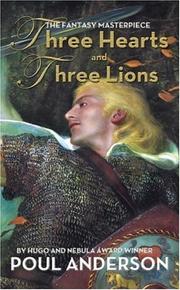
View source
https://openlibrary.org/works/OL90564WThree Hearts and Three Lions review: reason enters an enchanted war
This Three Hearts and Three Lions review argues that Poul Anderson's novel remains valuable less because every element has aged well than because its central collision still feels alive. Holger Carlsen, a Danish engineer fighting with the resistance during the Second World War, is wounded and displaced into a medieval-looking realm where the forces of Law and Chaos are in conflict. His scientific habits do not disappear when magic becomes real. He tests, infers, improvises, and gradually confronts signs that the world already knows him under another identity.
The resulting quest is compact, episodic, and foundational to later fantasy reviews. Anderson draws from Carolingian legend, fairy tale, medieval romance, and twentieth-century conflict without turning the novel into a museum of sources. The book's speed is part of its charm. It is also the reason some relationships and cultures feel like functional stations on a route rather than fully imagined lives.
From wartime Europe to mythic geography
Holger's passage from resistance warfare into fantasy is not an escape from history. He arrives already committed to opposing occupation and authoritarian force. The new world's moral geography translates that commitment into the struggle between Law and Chaos. The analogy is not exact, and the novel's mythic categories simplify the political realities from which Holger comes, but the connection gives the adventure ethical continuity.
This continuity distinguishes him from a tourist protagonist who enters fantasy merely to marvel. Holger reads landscapes strategically, assesses weapons, and treats unfamiliar creatures as problems with discoverable properties. His modernity is practical rather than smug. When evidence requires belief in magic, he adjusts. Reason means disciplined responsiveness, not refusal to accept anything outside a prior worldview.
Law and Chaos are dramatic tools, not complete ethics
The opposition between Law and Chaos gives the world immediate shape. Readers understand alliances, dangers, and the scale of Holger's possible role. The scheme also became influential beyond this single novel because it offers fantasy a portable structure: order and wildness can be represented as cosmic forces, not merely political preferences.
Yet the binary deserves scrutiny. Law can sound automatically just, even though history offers many oppressive orders. Chaos can absorb whatever the narrative marks as monstrous or seductive. Anderson introduces enough ambiguity to keep the story interesting, but the framework remains more useful for momentum than for moral philosophy. Readers encountering the novel as classic literature should see both sides: the power of a clear imaginative grammar and the limits of treating ethical difference as alignment.
Holger's engineering mind is the book's freshest feature
Many fantasies oppose technology and enchantment. Anderson creates a more flexible encounter. Holger's knowledge helps him respond to supernatural threats, but it does not dissolve them into errors. He uses the habits of engineering—measurement, causal reasoning, material knowledge—inside a world whose premises include magic.
This makes competence pleasurable without making it omnipotent. Holger can identify a principle and still face fear, incomplete information, or a destiny he does not understand. His rationality is one tool among courage, loyalty, and cultural memory. Contemporary readers who enjoy carefully designed magic systems may recognize an ancestor of that pleasure, though Anderson explains much less. The world feels rule-governed because Holger looks for rules, not because the narrative provides an encyclopedia.
The quest moves with ballad economy
Encounters with witches, legendary creatures, companions, and hostile powers arrive in swift sequence. Anderson rarely pauses for long domestic intervals or broad political exposition. The movement resembles a ballad or episodic romance: each episode tests a quality, reveals another piece of identity, and advances the party toward a confrontation.
The economy makes the book easy to recommend to readers wary of enormous fantasy series. It also produces thin transitions and secondary characterization. A figure may be memorable as an image or function without receiving an independent interior life. Readers who want the communal richness of High Rhulain or Rakkety Tam may find Anderson sterner and more compressed. The novel offers a path, not a continent.
Identity arrives as recognition
Holger's mysterious fit with the armor and shield bearing three hearts and three lions signals that his presence is not accidental. The plot gradually reframes displacement as return. This is a classic wish structure: an ordinary modern person discovers legendary significance. Anderson complicates the wish by linking identity to obligation. To be recognized as a champion is to inherit a struggle.
The device works because Holger's established character precedes the revelation. He does not become brave because a title validates him; his choices in both worlds make the identity plausible. Still, the destined-hero pattern narrows the social imagination. The world's fate gathers around an exceptional man whose buried essence authorizes command. Modern readers can enjoy the mythic satisfaction while noticing how strongly the narrative privileges inherited role over collective agency.
Strengths: synthesis, momentum, and genre afterlife
Anderson's greatest strength is synthesis. The novel combines resistance history, engineering logic, medieval legend, fairy-tale peril, humor, and romance in a narrative that remains readable. Its second is tonal confidence. The story can acknowledge absurdity without dissolving enchantment. Its third is historical usefulness: readers can see motifs and structures that later fantasy and games would make familiar.
Historical influence is not the same as present excellence, but here the book still generates its own pleasure. Holger's practical responses create wit; the companions give the journey warmth; the mythic reveal has genuine force. A reader need not approach it only as a sourcebook. The compact execution is enjoyable on its own, especially when contrasted with contemporary fantasy's tendency toward prolonged setup.
Cautions about romance and representation
The novel's treatment of women, desire, and cultural difference bears the marks of its publication era. Female characters can be arranged around temptation, loyalty, or romantic reward, and Holger's gaze is not always challenged. Some legendary materials carry assumptions that modern readers will reasonably resist. The briskness leaves little space for perspectives that might complicate those patterns.
These problems do not require dismissing the book, but they affect reader fit. Younger readers may benefit from context, particularly if the novel is presented as a genre landmark. Adult readers should avoid converting influence into immunity from criticism. The same clarity that makes the adventure move also exposes how quickly a heroic tradition can sort people into moral and narrative functions.
Reader fit and alternatives
Choose Three Hearts and Three Lions if you want a short portal fantasy, a capable protagonist, legendary material, and a visible bridge between older romance and modern genre fiction. It suits readers who enjoy recognizing the ancestry of familiar fantasy conventions. It is less likely to satisfy those seeking dense characterization, intricate politics, or culturally expansive worldbuilding.
For younger animal fantasy with richer community bonds, try High Rhulain or Rakkety Tam. For a radically different account of imagination creating a world, Harold and the Purple Crayon offers simplicity without martial destiny. Readers wanting epic scale should look elsewhere; Anderson's virtue is concentration.
Final assessment
The novel is a lively artifact and more than an artifact. Holger's willingness to bring reason into enchantment, rather than choosing one over the other, gives the story its distinctive intelligence. The Law-versus-Chaos structure is memorable but morally narrow; the romance and representation require historical awareness; the episodic form exchanges depth for speed.
Within those limits, Anderson delivers an adventure of unusual efficiency. Its best readers will enjoy the quest while keeping a critical eye on the tradition it helped shape. The three hearts and three lions on Holger's shield promise recovered identity, but the book's enduring interest lies in the mind behind the shield: empirical, adaptive, and prepared to accept wonder without surrendering judgment.


